Mukha Pariksha: The Health Secrets Your Face Gives Away
Published 1st June 2026
Ayurveda offers a wide range of diagnostic tools to glean information about our internal state, whether physical or mental. Many will be familiar with common examination techniques such as pulse diagnosis, tongue examination and even stool and urine inspection. But did you know that your face also reveals important clues about your health?
Mukha Pariksha (facial analysis in Ayurveda) observes features, tones and lines in the face to assess inner balance. Interestingly, modern nursing and clinical assessment also use facial observation to identify key health indicators. In this article, I blend both traditional Ayurvedic wisdom and modern clinical insights to explore how the face can reflect overall health.
It’s important to note that these observations are not intended to be used as stand-alone diagnostic tools. Instead, they are meant to complement a full health assessment, including a thorough history-taking, physical examination, and where appropriate, medical investigations.
General Face Inspection
A quick glance at someone’s face can give us a general overview of their current emotional state. Are they frowning, have more of a nervous disposition or do they appear calm?
When assessing skin tone, always consider the person’s natural baseline. Variations from this might include:
Ashy, dusky, greyish hue – may indicate Vata excess
Redness or flushing– may suggest excess Pitta
Paleness – may reflect Kapha changes
Yellowing of the skin could indicate jaundice, a sign that the body is having difficulty clearing bilirubin (a waste product made from the breakdown of old red blood cells). This can happen because of a quick turnover of cell breakdown as seen in conditions like thalassemia. It can also be a due to liver damage as the liver is responsible for converting and repackaging the old red blood cells into a form that's easy to excrete (bilirubin).
Pallor is when a person’s appearance is unusually pale. This can be associated with anaemia, infection or acute illness.
Forehead
Those with a receding hairline will be happy to hear that this is associated with wisdom, according to Ayurveda.
Prominent veins at the temples can signify hypertension or excess heat in the head and neck region so the person may have tendency towards migraines or headaches. This syncs with observations seen in modern medicine. Temporal arteritis is a condition where the arteries at the temples become inflamed and requires urgent medical attention. Symptoms include headache, scalp tenderness, jaw pain, fever and sometimes even visual changes, particularly in people over the age of 50.
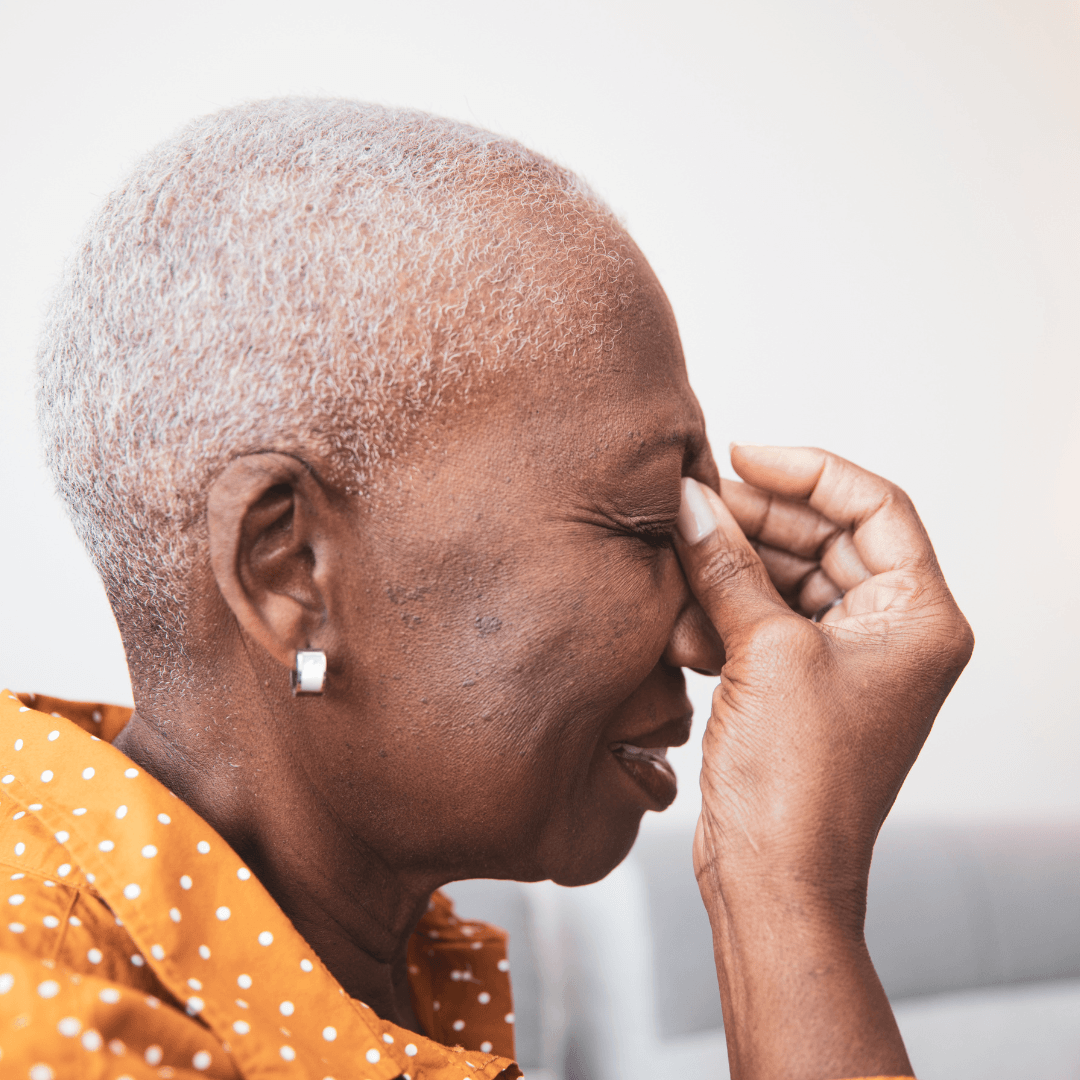
Horizontal lines across the forehead could disclose long-term worry, stress and grief whereas vertical lines between the eyebrows are said to be connected with acute stress, worry and doubt.
Ayurveda explains thinning eyebrows can be a sign of diabetes or insulin resistance. This makes sense from a modern perspective as uncontrolled blood glucose levels can damage vessels that supply hair follicles.
Eyes
The eyes can tell us a lot about a person’s physical health but also about their mental and emotional wellbeing too.
Gaze
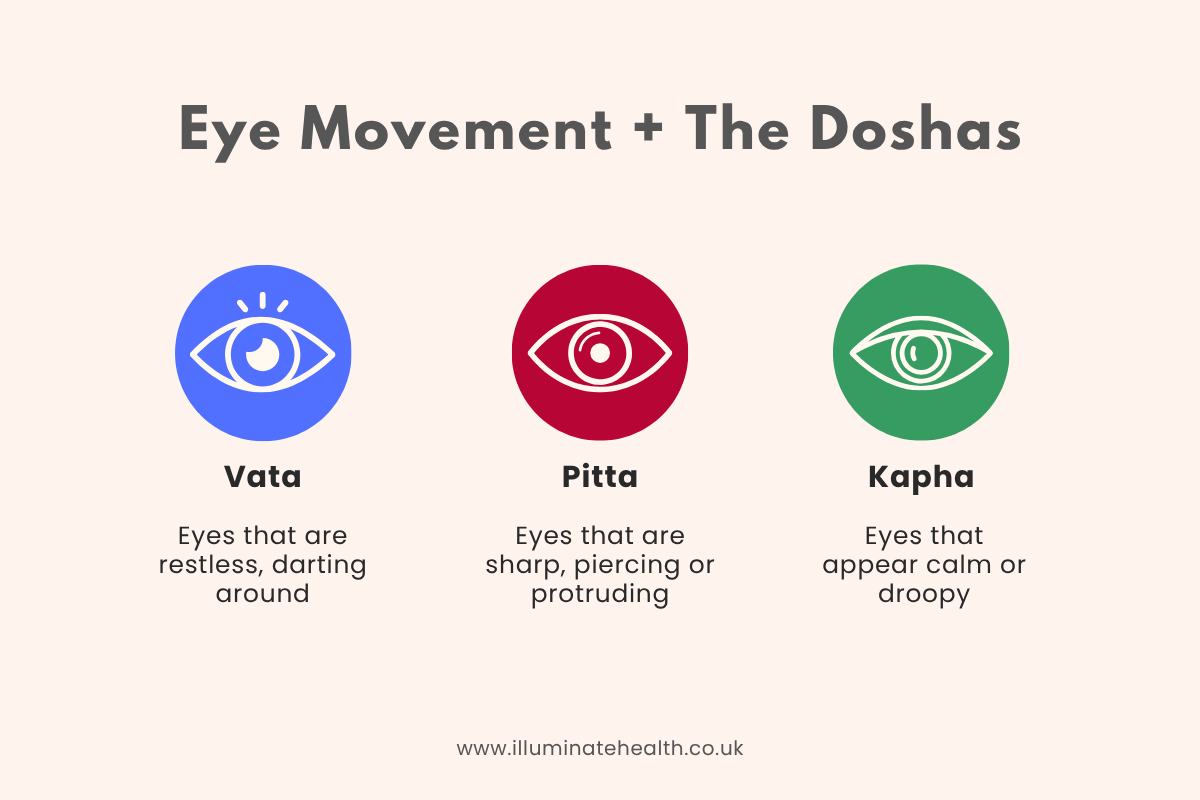
Ayurveda views the movement of a person’s eyes as a reflection of their brain activity and nervous system:
Restless or darting eyes – associated with a Vata imbalance
Intense or protruding eyes – can indicate excess Pitta or conditions like hyperthyroidism
Droopy or heavy eyes – linked with Kapha excess
Sclera
The whites of our eyes are known as the sclera. Discolouration here can signal systemic changes.
Ayurveda recognises muddy-looking sclera as a sign of high cholesterol.
Yellow sclera can suggest jaundice and liver dysfunction. Red sclera can mean inflammation such as allergic conjunctivitis (Pitta excess) or poor sleep.
Conjunctiva
If we pull the lower eyelid down slightly, the area underneath it is known as the conjunctiva. This should be a healthy deep pink colour. If the area is pale, it can indicate anaemia.
Pupils
The pupils can also give us insight into a person’s wellbeing, especially their nervous system state. If the pupils are constricted, a person is generally in a relaxed, parasympathetic nervous system state. If the pupils are enlarged and dilated, the person is likely in a stressed, heightened or aroused state (sympathetic nervous system).
Sometimes different coloured rings can appear around the pupils and iris. Kayser Fleisher rings are brown in colour and are a sign of copper build-up, showing that the liver is having trouble clearing this.
Another type of ring that can form around the pupil and iris is a corneal arcus. This is white or grey in colour and are lipid deposits generally seen in older adults.
Eyelid
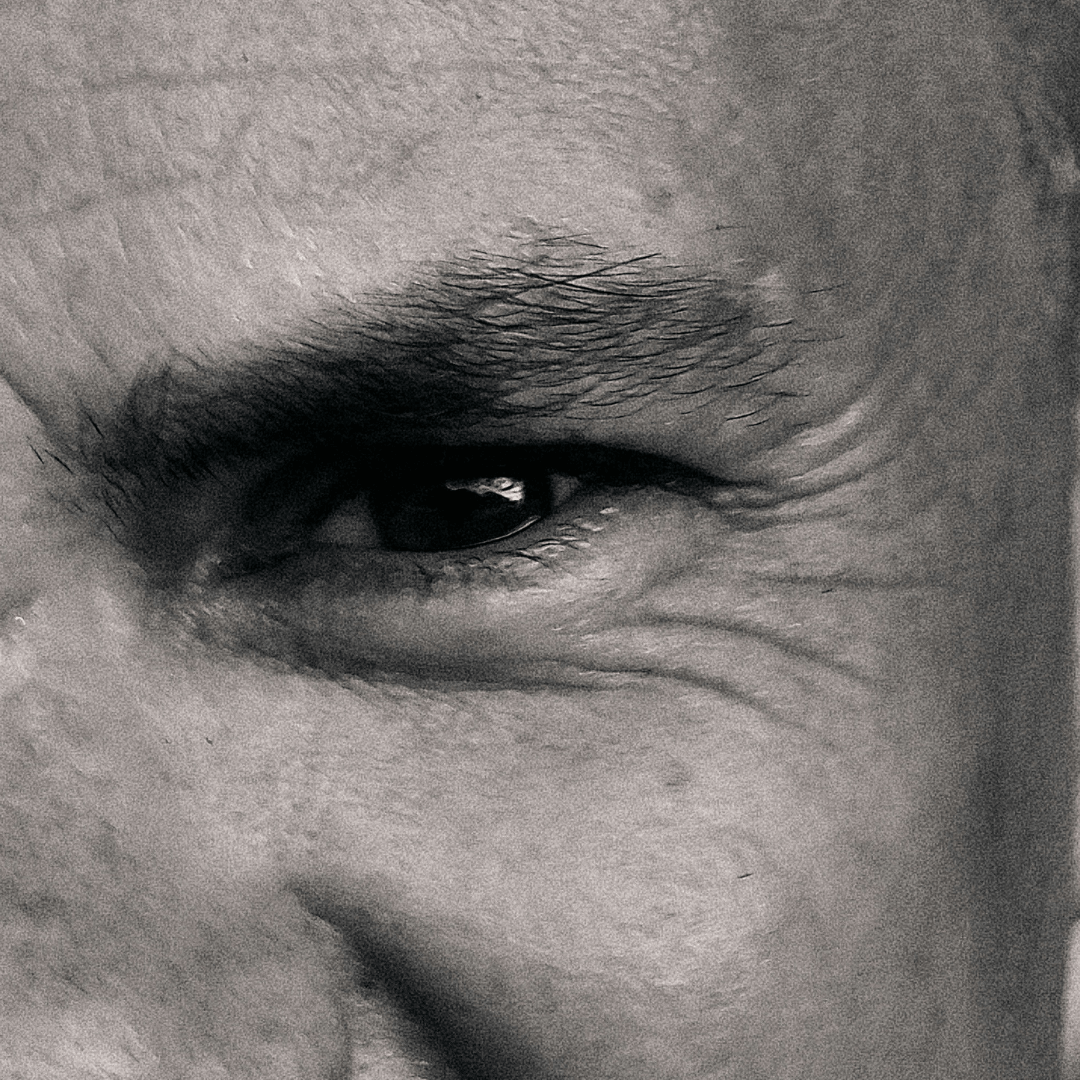
Moving onto the eyelid and surrounding area, we might see yellow-coloured blobs appear under the surface of the skin. This is xanthelasma which is often linked with high cholesterol.
Nose
The nose is rarely given attention in facial analysis as many tend to focus on the eyes with their rich data. But, the nose can offer useful knowledge about a person’s health.
In Ayurveda, a nose that is red at the tip or the root can indicate heat in the heart region.
Spider veins on and around the nose are damaged capillaries beneath the skin's surface that appear as red patches. This damage can occur due to many reasons such as exposure to extreme temperatures, changes in facial pressure, and even long-term alcohol consumption. Alcohol causes temporary dilation of the blood vessels. Over time, the pressure on the vessel walls of stretching to widen can weaken and even break them. Understanding this, we can see that the presence of spider veins might prompt a practitioner to further explore the person’s heart and liver health.
Mouth
The mouth and lips carry important information both about our gut and respiratory health.
Bluish lips (central cyanosis) suggest insufficient oxygen levels and requires urgent medical assessment.
The shape of a person's lips also tells a story about their breathing capabilities. Persistently pursed lips can indicate respiratory conditions such as COPD as the person tries harder to exhale and offset the excess CO2. Ayurveda similarly associates visible veins above the lip with respiratory weakness and reduced Ojas (vital essence or vigor).
Visible cracks to the corners of the mouth is known as angular chelitis and can indicate deficiencies such as B12 or malabsorption. However, they can also result where the person has ill-fitting dentures so context and a person-centred approach is important in identifying causes.
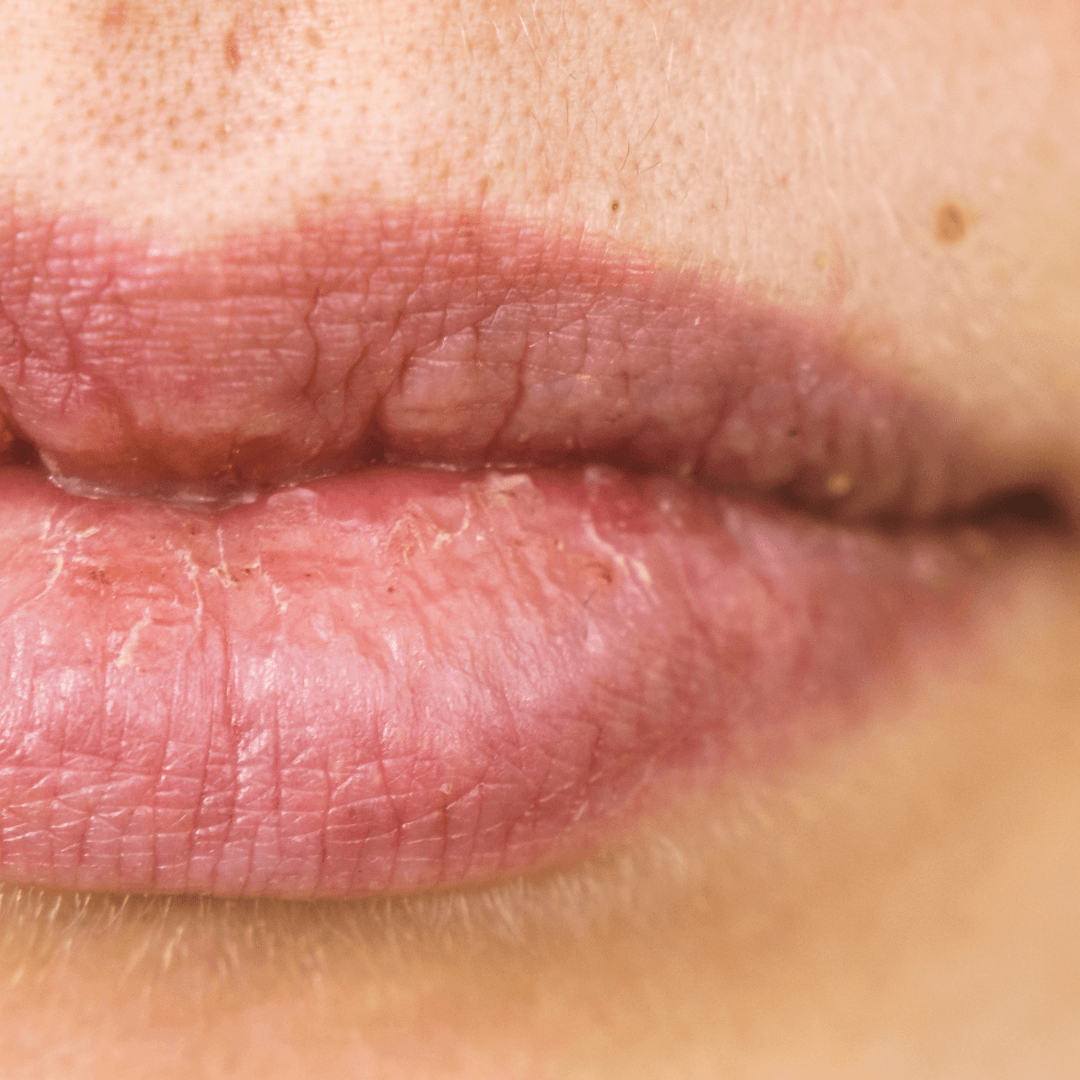
Our face can also giveaway some of our lifestyle habits. Vertical lines above the lips can indicate a long-term history of smoking.
Ears
The ears are another overlooked feature when examining for general health but can offer meaningful information. Simply checking what a person’s hearing is like can give us a window into how they interact with the world around them.
According to Ayurveda, excess hair growth on the ears can suggest potential cardiac issues. Modern evidence is less clear on this, though it might be linked to higher testosterone levels which in turn have been associated with increased cardiovascular risk. Again, it’s a matter of taking a wide-lens view, including the person’s lifestyle risk factors such as smoking, stress and a sedentary or over-stimulating pace of life.
Ayurveda also suggests that grooves on the earlobes are a sign of raised cholesterol. While modern science also agrees that this observation may be connected to cardiovascular disease, the exact mechanism is unknown and should not be taken as a definitive prediction of it.
Neck and chest
General inspection of the neck can give us an idea of how well the person is breathing. For example, if a person is struggling to breath, we might see a tracheal tug or the use of accessory muscles such as those in the neck or shoulders.
Swollen lymph glands in the neck, under the chin, behind the ears and above the collar bone (clavicle) can indicate a current infection or other underlying conditions. These may not always be visible so will need physically palpating and assessing by a clinician.
A sunken area above the clavicle is interpreted in Ayurveda as a sign of weak lungs and low energy (low Ojas). Modern medicine also recognises this as a sign of respiratory disease.
This is all in keeping with the modern medical understanding that certain respiratory conditions such as COPD are characterised by an altered chest shape due to prolonged breathing effort.
The Body as a Map
Practices such as Mukha Pariksha, reflexology and tongue diagnosis are amazing when we think about it. They show us that the body literally reflects itself in patterns and diagrams that we can observe and decipher.
While facial analysis should never replace medical diagnosis, it can be used to expand our awareness and guide further assessment.
We have touched on some key assessments here, but this subject is vast and goes beyond the scope of this article. It does, however, encourage us to ask a simple but important question: What is your body trying to communicate to you?