The Hidden Contradiction in Community Pharmacies and Why It Matters
Community pharmacies are one of the most frequently used areas of the UK healthcare system. For many, they’re the first point of contact for minor ailments and health advice. They’re easy to access, staffed by knowledgeable professionals and also offer preventative health services from blood pressure monitoring to smoking cessation, and contraception through to the ‘Pharmacy First’ scheme.
But today, I noticed a glaring misalignment at my local pharmacy. As I stood there paying for my toothpaste, I saw a huge refrigerator by the checkout full of soft drinks (see picture below).
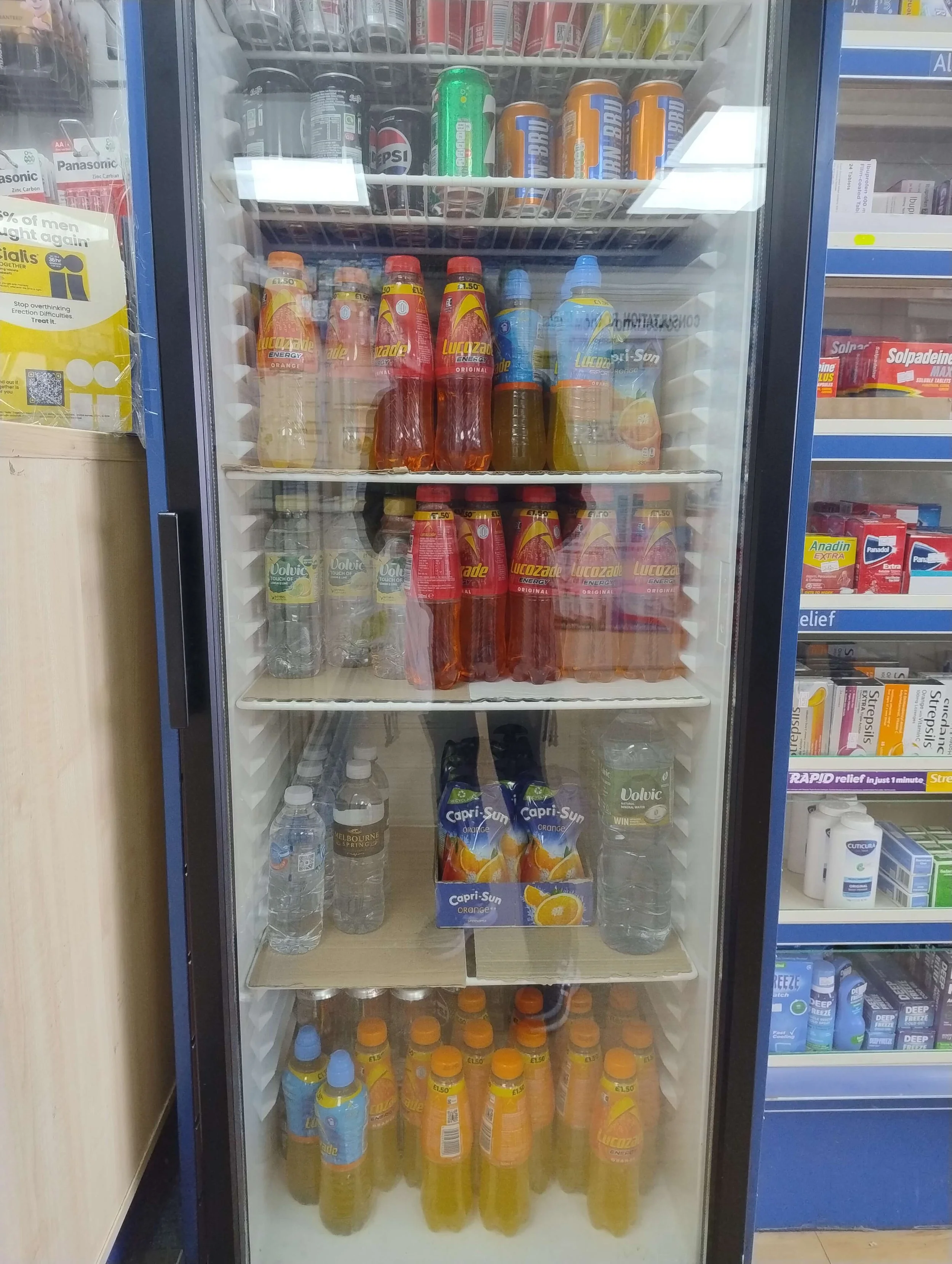
Some might see nothing wrong with the Lucozade being there because once upon a time it was used to help with hypoglycaemia and was often associated with an active and healthy lifestyle. But this is an outdated view. And if you look further up top, you’ll see two shelves packed with Irn-Bru, Fanta and other soft drinks.
Pharmacies as Retailers vs Healthcare Providers
Pharmacies are funny spaces. They are places that provide remedies yet also operate as retail businesses. This is something we’re not too familiar with in the UK where most of us use the nationalised and subsidised healthcare system.
Alongside prescription and over-the-counter medications, pharmacies are those places where we can find everything from nail cutters to perfumes and even knitting wool! Anything goes in the local pharmacy.
This dual role of half retailer and half health provider can create blurred lines. As a retailer, why wouldn’t they stock brightly coloured canned drinks strategically placed beside the checkout? Except they are the same people that educate us on our metformin prescription for diabetes.
Do Pharmacies Have a Public Health Responsibility?
Pharmacies play a key role in preventative healthcare. They are trusted places where people seek guidance and support. Because of this, anything sold and displayed here carries implicit messaging.
As a nurse, I’m all too aware of our duty of care to the public. The environments we create can shape our behaviours. When unhealthy products are prominently placed, it can normalise choices that contribute to poorer health outcomes.
This inconsistent messaging can also chip away at people’s trust in institutions that are set-up to support their health.
Of course, personal responsibility matters. People ultimately choose what they purchase. But knowing how environment impacts behaviour, healthcare settings should be especially mindful of the signals they send.
How Pharmacies Affect Health Inequalities
This issue becomes even more significant when viewed through the lens of health inequalities.
Pharmacies located in deprived areas tend to have higher usage of NHS services by their communities. This may be due to multiple factors including:
Difficulty getting a GP appointment
Challenges taking time off work
Poor access to transport for appointments
Greater levels of multi-morbidity (multiple long-term health conditions)
These are just some examples that patients have shared with me and research supports.
The Positive Pharmacy Care Law is an observation of the relationship between communities and pharmacy distribution. It shows that there is greater accessibility of pharmacies in the most deprived areas and this is key to supporting the people that need it most. At one point, research found that more people were living within 20 minutes of a community pharmacy than a GP Practice.
But, recent funding cuts have led to pharmacy closures and this will no doubt have repercussions for vulnerable people.
While the sentiment behind the Positive Pharmacy Care Law seems beneficial for many, are we scrutinising the retail aspect enough? If not, my worry is that the care we claim to give, is not genuine and does not look deeply enough at the layers that create poor health in the first place.
Let’s do the math – those living in deprived areas are more likely to have multiple chronic health conditions and rely on community pharmacies, but their conditions might be further compounded by the products promoted and sold in these establishments. This deepens the very health inequalities they are set up to address.
Think about this for a moment: communities with the greatest health needs are the ones more likely to receive mixed health messaging.
Awareness is key
This isn’t a new issue. As long as humans have been around and trading, health and commerce have been intertwined and pharmacies aren’t the only places where this tension exists.
But awareness is a useful starting point. It helps us stay curious and question our environments.
Rather than it being about blame, I want the takeaway here to be one that empowers people to reflect on how healthcare spaces are created and how this in turn can shape us and our choices. Being conscious of this helps us make more informed and intentional decisions about our health.
References:
Mallorie (2024) Illustrating the relationship between poverty and NHS services. The King’s Fund