The Seasons of Our Lives: An Ayurvedic Perspective
I read a quote the other day:
"The only thing an old man can tell a young man is that it goes fast, real fast, and if you're not careful it's too late. Of course, the young man will never understand" ~ Norm MacDonald
It made me reflect on how true this is. That we only fully appreciate a particular experience or stage once it's passed us by. And perhaps more importantly, that it's not really possible to teach someone a feeling or perspective. It has to be lived.
We can offer advice to our children or those younger than us as much as we want, but often people only truly understand a lesson after the fact.
It got me thinking about the Ayurvedic perspective on growth, ageing and the natural seasons of our lives. Although it often takes hindsight to show us lessons, Ayurvedic principles can be started at any stage and we'll still reap the benefits.
What are the Stages of Life in Ayurveda?
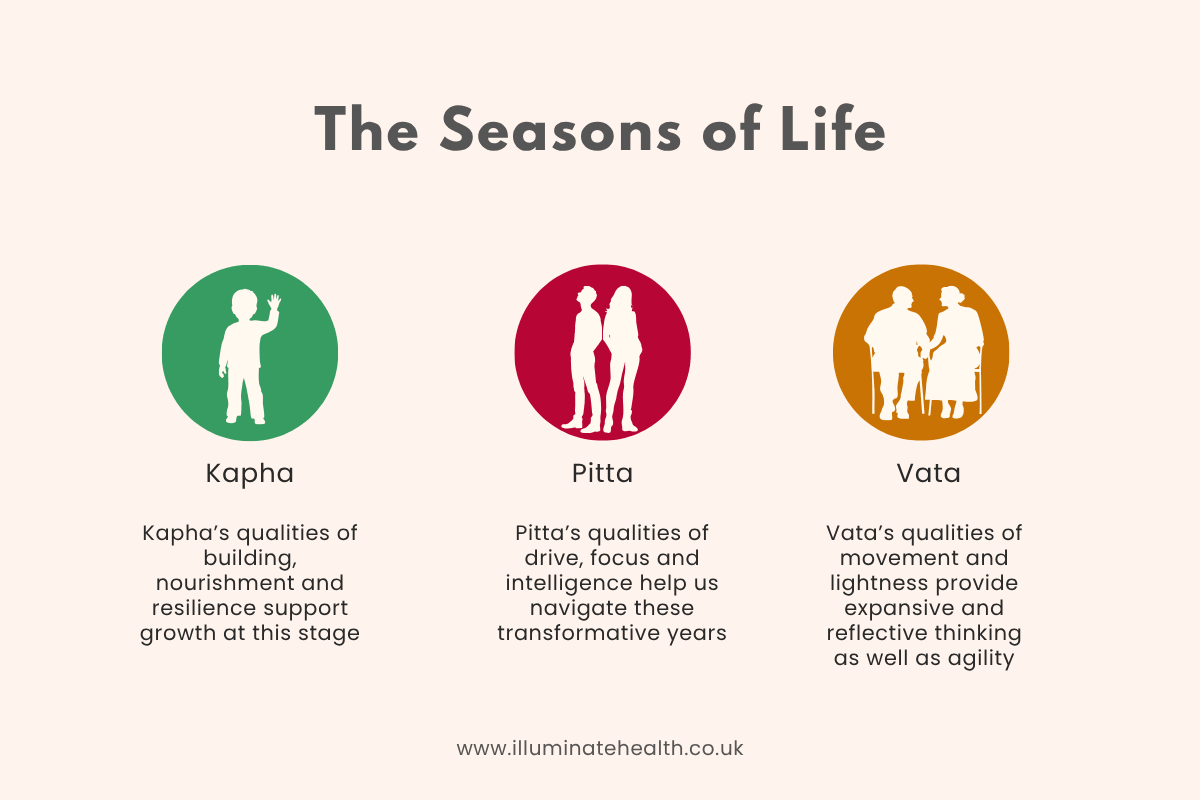
According to Ayurveda, the journey of life is divided into three stages, each overseen by one of the three Doshas:
Childhood (pre-puberty) – Kapha
Adulthood (reproductive years) – Pitta
Older age (post-menopausal and post-andropause) – Vata
Each phase brings physiological and emotional surges and declines that reflect the qualities of the dominant Dosha.
Let's take a closer look at each of these phases more closely.

Childhood (Kapha season)
Kapha Dosha gives the qualities of accumulation, growth, nourishment and endurance – all physical attributes of a growing, healthy child. Emotionally, Kapha carries the traits of caring, loyalty, attachment – qualities easy to see in children.
If we look at common ailments most likely to occur during these years, most parents will tell me it’s coughs and colds. And that makes sense from an Ayurvedic perspective because Kapha’s heavy and moist qualities lend themselves to congestive imbalances.
This is true from an anatomical perspective too. Anyone who has done the paediatric Basic Life Support training will know that the CPR procedure for infants and children is different to that of an adult and that’s because their respiratory tract is relatively large for their body, so they are more prone to respiratory congestion or even respiratory arrest than an adult.
That said, Kapha Dosha also provides our immunity. Healthy children may still experience frequent sniffles but will often bounce back quickly.
Encouraging children to stay active is one of the best Kapha-supportive strategies we can give them. This helps clear stagnation, generate heat and support the immune system.
Adult Years (Pitta season)
Pitta Dosha gifts us the ability to process, transform and convert into energy all incoming information. This makes it vital for all the transformative processes we go through during this phase including puberty, reproduction and the demands of modern life.
Emotionally and mentally, Pitta Dosha expresses ambition, focus and intelligence. These traits are key to helping us navigate all the significant shifts we experience over these years – studying, making a living, moving home, relationships, travel, raising children, personal achievements, burning the candle at both ends. They also help us build a sense of self (identity) and make sense of our life experiences.
It’s easy to see that when these traits go into overdrive, symptoms related to excess heat and inflammation become commonplace in the body. Stress is a common culprit as is over-working and living out of alignment with the circadian rhythm, but causes will vary. It’s during this time of our life that imbalances such as metabolic disorders (including diabetes, thyroid and other hormone dysfunction) and inflammatory conditions (such as hypertension, migraine) are most often diagnosed.
Being mindful of where we place our attention and energy is key to balancing Pitta problems. In today’s world, it is too easy to fall down information rabbit-holes and overstimulate our senses and generally feel overwhelmed. Bringing in cooling and calming practices can offset some of the pressure.
Older Adult Years (Vata season)
Vata Dosha is characterised by movement, lightness and dryness. As we enter later life, these qualities become more prominent, influencing both our physical and mental state.
This is yet another turning point for people bringing shifts in hormones levels, energy and overall vitality. But Vata qualities, in balance, are key to assist these fluctuations with poise and agility kept intact.
Mentally, Vata offers expansion, creativity, flexibility and a broader perspective. We might notice that we hold less tightly the things that made us so hot-headed or stubborn before. There’s a certain level of acceptance of what is and many people become more reflective with age.
These same qualities can make a person fragile too if supportive measures are not taken. Vata Dosha governs our nervous system and colon as well as other sites. This explains why we see imbalances such as constipation, memory issues, joint pain and dry skin more often.
Grounding practices are by far the most supportive strategies for flighty Vata Dosha during this phase. This can look like establishing daily routines into a person’s lifestyle, choosing warm and nourishing foods and incorporating massage to create stability and support overall wellbeing.
Personalisation Over Protocols
The seasons of life presented here are a beautiful way to capture the transitions we go through in our lives. However, we must remember that each person’s journey is individual and any number of other factors may affect their health at a given time (Prakriti, lifestyle, environment, social circumstances etc.).
What I like about this framework is that it shows us both the advantages and vulnerabilities that the Doshas bring in each phase. With this awareness, we can feel more confident in accepting and adapting our ways over time as ageing is presented as a privilege, rich with growth and understanding.