Make Friends with Fibre: Why Dietary Fibre is Essential for Your Health
When we think of fibre, most of us picture the thing that keeps us regular – a digestive helper often linked with cereal boxes and “roughage” (Shredded Wheat or Bran Flakes). But fibre goes way beyond gut health. It plays a key role in maintaining heart health, supporting our immune system, balancing blood sugar, and even protecting our kidneys!
Fibre might sound ordinary and boring, but it’s the queen of nutrients, multi-tasking across several body systems to keep you feeling your best.
What is Fibre?
Fibre is a type of carbohydrate that our body cannot digest and is found in plants. Unlike other carbohydrates that are digested in the small intestine, fibre reaches the colon complete and intact – this is where it shines as a super nutrient.
What are the different types of fibre?
You might remember learning about two main types of fibre at school:
Soluble fibre – Forms a gel-like substance once in the body. It slows down digestion, helps lower cholesterol, and keeps us full for longer.
Insoluble fibre – Acts like a net or mesh that doesn’t dissolve in water so can create bulk for stool. This helps move food smoothly along the gut.
But fibres are more complex than just these two categories. Other types, such as resistant starch, fermentable fibre and non-fermentable fibres, also play unique roles in gut function and microbiome balance. They influence how quickly food travels through our digestive system and support the makeup of our gut bacteria.
Health Benefits of Fibre
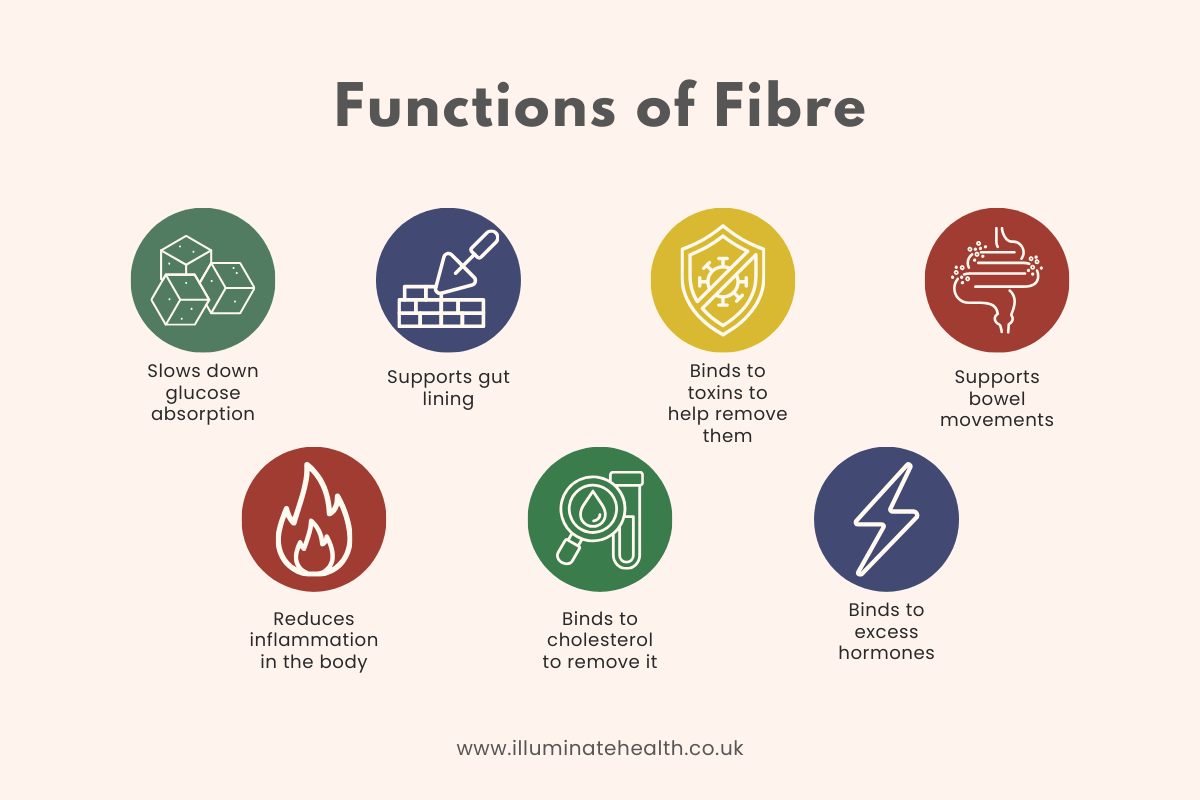
The health benefits of fibre are huge ad often underestimated. Here are just some of the activities that fibre does in our body:
Slows down glucose absorption, preventing sharp blood sugar spikes and supporting your energy levels
Keeps you fuller for longer
Binds to cholesterol so lowers it
Binds to excess hormones to remove them through bowel elimination
Helps to excrete toxins and waste from your body
Fermented fibre produces short-chain fatty acids (SCFAs) – a powerful metabolite (by-product) with a range of benefits
The Power of Short-Chain Fatty Acids
Short-chain fatty acids (SCFAs), produced when gut bacteria ferment fibre, have strong anti-inflammatory effects across the body. Research shows that SCFAs:
Fuel colonocytes (cells responsible for maintaining our gut lining) so reduce the risk of leaky gut
Reduce inflammation in blood vessels (1)
Improve blood glucose levels by enhancing glucose uptake by the liver and muscles through increased enzyme activity (2)
Stimulate satiety (fullness signal) hormones to regulate appetite (2)
Protect the blood vessels of the kidneys from damage (3)
Support the kidney’s natural filtration and waste removal by enhancing the activity of the “pump” protein, OAT1 (4)
These anti-inflammatory effects cascade through the body. For example, healthy vessels, means healthy circulation and improved blood pressure.
How Much Fibre Do You Need Daily?
Despite its importance, most of us aren’t getting enough fibre. I often hear patients tell me that they go days without eating any fruit or vegetables. According to the UK National Diet & Nutrition Survey 2019-2023 (5), a whopping 96% of adults are not meeting the recommended daily intake of 30 grams.
Top food sources of fibre:
Fibre-rich foods are easy to include in your daily meals. Try incorporating some of these options:
Beans and pulses – lentils, baked beans, chickpeas, black beans
Nuts and seeds – almonds, flaxseeds, sesame
Fresh and dried fruit – berries, pears, dates, figs
Vegetables – especially leafy greens and root vegetables
Whole grains – wholegrain breads, pasta, brown rice, quinoa, millet, oats

Start slow
Many of use can do with increasing our fibre intake. But, before you go and splurge on all the fibre-rich foods and supplements out there, keep in mind that an excess of anything can cause problems.
Suddenly adding lots of fibre to our meals (especially without enough water) can sometimes lead to a disturbed digestion with symptoms like bloating or even constipation. Resist the urge to follow trends like the latest ‘Fibre-maxxing’ one and start slowly, introducing a little at a time.
References:
5. Office for Health Improvements & Disparities (2025) National Diet & Nutrition Survey 2019-2023