Ayurveda for Exam Stress: Sleep, Diet and Mind-Body Balance
Exam season is here and while things may appear very structured with set dates, timings and rules, it can bring disruption to routines. Meal times may be different, lesson times changed, sleep schedule off, not seeing your friends as often sometimes – all change! Exams and revision aside, this in itself can feel de-stabilising and set off a cascade of imbalances without proper recognition and support.
Rather than the standard advice to “stress less”, Ayurveda offers a practical, whole-body approach that supports mental clarity and physical resilience.
The Ayurvedic Perspective on Stress
According to Ayurveda, stress is understood as an imbalance in the three Doshas. The Doshas are bio-psychological energies that regulate both mental and physical processes.
Vata dosha is our catabolic energy, responsible for all movement, the nervous system, and breakdown of molecules and thoughts
Pitta dosha is our metabolic energy, key in all transformational processes (think enzymes, hormones and intellect).
Kapha dosha is our anabolic energy, providing support through structure, lubrication and immunity.
Any imbalances in these doshas through stress can show up as disruptive physical symptoms, emotional disturbances or unhelpful thought patterns.
But the Doshas also oversee processes that occur across nature whether that’s the seasons, the weather or our surrounding circumstances. This is important to understand because Ayurveda recognises that our inner world mirrors our outer environment. So, any excess or lack of certain qualities externally can tip the scales and lead to disruption internally.
For example, prolonged mental pressure, hyper-focusing or perfectionism may aggravate Pitta dosha. On the other hand, frequent travel, irregular routines or skipping meals can exacerbate the mobile features of Vata dosha.
I often give students an analogy of a tree – although trees are rooted strongly in the ground, their leaves and branches are susceptible to being blown about by the wind. Just as Vata causes havoc when out of control with curveballs. So, our lifestyle and behaviours can heavily influence how stress shows up for us.

How Exam Stress Impacts Each Dosha
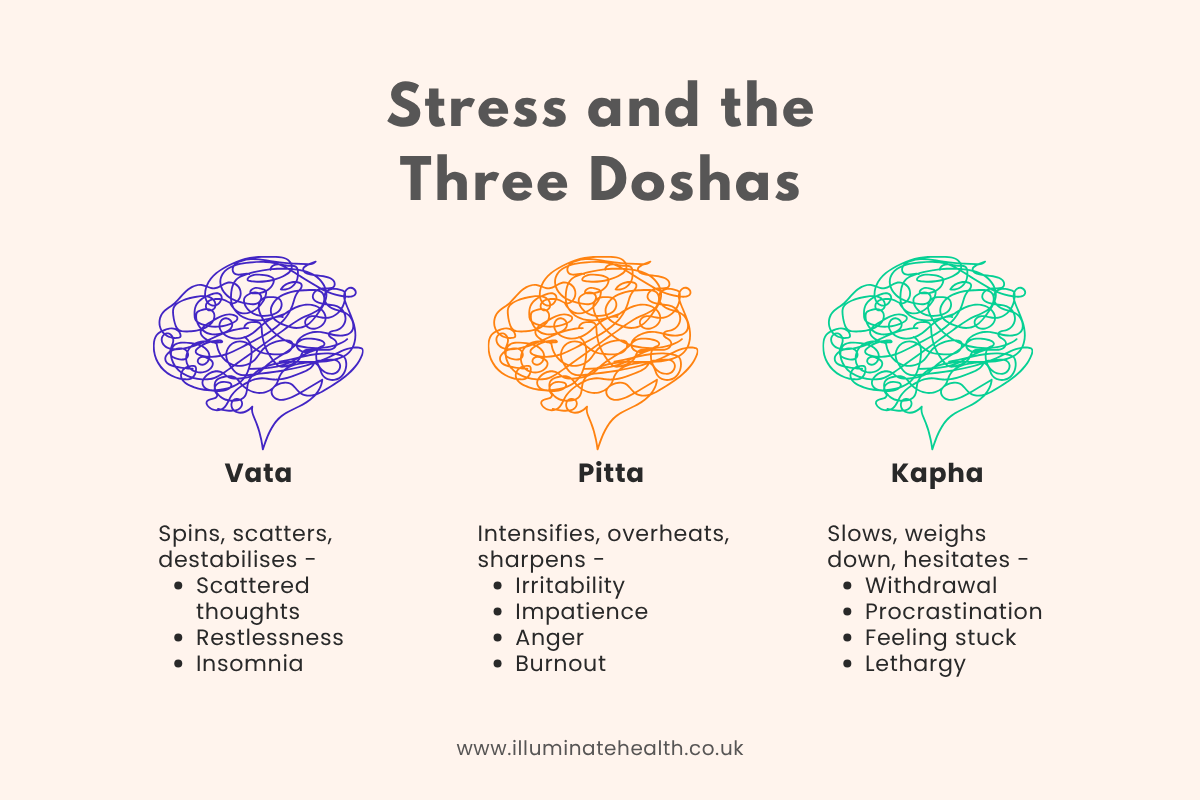
Symptoms of stress can show up differently depending on the dominant imbalance:
Vata dosha – Flighty, fear, anxiety, distraction, lack of focus, dryness, constipation, insomnia or difficulty falling asleep, racing thoughts, restlessness
Pitta dosha – Irritability, frustration, anger, sensitive gut, loose stool, inflammation, skin allergies or hives, fatigue, burnout, disturbed sleep due to over-heating, headaches, muscle tension
Kapha dosha – Low motivation, low mood, procrastination, brain fog, lethargy, loss of interest in hobbies, a feeling of “stuckness” or stubbornness
It’s important not to label people strictly as one “type”. Most people have a unique combination (Prakriti) with certain tendencies towards particular vulnerabilities and strengths when under stress.
Supportive Strategies for Students
During exam season, changes to our usual daily structure as well as academic pressure and feeling uncertain about the future, can all create a lot of instability for students.
The key is to create stability while supporting energy and focus, Small consistent changes can have a powerful impact.
Prioritise Consistent Sleep
I put this as number one because sleep is the ultimate medicine. It’s a time for repair and supports every system from our immunity to our gut and even skin health. It’s also important for memory consolidation.
However, in today’s “always on” world, there are many competing factors that keep us from naturally winding down with the day.
What’s matters most is not just the number of hours we clock in, but how regular our sleep and wake time are. Research shows irregular sleep/wake patterns can negatively impact our memory (1), mood and emotions (2), gut health (3), and academic performance (4). Variations in sleep/wake time creates a jetlag effect.
If you’re currently studying for exams or caring for someone who is, try to set a regular time for sleeping and waking to feel your best.
Another point to make is that we tend to over-focus on bedtime routines or sleep hygiene. But it’s not just how cosy we make our bedroom that helps us drift off. The Ayurvedic appreciation for opposites helps us see how rest and recovery can only come after a period of expansion and activity. Daytime activity and spending time outdoors each day helps us feel ready for bed when night falls. Modern science echoes this as we know that exposure to morning daylight starts the melatonin countdown which supports a good night’s sleep.

Eat to Support Balance and Focus
Probably one the lowest hanging fruits we have to make noticeable shifts to our mental and physical health is the food we choose to eat. When chosen intentionally, food can be medicine. Unfortunately, sometimes uninformed and rushed decisions can do more harm than good.
Instead of focusing on “superfoods” and “brain foods”, Ayurveda takes a unique approach to food. Rather than looking at individual nutrients and their effects, foods are understood in terms of their qualities and how these impact our mind and bodily tissues.
Cold, airy, crunchy and dry foods (crisps, raw snacks or skipping meals) can aggravate Vata dosha within us, leading to anxiety, restlessness and poor focus.
Very spicy, sour and salty tastes can stoke the fire of Pitta dosha.
Carb-heavy, overly-sweet, processed and dairy foods in excess can cause Kapha dosha to accumulate.
We begin to see that balance is key when it comes to healthy meals. Too much beige on the plate and we might start to feel sluggish, but equally, too much spice, and we may feel irritation and inflammation.
Supporting digestion is the aim so that we can get the most out of our meals to sustain and support us during stressful times. Meals that are warm and cooked are grounding and easier to digest. Many clients tell me that when they switch to eating warm meals, they feel better satiated and calmer in themselves.
Work with the Body to Calm the Mind
Ayurveda understood years ago something we’re only recently getting to grips with in modern research – that the mind follows the body.
The mind-body connection is a key foundation of Ayurveda and our five senses are the gateway to our experience. This is great news because it means that we can bring about meaningful shifts in our nervous system and stress levels through physical practices. Here are just a few:
Massage
Touch has a profound grounding effect on our nervous system and also keeps us in-the-moment so that we don’t run away with our thoughts. You don’t need to visit a salon to have a massage. A simple self-massage of the feet, hands or head can settle frayed nerves and promote deeper sleep.
Breathing exercises
The breath carries Prana (our life force) to nourish all our cells. But how many of us today are breathing fully? I include myself when I say that many people tend to breathe shallowly or unknowingly, even hold their breath for periods of time. Breathing exercises not only allow us to breath fully by encouraging us to take deeper inhales and exhales, but some will stimulate the parasympathetic nervous system to support relaxation. Alternate-nostril breathing is one such type of breathing practice which promotes balance. Give it a go – just 7 rounds in the morning and on an empty stomach.
Movement
Movement is a great way to clear any stagnation, both physical and mental, especially if you’re feeling stuck while studying. There are two angles to this – first that movement and active play helps us become more focused when we later sit down to do quieter, academic tasks (5), and second, that physical activity after a period of learning helps improve memory retention (6).
From an Ayurvedic perspective, simple neck and eye exercises done regularly also offer support by improving circulation and easing tension to a region that can feel much more tense at this time.
Time outdoors
It’s easy to get in a rut and spend the whole day indoors when studying, but Ayurveda recognises the importance of appropriate sun exposure (surya seva) and fresh air (maruti seva) for our energy levels and general wellbeing on a daily basis.
Aromatherapy
Our sense of smell is tightly related to the limbic system – the brain’s emotional centre. This is why certain smells will evoke memories and trigger emotional responses. During stressful times like exam season, aromatherapy can be a useful tool to help us relax. But some studies also suggest that smell can be used to help us recall information for exams. It’s called “odour cueing” where the same fragrance is present during the learning stage, sleep and during the exam session (7).
Some useful essential oils that promote focus and clarity include: peppermint, vetiver and rosemary.
Eye care
Relieve tired eyes from all the screens and reading by applying a rose water compress over the eyelids in the evening just before going to sleep. The eyes are related to Pitta dosha and overuse can provoke inflammatory imbalances.
Create a Stable Daily Routine
The body thrives on rhythm. During stressful periods, routine becomes even more important. Focus on:
Regular meal timings
Consistent sleep and wake times
A predictable daily structure
Avoid skipping meals
These might sound like inconsequential shifts but if we think about how closely linked we are with the circadian rhythm, and how easily our rhythm gets thrown off when we travel abroad, we can appreciate its importance.
I notice a lot of students, young and old, who experience gut disturbances during exam season. Constipation is common but so is loose stool. Maintaining some regularity with our sleep and meal times is one way of supporting our body’s own rhythm.
Be Mindful of Temperature
Temperature plays a subtle but important role in balance.
Both Vata and Kapha dosha are aggravated by the cold. Support these imbalances by incorporating warm water, warm meals, warm environments, warm oils – none of those iced coffees and cold salads.
Pitta dosha, however, gets triggered by excess heat in the environment. This doesn’t mean to avoid warm meals (warm meals are a cornerstone of Ayurvedic nutrition for everyone), but to reduce consumption of overly spicy, sour, salty and deep fried foods. For drinks, rather than picking iced drinks, choose naturally cooling options such as coconut water or peppermint tea. And consider the climate. If it’s Summer time, reap the benefits of the early morning and evening soft sun rays, but try to keep out of the midday sun when Pitta dosha can intensify and cause irritation.

Reduce overstimulation
Today’s study habits can often feel over-stimulating – multiple tabs, late night screens, and even high caffeine intake (don’t get me started on those energy drinks). All this can reduce focus, disrupt sleep and even increase jitteriness and anxiety.
If possible, try a create a “quiet time” in your day – a time not dedicated to study, attending events or doing anything else. Studies show that taking short breaks (“wakeful rest”) actually enhances our memory for new information because that’s the time when our brain replays it (8).
Also, be mindful of the company you keep – sometimes it’s not all the tech or coffee that’s over-stimulating, but the people we hang out with.

Gentle Herbal Support
The plant kingdom offers plenty of herbal aids that can support the nervous system during stressful times. However, any suggestions should be made on an individual basis with a practitioner so that they are safe and appropriate for the person’s constitution and need.
Herbs like Brahmi, Tulsi and even Dashamoola have wonderful effects and are quite easy to source. But, starting in our kitchen cabinet is even easier:
Cardamom – Both a carminative and anxiolytic, meaning that it relieves gas and also promotes calm
Nutmeg – Relaxing effect
Saffron – Supports mood via dopamine and protects the nervous system
Turmeric – Anti-inflammatory and neuroprotective
A key tenet of Ayurveda is that all imbalance begins in the gut so it makes sense that we start there. It’s easy to incorporate, accessible and probably a more acceptable place to start with children and teens who might feel dubious about taking herbs.
The Role of Parents and Caregivers
A child’s environment plays a significant role in how they experience stress. Children often pick up on the emotional tone around them, even without direct communication.
Research shows that parental education anxiety can influence a child’s stress levels (9). In some cases, parental anxiety about exams is greater than the child’s (10).
Caregivers might find it helpful to reflect on:
Their own stress and expectations
The home environment they are creating
The behaviours they are modelling, especially in stressful times. For example, do they burn the candle at both ends or do they tend to skip meals?
Small shifts in the atmosphere can make a meaningful difference.
Final Thoughts
Exam stress is not just about academic pressure. It’s about how changes in our routine, environment, and expectations impact the whole person.
Ayurveda reminds us that balance doesn’t come from extreme measures, but from consistent, supportive habits. By focusing on the foundations of sleep, nourishment, movement, and rhythm, students can build capacity and approach exams with more calm and clarity.
Meeting Basic Needs First
As I write this blog post, I am also aware there are some who cannot provide the ideal environment for their children for various reasons.
A couple of weeks ago I met with health professionals to discuss recent research and innovation in the Inclusion Health field. One of the latest reports we shared, Housed but not homed, by The Childhood Trust, shows the impact of “furniture poverty” on the wellbeing of children and families.
Then last week, by chance, I stumbled across an amazing community interest company who donate these essential items to families so that their children can get good sleep. Forget the night light, pillow spray and bubble bath – when a child doesn’t have a bed, the foundations of good sleep just aren’t there.
You can find out more about For Every Child I Wish, their A Good Night’s Sleep campaign, and donate here.
References:
10. Aviva (2025) More parents feel exam stress than their children.