Dinacharya: Ayurveda’s Prescription for Circadian Health
Have you ever wondered why you feel more energetic at certain times of the day?
In 1959, Franz Halberg coined the term circadian rhythm to describe the natural 24-hour guiding biological functions in all living organisms. In 2017, Jeffrey Hall, Michael Rosbash and Michael Young received the Nobel Prize in Physiology or Medicine for uncovering the genetic and molecular mechanisms behind these internal clocks.
Each of our cells contain its own timer overseen by complex interactions between genes, proteins and regulatory signals. These rhythms affect vital processes such as sleep, hormone release, and metabolism.
What is the Circadian Rhythm?
The circadian rhythm is an internal cycle that repeats itself every 24 hours. It regulates many biological functions including the sleep-wake cycle, body temperature, and hormonal activity. When we live in sync with this rhythm, our bodies function more efficiently – leading to better sleep, mood and health.
Ayurveda and the Rhythms of the Day
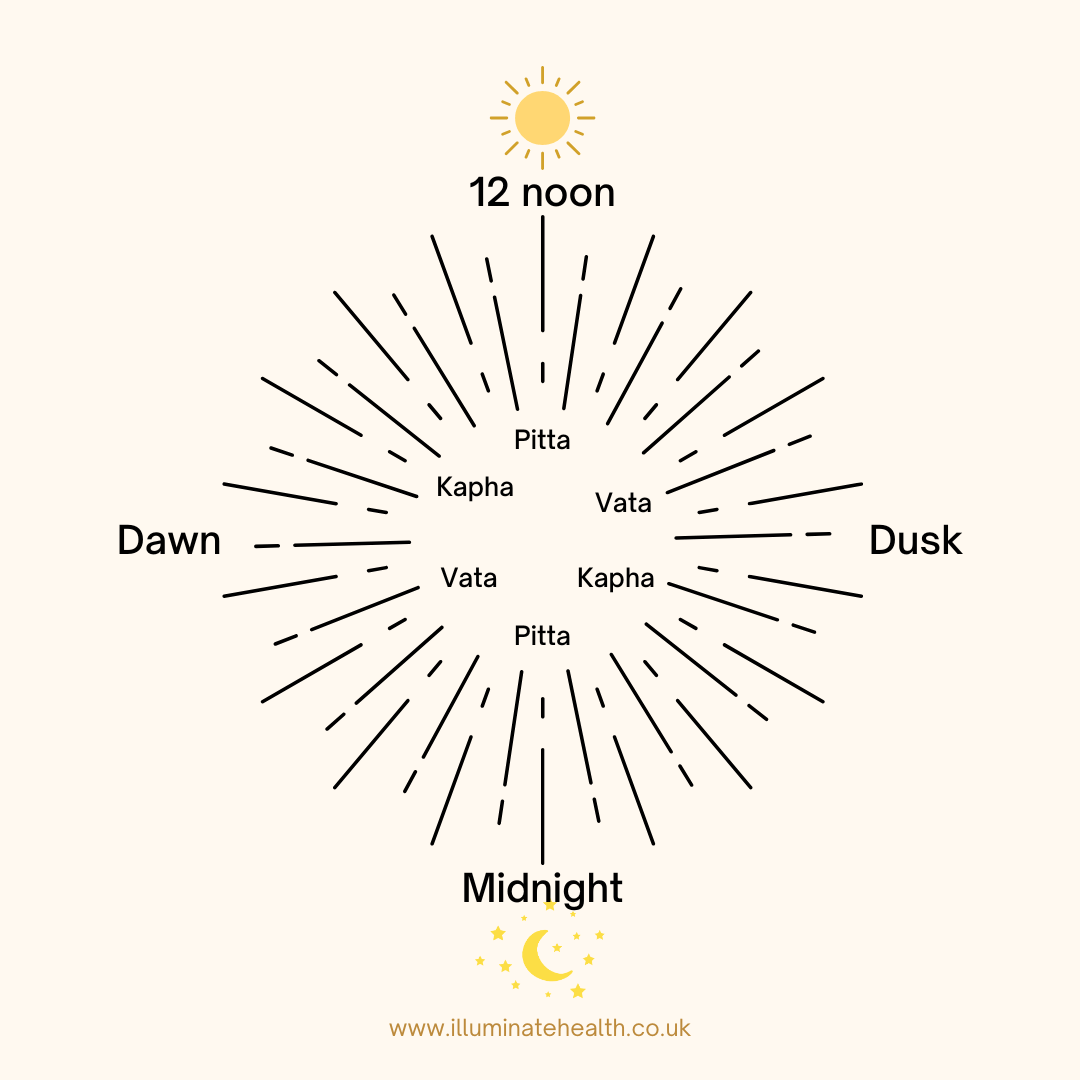
Centuries before modern biology described circadian rhythms, Ayurveda explained similar principles. The concept of Dinacharya means “daily rituals” and appreciates that different parts of the day carry distinct energies, making certain activities more beneficial at certain times.
Let’s explore the Ayurvedic clock and how it relates to modern circadian science.
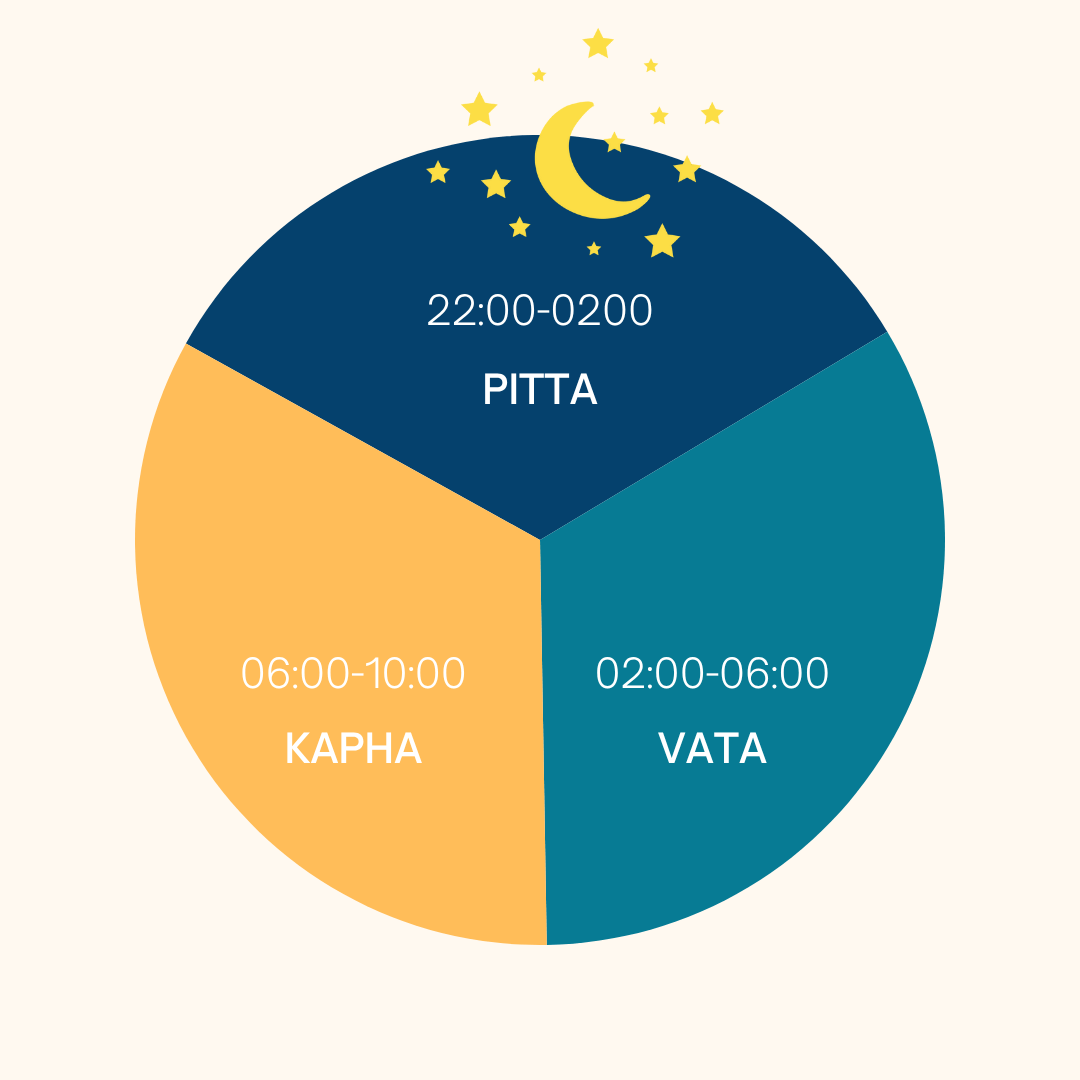
02:00-06:00 – Vata Time: Wake and Move
The early morning time belongs to Vata dosha, representing movement, alertness and transition. It’s the ideal time for waking up, meditating, gentle yoga and elimination. We will notice that it’s also the time when we tend to have dreams as the influence of Vata makes our mind more active.
Modern science supports this: cortisol levels naturally rise at dawn, promoting wakefulness and and energy so that we’re ready to go.
06:00-10:00 – Kapha Time: Build Energy
The morning time is influenced by Kapha dosha dominates which brings heaviness and stability. This is why we tend to feel more sluggish if we wake up during this period. Rising earlier helps avoid that lethargic feeling. Eat a light breakfast if hungry as digestion is slower during this time. Make the most of the strength and endurance that Kapha gives us by doing any workouts at this time.
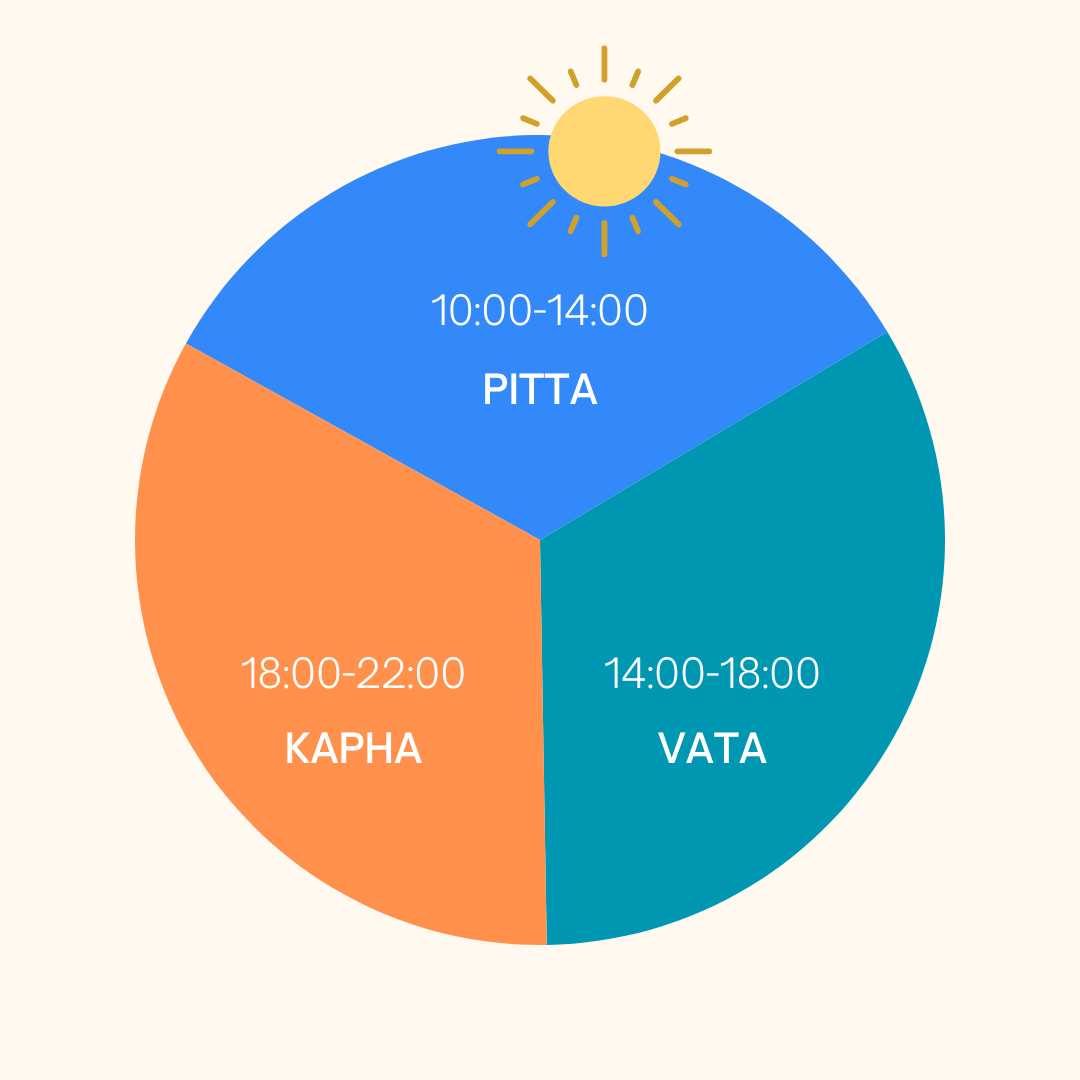
10:00-14:00 – Pitta Time: Work and Digest
The fiery Pitta dosha dominates midday, boosting metabolism and focus. This is the most productive part of the day for work and decision-making. Our digestive power is at it's strongest so it's the ideal time for our biggest meal of the day. Avoid strenuous activities at this time - no vigorous exercise or staying out in the midday sun too long as Pitta’s heat can lead to depletion.
14:00-18:00 – Vata Time: Create and Reflect
Late afternoon returns to Vata spacey and expansive energy, stimulating creativity and imagination. It’s a perfect time for brainstorming, writing and other creative activities. Vata can get easily restless though so aim to stay grounded – create a calm indoor environment, take a walk, stretch or spend time outdoors.
18:00-22:00 – Kapha Time: Rest and Restore
Kapha in the evening is all about winding down. The body produces less insulin during this window, so choose a light dinner to support digestion and sleep quality. Limit screen time, loud noises and heavy exercise - we don't want to suppress melatonin and delay rest.
22:00-02:00 – Pitta Time: Detox and Renew
During sleep, Pitta governs internal transformation. This when the brain consolidates all the information it has taken in during the day, processes emotions, and detoxifies through the glymphatic system, which clears waste via cerebrospinal fluid. It’s also a key time for the regeneration of the liver and skin. Sleep during these hours supports memory, emotional balance, and cellular repair.
Living in Alignment with Nature
Creating a daily routine aligned with natural cycles helps balance digestion, immunity and mental well-being. By following Ayurveda’s Dinacharya and respecting our body’s circadian rhythm, as much as is realistically possible, we restore harmony between internal and external environments – the foundation of lasting health.