Ease into Early Spring with Ayurveda: The Great Thaw
Published 1st March 2026
I don't know anyone who doesn't love the Spring time. At least the idea of it anyway. And that's because even though we enjoy the sense of new beginnings, brighter days and fresh possibilities, the seasonal shift can feel surprisingly unsettled. Leaving behind the slumber of Winter, can stir up troublesome symptoms for many at this time of year.
Ayurveda has a beautiful explanation for this and here I’ll share with you some of the ways we can move through early Spring with a little more balance and ease.
Turbulent Times: Navigating Seasonal Transitions
Junctions, bridges and joints all share one thing in common – they are naturally vulnerable spots because of their higher level of instability.
Think of the joints in your body – while they give the joy of movement, they are fragile and susceptible to injury from over-stretching, twisting, bending etc. Similarly, a bridge constructed between two solid grounds is a vulnerable spot, no matter the material it's made from. It's very nature means that there is a risk of being exposed to the area it's allowing you to cross over.
The periods between seasons are the same. They are junctures between a spell of time that has its own distinctive nature and feel. It’s in these “in-between” times when the Doshas are more fluid and susceptible to imbalance – our internal stability is tested.
Early Spring is characterised as a point of transition as our body moves from a state self-preservation (hardiness of Winter) to releasing (softness of Spring). Throughout Winter, Kapha dosha has been busy building, protecting, lubricating and stabilising the body and mind to weather against the harshness of the season. This protection and fortitude was created by heaviness and dampness (earth and water elements), keeping us sturdy.
Come Spring time, an internal “thaw” begins, moving these qualities to other parts of the body. But without proper release, this can create symptoms that can become systemic and problematic.
Our inner landscape mirrors what’s going on outdoors with unsettled weather. My fellow Brits will get me when I share that just days ago I was wearing thermal leggings under my trousers while today, I built up a sweat as I walked back from the shops because we hit double figures in temperature

The Body Thaws: Physical Signs of Kapha Imbalance
Just as Spring melts away the snow and ice, the warmth liquifies accumulated Kapha within us – we’re thawing out. This period can either be energising or can end up triggering annoying symptoms, bringing us a unique set of challenges.
When Kapha liquifies but has no outlet or direction, it can relocate via our circulatory system and other channels and find a home elsewhere, causing issues.
Common signs of excess Kapha in early Spring include:
Liver stagnation
Sluggish digestion
Raised cholesterol
Sinus congestion, hay fever
Muscle stiffness
Itchy eyes
Water retention and lymphatic congestion
These are classic Kapha-season imbalances and a key focus of Ayurvedic early Spring routines.
Primed to Procrastinate: Mental and Emotional Effects
Spring might bring light, but if Kapha dominates, our minds can feel resistant. I've definitely noticed that people tend to feel more sluggish, lethargic and even a little down as we come out of the depths of Winter and the fog lifts. We don't all come bouncing out into Spring. And this is because the increased Kapha Dosha can cause a sense of stagnation in the mind too.
This can appear as stubbornness, procrastination, complacency and a general difficulty in getting ourselves going even when we know exactly what we need to do.
Recognising this helps us respond with understanding and a plan forwards rather than frustration and self-criticism.
Ayurvedic Practices to Ease into Spring
To help us gently unfurl and unravel from the grip of Wintery Kapha, we want to create the conditions that balance out its qualities – see the chart below. We can dissipate the cold “stuckness” through activities that generate warmth, clarity and flow.
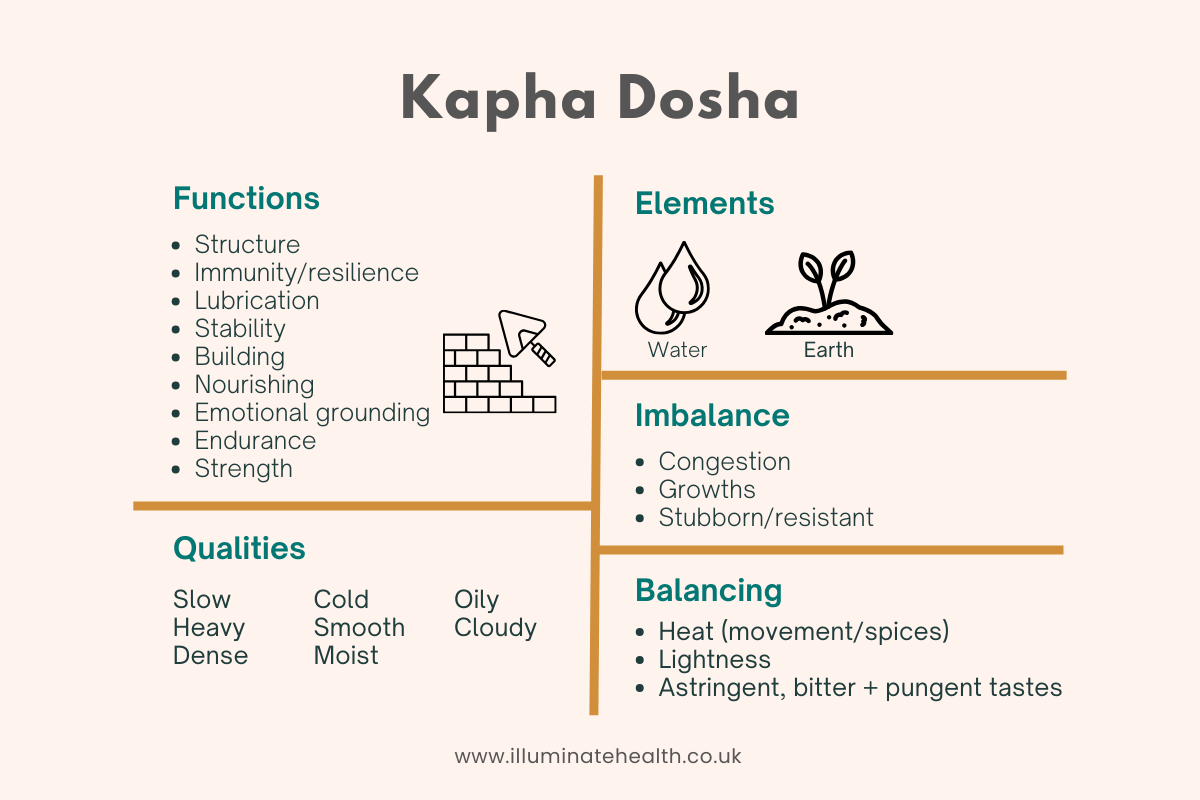
Here are some practices we can weave into our days to support the mind and body through this transition.
1. Stay mobile
Daily movement, the kind that helps us work up a bit of sweat, helps us stay supple, prevent joint stiffness, support our lymphatic system, and clear mental stagnation. The warmth this builds combats the cool, heavy nature of Kapha.
A brisk walk or a few rounds of Surya namaskar (sun salutations) are great for circulation and to loosen stiffness as are joint mobility exercises and rotations.
If we can do this outdoors, even better! Sunshine has a lightening effect on the mind and body and is a natural remedy for excess Kapha. It also helps us stay anchored with the circadian rhythm to support our energy levels and sleep.
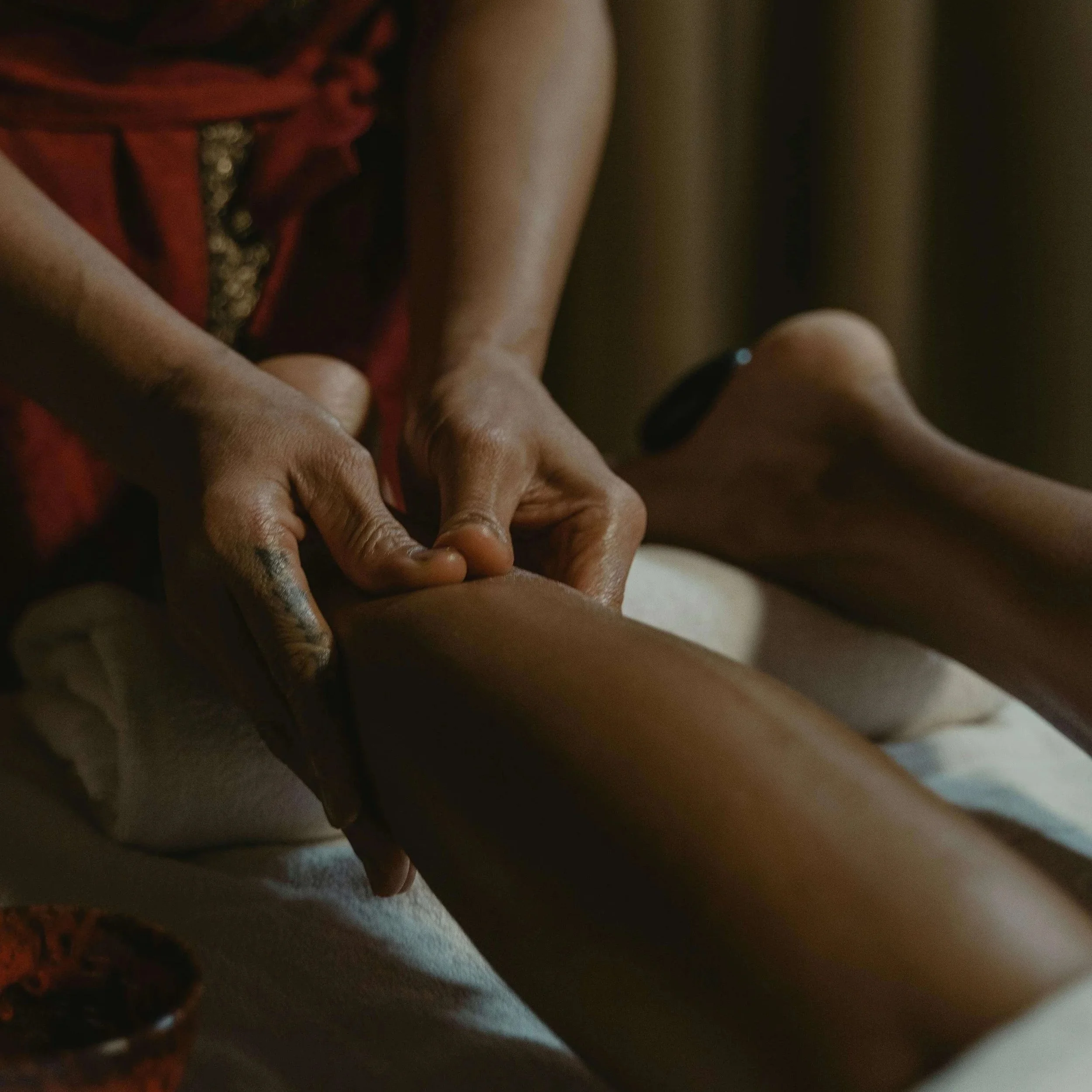
Movement can also come in the form of massage. Both oil massage and dry exfoliating techniques help to stimulate the mind and body while clearing stagnation from our muscles and lymphatic channels.
2. Support the liver
The liver is one of our key detoxification organs and works hard at this time of year. But, it can become easily burdened by processing physical and mental “build-up”.
Prioritise consistent sleep – Sleep acts like a hug for our liver (Pitta transformation overnight). And regularity is important here – same time to bed and same time for rising will support not only our liver but our brain and hormonal health too.
Keep meals lighter – Heavy meals and a sedentary lifestyle leads to a liver that is unable to function properly and we see the consequences in our circulatory system – creating more heat and congestion in the body.
Consider a gentle cleanse to clear Winter accumulation and refresh digestion – This junction between the seasons is an ideal time to do a cleanse or detox because the imbalanced doshas are temporarily mobile and can be cleared out easier at this time.
3. Wake with the day
The hours between 6:00am and 10:00am are Kapha time so if we wait until then to get out of bed, we might find we feel sluggish (like increases like principle).
Choosing to wake earlier, during Vata hours, helps us get the most out of the energy, lightness, clarity and momentum that this Dosha gifts us for the day ahead.
4. Explore fasting
Look around the world and you’ll notice many traditions encourage lightening (Langhana) rituals around early Spring time or Spring Equinox. Lent, Ramadhan (depending on where in the lunar calendar it falls), Mahashivratri, the Baha’i 19-day fast and others.
Religious stories aside, these practices were developed by our ancestors who lived closer to nature, had no choice but to eat seasonally, and had intuitive insights into what the body needed. Fasting helps naturally cleanse the body of the accumulation of heavy foods consumed over Winter, supports cellular repair and recycling (autophagy), and resets the digestive fire (Agni).
Fasting isn’t for everyone though and certainly not safe for some. But, this does tell us a lot about our change in metabolism and energy requirements shifting with the seasons. If it is something you’d like to try, it doesn’t have to be extreme but can simply be reducing snacking, eating an earlier lighter dinner or setting aside a day for simpler meals.
We can also think of other ways we tend to shed excess in Spring such as decluttering our homes, reflecting the inner clearing.
5. Choose clarifying foods
As the weather warms and our bodies sense a change in the atmosphere, we naturally crave lighter foods. In fact, we might find that heavier foods we enjoyed in Winter now feel harder or slower to digest than before.
Tastes like bitter, astringent and pungent help to balance mucous accumulation, balance skin moisture levels (sebum), and open up our natural detox pathways. Think warm, spiced broths with seasonal greens and herbal teas with warming spices like ginger, black pepper and cinnamon.
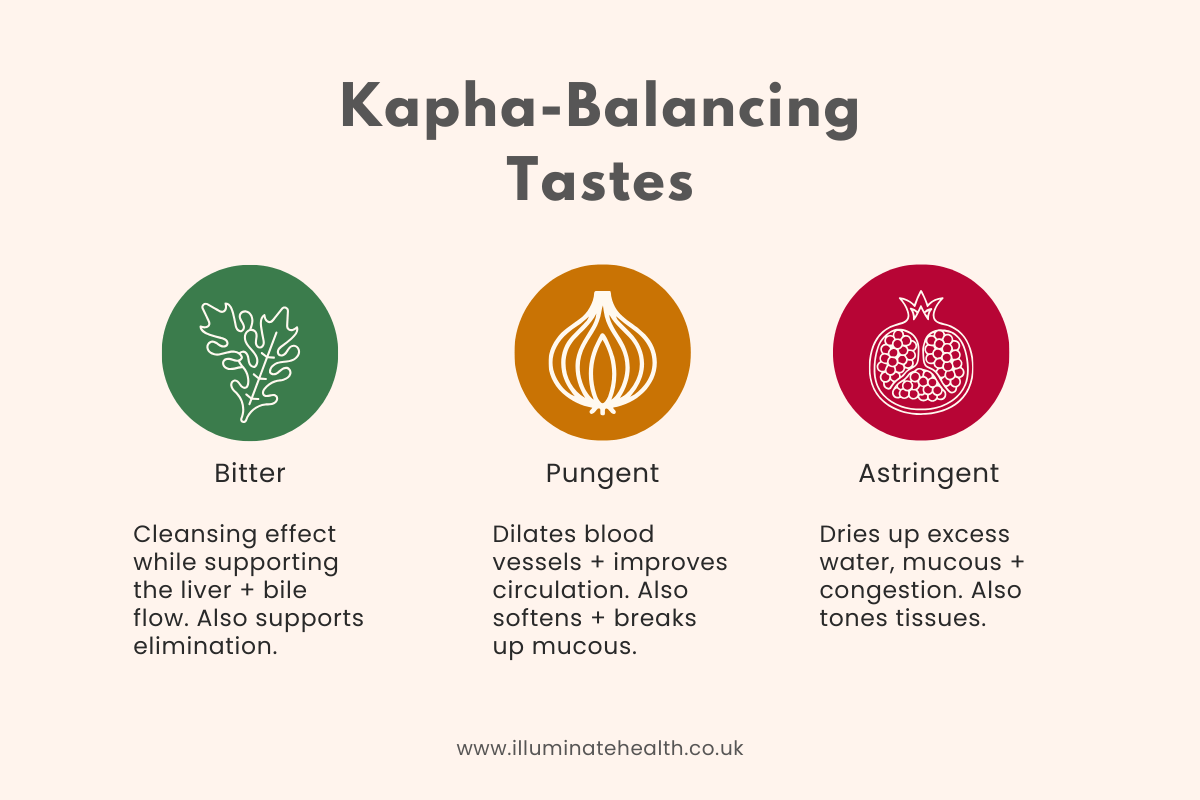
While Ayurveda recommends we incorporate all six tastes into our meals, it is best to reduce our intake of foods that are sweet and salty. Both of these can exacerbate any mucous-type symptoms, inflammation or water retention as they increase Kapha qualities.
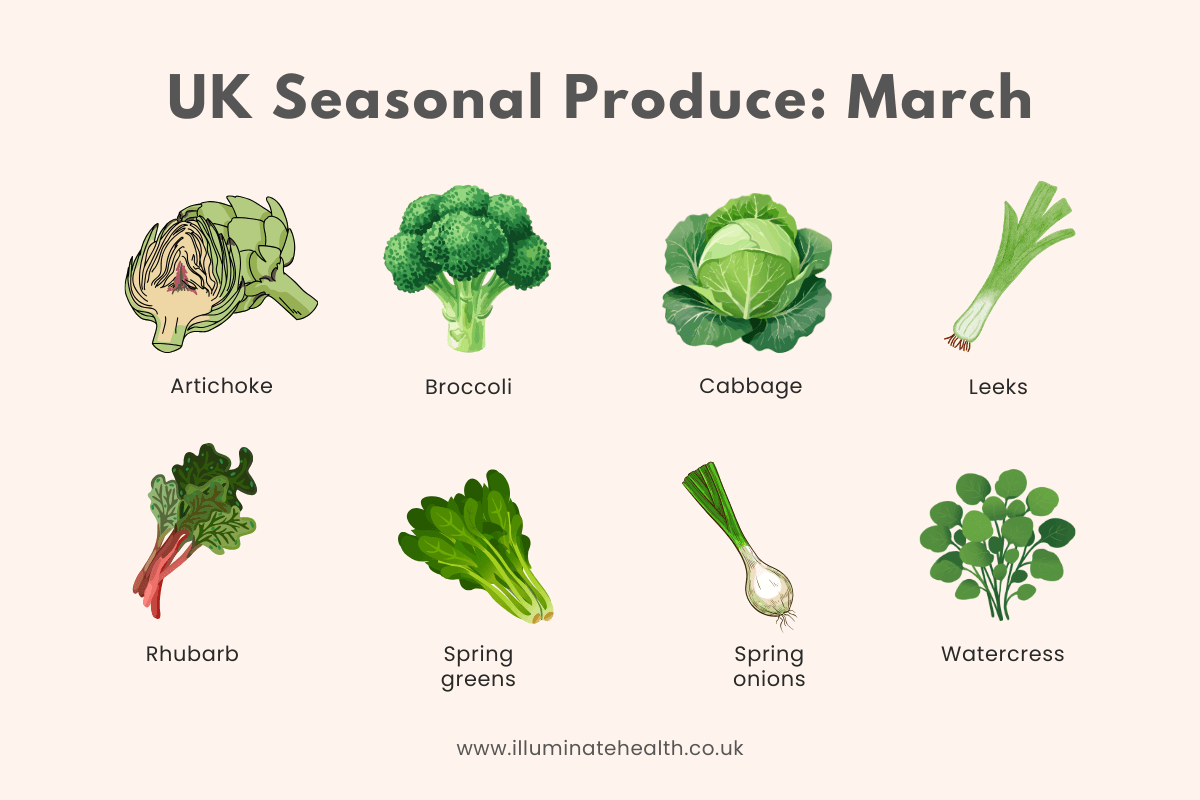
Nature designs our plate with seasonal foods that support our bodily functions during each period. Take a look at the chart below – plenty of bitter green leafy vegetables to support liver function, and tart fruits to aid congestion at this time of year.
6. Nature’s Pharmacy
Easily-available herbs and spices can also support at this time of year. Always consider your individual constitution and imbalances. Here are just a few that help counterbalance Kapha excess:
Turmeric – powerful antioxidant, immune support and gives warmth
Nettle – natural detoxifier and anti-histamine for allergy relief
Tulsi – clears respiratory congestion and promotes mental clarity
All warming spices will aid with digestion (cinnamon, black pepper, ginger)
7. Keep a Flexible Routine
“Eh? What's a flexible routine?” I hear you ask. I get it, the two words sound opposing. But hear me out
Early Spring time is inconsistent with fluctuating weather – something that those of us in the UK are only too familiar with! Sometimes it feels like you've been through all four seasons in just 24 hours.
Because no two days are the same at this time of the year, our routine needs to be flexible to adjust to these shifts. This helps us to stay responsive to changing needs. So adapt on a day-to-day basis rather than keeping a fixed schedule for the whole season.
Try this short self check-in in the morning:
What’s the weather doing? - use this information to gauge how you approach the day in terms of movement, rest and nutrition.
Check your tongue – a heavy white coating (you know the type when you’ve been eating too much beige food) indicates a sluggish digestion. If this is the case, go for lighter, more clarifying meals.
Tune into your appetite and how you feel after eating – adjust the types of foods you eat according to how well you can digest them.
This attunement is Ayurveda in action – responsive, practical and based on daily self-observation or reflection.
Ride the Wave to Settle into Spring
The early Spring time is ideal to shift our routines, release heaviness, and bring fresh energy into our days. Ayurveda reminds us that balance is found in self-awareness, staying responsive, and adjusting as we go, not through rigid rules.
Staying tuned-in both inward and outward, we can feel invigorated rather than sluggish as we emerge from Winter.