Beautiful Brahmi: A Nootropic for the Nervous System
Modern life with its fast-paced and over-stimulating ways is exhausting our ancient operating system.
Brahmi (Bacopa monnieri), a respected Ayurvedic nootropic may help calm stress responses, support memory and learning and improve sleep quality when taken consistently over weeks.
Just like a computer operating system, our body's nervous system works hard to coordinate multiple functions simultaneously so we can move smoothly, think clearly and sense the world around us. All of this is possible because of how our nervous system allows our software to interface with our hardware:
Resource management – Our nervous system oversees where we place our attention.
Memory management – Our nervous system stores away past experiences.
File management – Incoming information is processed and filed away to be used at a later date.
Security – The nervous system has its own checks and balances as well as buffers to protect it from damage. Think of our reflex actions that act as rapid protective responses.
User interface – While a computer’s interface will be the graphics we see on screen, every day, we use facial expressions and gestures controlled by our nervous system to convey our thoughts and ideas to others we come across in our lives.
What Modern Times are Doing to Our Nervous System
This 24/7 world of apps, instant access and an “always available” expectation has out-paced our design and overwhelmed us. Even the things we assume are neutral can be dramatic and stimulating but our limbic system doesn't know the difference and then we’re perpetually in a heightened state. We weren't meant to digest multiple incoming news headlines and faces all at once.
And this isn't just a "young-person problem". Something I've noticed over the years is the number of my patients who are struggling to manage their phone time - adults, parents, grandparents, carers... What they all tell me is that when they finally get a slice of time to themselves, they fill it with short videos or drama series online. But they're jumping from one highly stimulating input to another, not really giving their nervous system the break it needs.
Ayurveda would describe these as highly Vata and Pitta times that we’re living in. Burning the candle at both ends leaves a nervous system that's frayed and a metabolic system that's overheated and confused.
While I'm a strong advocate for looking upstream at systemic pressures and life stressors (workload, finances, political instability), and while I always say that sleep is the best medicine for brain and mental health, many people also need real-time support. This article doesn’t dismiss real life. It’s about protecting our nervous system so that we can buffer some of the influx and build resilience.
What is Brahmi?
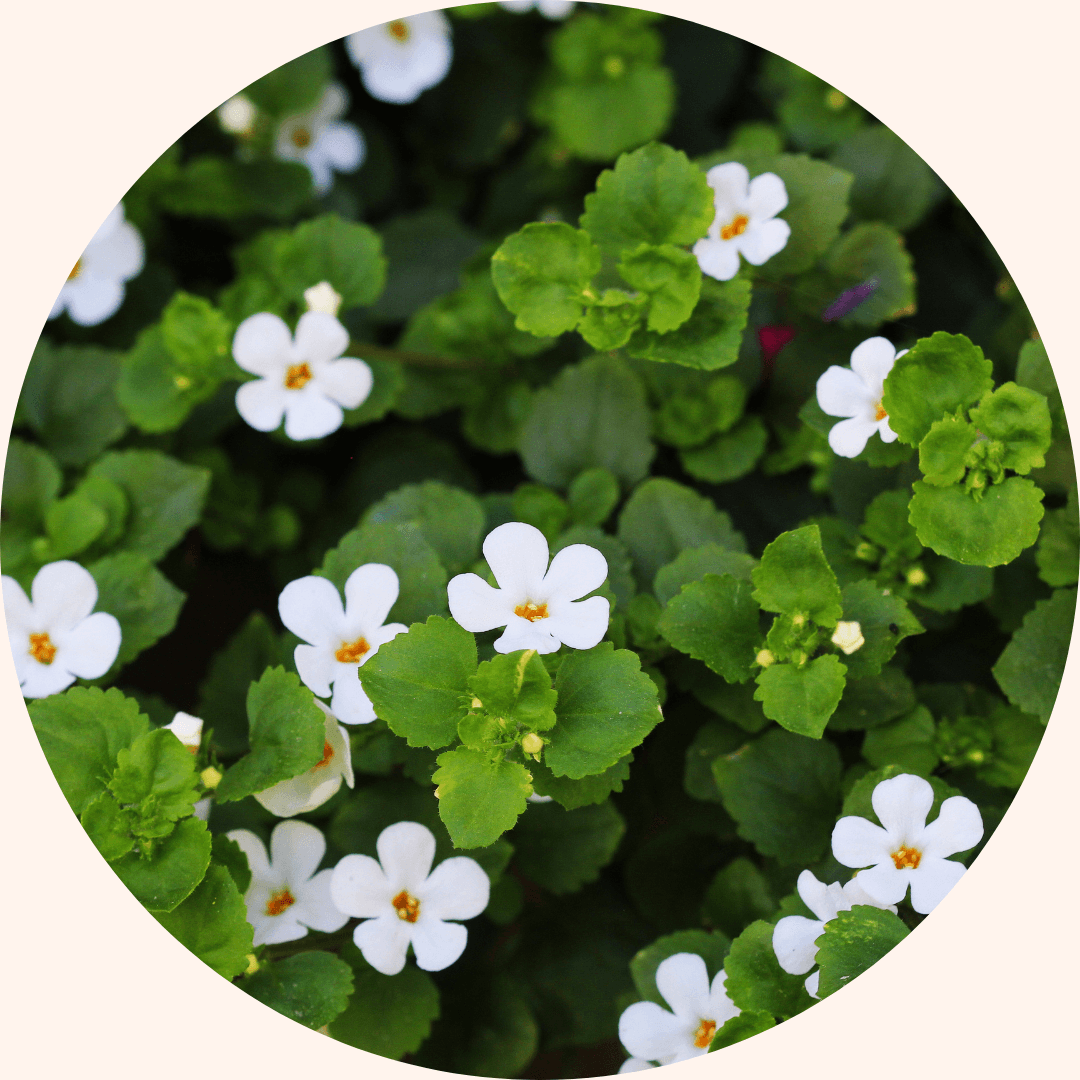
Brahmi is a perennial (grows all year round) plant found growing across South and South East Asia. It thrives in humid and marshy environments.
It’s been revered in Ayurveda for thousands of years and in my own practice, I’ve found it to be a gentle balm for people with overworked nervous systems.
Key phytochemicals:
Brahmi contains numerous bioactive components including:
Alkaloids (brahmine, herpestine)
Saponins (bacoside)
Flavonoids
Phytosterols (beta-sitasterol, stigmasterol)
Triterpenoids
Its phytochemical profile shows it has a dual structure that is both hydrophilic (water-loving) and lipophilic (fat-loving). This gives Brahmi the unique ability to interact with neurons, cross the blood-brain barrier and change enzyme activity.
Ayurvedic qualities (Dravyaguna):
Ayurveda studies substances by their qualities:
Taste (Rasa): Bitter and astringent
Potency (Virya): Cooling
Post-digestive effect (Vipaka): Sweet
Tridoshic: Suitable for all three doshas
Etymology of ‘Brahmi’
The word Brahmi is derived from Brahma, the creator god in Hindu mythology. Its association with Brahma tells us how important it is considered and helps us understand its attributes:
Clarity – Brahma symbolises the all-knowing truth and in this way, Brahmi offers us clarity of thought and the ability to discern.
Creativity – As Brahma is said to have created the universe, Brahmi gifts us the ability to create our own realities.
Learning – Brahma’s ability to see all aspects of reality needs an openness to learning and Brahmi helps us to stay curious, explore and remember.
With this brief introduction to the etymology of the name of the herb, we can begin to see which systems and symptoms it might support.
How Brahmi Supports the Nervous System
From an Ayurvedic perspective, Brahmi cools and calms imbalanced Vata and Pitta doshas.
Vata Dosha is the energy of movement and space, responsible for the nervous system with its delicate neurotransmission, sensory perception and thought processes. When out of balance, we can experience issues such as altered sensations, conditions of the nervous system, brain fog and anxiety.
Pitta dosha is the energy of transformation and intelligence. A few of its key sites are the eyes, liver and small intestine. When out of balance, often due to stress, we can experience inflammatory conditions, headaches, visual disturbances and stress-related skin flare-ups.
By acting through the nervous system, Brahmi becomes a balm for the overworked Vata and Pitta doshas. Brahmi settles the erratic nature of Vata dosha and cools the spiky-ness of Pitta dosha.
Nootropic and neuroprotective effects:
A nootropic is a substance that supports cognitive function. Brahmi is considered a nootropic meaning that it supports the brain and nervous system.
Its mechanisms of action appear to be:
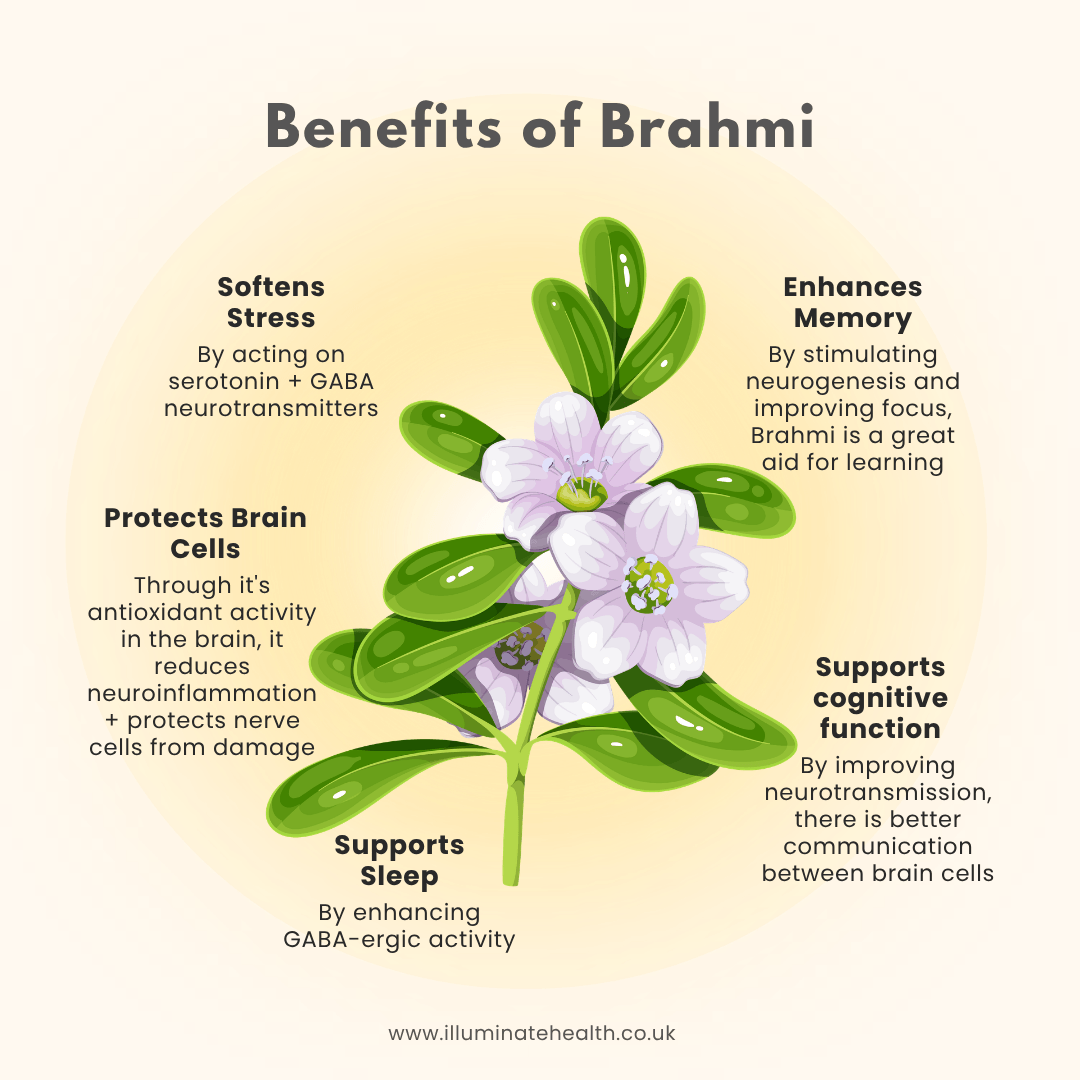
Antioxidant effect in the brain: Brahmi compounds show antioxidant activity in the brain, protecting against neuronal damage (1, 2).
Enhanced neurotransmission: Improves communication between nerve cells
Stimulation of neurogenesis: Supports the formation of new nerve cells
Brahmi’s Anti-inflammatory Action
According to Ayurveda, Brahmi gently cools inflammation. But while many bitter herbs act primarily via the liver, what makes Brahmi special is that it works via the nervous system. This makes it ideal for a whole host of imbalances and symptoms related to stress such as heat build-up, hot flushes, brain fog, anxiety, insomnia and stress-related skin reactions.
Neuroinflammation happens when inflammatory responses in the brain are amplified. It can increase neurotoxins which ultimately damage or kill neurons (3).
Chronic neuroinflammation is now understood to play a central role in several neurodegenerative diseases including Alzheimer’s disease, Parkinson’s disease, Multiple sclerosis and Huntington’s disease.
Brahmi extracts have been reported to stop beta-amyloid-induced toxicity by inhibiting lipid peroxidation (where fatty acids react with free radicals and cause cell damage) and preventing harmful membrane formation (4). Accumulation of beta-amyloid is heavily involved in Alzheimer's dementia. Note: these findings do not suggest that Brahmi is able to reverse dementia.
Brahmi also has the ability to protect neurons by preventing oxidative stress. Specifically, it has been found to stop the toxicity of glutamate, the most abundant excitatory neurotransmitter in the nervous system. Glutamate is responsible for relaying signals between neurons.
The same anti-inflammatory and antioxidant effects that calm the brain, may be what calms inflammation in other parts of the body too. For example, if the hives you are experiencing are stress-related, Brahmi may be able to help with this indirectly by adjusting the underlying stress response.
Supporting Sleep with Brahmi
Stress, anxiety and inflammation all impact our sleep quality and in turn, poor sleep can make all three of these worse. Rather than acting as a heavy sedative, Brahmi appears to improve other aspects of our health that enable better sleep.
As the chief inhibitory (calming) neurotransmitter, GABA-mediated neurotransmission plays a vital role in the initiation and maintenance of sleep. GABA is sleep-inducing and Brahmi enhances the effect of GABA without being a super strong sedative.
Researchers used an actigraphy (a watch-type device that monitors movement and sleep) which showed improved total sleep time and quality of sleep when people took Brahmi over 28 days (5).
Another interesting study looked at insomnia caused by mobile phone addiction in people admitted to an Ayurvedic hospital. The researchers found that Brahmi usage over 42 days was associated with marked improvements in insomnia severity and reductions in mobile phone addiction (6).
Not all studies have been able to replicate these findings though. One 28-day trial using self-reported questionnaires found no improvements in sleep patterns but participants did report improvements in overall emotional wellbeing and pain-related symptoms (7).
On balance, the evidence suggests that Brahmi may help some people with sleep, especially where stress and anxiety are involved. But the effects are not universal.

Can Brahmi Improve Memory and Learning?
Often described as a 'brain tonic', Brahmi is traditionally taken to support study. Ayurveda classifies it as a Medhya Rasayana. Medhya means intellect or cognition while Rasayana means rejuvenation or elixir.
How does it do this?
Acetylcholine is an important neurotransmitter that influences:
Muscle control: Released by motor neurons, acetylcholine stimulates muscle contraction, enabling voluntary movement.
Autonomic (involuntary) functions: Plays an important role in the parasympathetic nervous system which keeps us in a rested state (lowered heart rate, supports digestive processes, encourages secretions).
Cognitive processes: Supports communication between neurons in the hippocampus and maintains alertness and motivation.
Brahmi blocks the enzyme acetylcholinesterase(AChE) which breaks down acetylcholine. This means we have more of this neurotransmitter floating about doing its thing – keeping us cool, calm and collected while enhancing focus, memory and a sense of stability.
Another proposed mechanism is that Brahmi elevates the expression of brain-derived neurotropic factor (BDNF) in the hippocampal region of the brain. BDNF is a key protein supporting neuroplasticity and neurogenesis which are necessary for forming and storing memories.
Studies have tested extracts of Brahmi with healthy human adults over a 3-month period and found improvement in memory when learning new information (8, 9, 10, 11). Research also indicates that Brahmi improves attention, cognitive processing (8, 10), mental control (12) and increases cerebral blood flow (13), all ideal conditions to support studying and learning.

Brahmi Softens Stress
While stress is a natural part of life and a necessary reaction in acute phases, chronic stress can deplete us. And while there is no single way to manage stress, Brahmi can be a useful addition for some people.
From an Ayurvedic perspective, Brahmi’s bitter taste and cooling potency offers calm and clarity for the body and mind. It also has a sweet post-digestive effect that offers a sense of grounding.
Modern research shows that Brahmi increases serotonin (14), a mood-regulating neurotransmitter and hormone. It also enhances GABA-ergic activity and both these effects are linked with reducing stress and anxiety.
These effects tend to be slower than conventional pharmaceuticals. Research shows that when used over a 12-week period, Brahmi showed a significant reduction in anxiety (11).
Similar studies have been done using different durations and found comparable results. One studied the effects of Brahmi in adults with generalised anxiety disorder over a 45-day timeframe and found noticeable improvements using multiple anxiety rating scales (15).
Over a 28-day period, use of Brahmi was associated with a reduction in cortisol levels in adults with non-chronic stress alongside improvements in stress, mood and anxiety levels (5).
Both in vitro and in vivo studies suggest neuroprotective and adaptogenic effects of Brahmi. An adaptogen is a plant or drug that helps the body to cope with stress.
Stress in the brain can appear as heat, hypoxia (low oxygen) or reduced blood supply. Brahmi usage shows a rise in the expression of heat shock protein (Hsp70) which acts as a “first responder”, repairing damage, preventing cell death and reducing inflammation (16). This suggests that Brahmi could help the brain feel better prepared for stressful situations.
What the Research Says about Brahmi
Modern research shows mixed findings regarding Brahmi’s effectiveness. Research includes:
animal studies
human studies
in vitro studies
studies using whole Brahmi and others using component parts
studies using varying strengths/dosages of Brahmi
studies testing Brahmi over different durations
small sample sizes in some trials
This variability makes it difficult to compare like for like. And some may take this as incomplete evidence of Brahmi’s effectiveness. However, this doesn’t necessarily negate the studies because many show replicable results, particularly for memory, attention and anxiety.
It also shows how modern-day research and understanding of these herbs is still in the infancy stage. Nature presents us with complete, whole plants, not individual extracts. This has been understood by ancient scientific systems for millennia and it’s exciting that we are now rediscovering them using today’s modern methods.
Who Should Avoid Brahmi
It is always advised to see a practitioner before starting any new herbal preparation as they may not be suitable for everyone and can interact with some medications.
In the case of Brahmi, precaution must be taken in the following circumstances:
Pregnancy
Over-active thyroid (hyperthyroidism)
Low heart rate (bradycardia)
If the person is taking antidepressants or sedatives
If the person is taking medications for nerve pain e.g. amitriptyline
📞Seek Support
If you feel you are not coping with stress, please reach out to others. It could be friends, family or specialist organisations. Here are just a few based in the UK:
Herbs can be supportive but are never a replacement for professional support when needed
A Whole-Health Approach
Stress relief is never really found in just one thing and we definitely can’t pin our hopes on a single supplement. Ayurvedic assessments and treatment plans incorporate a variety of methods to support individuals including:
Movement
Nutrition
Manual therapies (e.g. massage, marma therapy)
Breathing exercises (pranayama)
Daily routine (dinacharya)
Herbal support
Experienced practitioners never recommend a “pill-only” solution and understand that a multi-modal approach is necessary as our health exists on many layers.
It’s also important to consider that Brahmi, like many herbal preparations, does not produce rapid results. If you’re looking for study support, taking Brahmi the night before your exam won’t be the wonder drug you hope for. Similarly, Brahmi should not be used for immediate relief for acute anxiety states. Most of the studies discussed have been carried out in generally healthy adults and don’t make claims to reverse or treat any specific disorders.
Why I love Brahmi
The power of Brahmi is a reminder of how many of our ailments can be connected back to our delicate nervous system. It’s also a reminder that that subtlety can be strong and that consistency, over time, can be transformative.
For more on Ayurvedic herbs, spices and nervous system care, subscribe to the newsletter. Each month, I share practical tips and seasonal wellness reminders sent straight to your inbox.
References: