Health Is More Than a 30-Day Challenge: Building Sustainable Habits for Long-term Wellbeing
It’s that time of the year where everywhere you turn, there’s a new challenge, diet or gadget promising to bring about a new you.
But, the truth is, there’s nothing wrong with you as you are. And those 30-day challenges don’t always work – not in the way we hope.
The Myth of the 21-Day Habit
We’ve all heard the phrase “It takes just 21 days to create a new habit”, but this is a myth. Depending on which research paper you read, it can take anywhere from 18 to 254 days for a new behaviour to become automatic, and there are a number of factors that affect this (1; 2).
Some key influences include:
Frequency of the habit or task
Timing (morning routines often stick better)
Type of habit (complex habits take more time)
Individual choice (self-selected habits show greater strength)
Emotional connection
Behavioural regulation
Preparatory habits
So, if day 22 comes along and your new morning routine still feels clunky — that’s normal.
The Natural Stages of Change
In 1983, Prochaska & DiClemente (3) described the stages of change – a process that individuals go through when attempting to modify their behaviour. It includes six predictable phases:
Precontemplation
Contemplation
Preparation
Action
Maintenance
Relapse
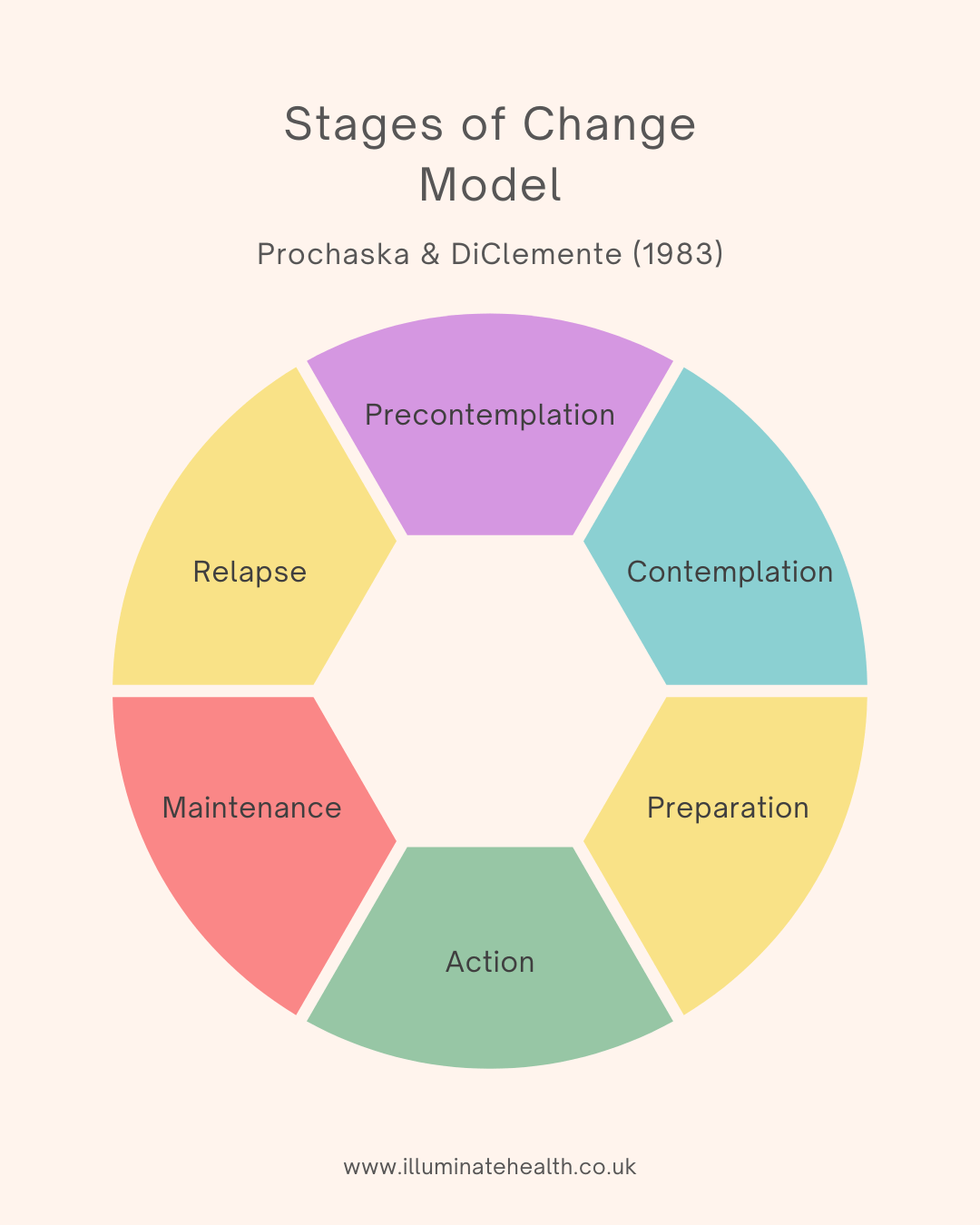
What’s important to note here is that the cycle recognises relapse as a part of change formation. This should give us reassurance that a slip-up here and there does not mean failure because we can start afresh tomorrow. But this time, when you start again, you do so with greater awareness and resilience.
Why 30-day Challenges Often Fall Short:
1. They’re Too Intense
To produce visible results fast, many programs push drastic changes. But the body and mind don’t like this and tend to resist sudden shifts, so there’s a good chance we will give up.
Instead, micro changes incorporated one-by-one into our daily life, over a longer period of time, are more sustainable. Gradual growth leads to lasting transformation.
2. They Prioritise Short-Term Gains
If your goal is a quick refresh before an event, a challenge might help. But sustainable health needs consistency, not intensity.
Without ongoing support – confidence, knowledge, accountability – our efforts and momentum can fall by the wayside once the challenge ends.
3. They Focus Only on “Doing”
Not every change depends on adding new actions. Rest, for example, is transformative. Consistent and quality sleep supports energy, mood, hormone balance, appetite regulation, and even glucose control.
Simply committing to a regular bedtime might sound minor, but it can set off a cascade of improvements – making newer habits easier to adopt!
4. They Frame Health as a Battle
Language matters. When we approach wellbeing as a challenge to be conquered, we create pressure and judgment. Miss a day, and it can feel like a failure.
But health is not a competition – it’s a lifelong relationship with yourself. Taking a softer and more adaptive approach allows you to navigate through life’s inevitable fluctuations with kindness and flexibility.
5. They Ignore Natural Cycles
Whether they menstruate or not, women will experience fluctuating energy levels throughout the month. These cyclical patterns will impact our need for sleep, our capacity for exercise and stress, and our body’s nutritional requirements.
A rigid plan that ignores these rhythms could lead to burnout rather than balance.
6. They Rely on External Motivation
Challenges often use external rewards — prizes, recognition, social comparison. While these might kickstart momentum, we want lasting change. Long-term wellbeing is anchored in intrinsic motivation — knowing your “why.”
What Actually Supports Sustainable Health and Habit Change
Personalised Health Plans
There’s no one-size-fits-all route to wellness. Ayurveda reminds us that each person’s constitution, lifestyle and environment are unique. Recognising this is key in creating an effective health action plan that a person feels connected to.
Focus on Sustainability
Big changes might sound impressive but can cave under pressure without the right scaffolding or foundations. Choosing to focus on small, realistic and repeatable habits – the kind that integrate seamlessly into your everyday life – will serve you better in the long-term.
Take a Holistic Approach
True health goes beyond the physical (diet and exercise). Social connections, sleep, emotional balance, spiritual wellbeing and purpose are all part and parcel of our health. Choosing to focus on and nourish these aspects of our health is equally important.
Cultivate Internal Motivation
Ask yourself why you want to make a change. Connecting your actions to your deeper values — energy, vitality, peace of mind, your family — strengthens your commitment way more than any external validation.
Review, Reflect and Adjust
Regular check-ins help you to see how far you have come and make adjustments as needed.
Remember flexibility is supportive. Missing a day or two does not derail your overall habit formation journey (1). Life happens and life evolves – and so should your health plan.
Reflection Prompts to Ask Yourself:
What is my “why”?
What do I want to feel and experience on day 31?
What would success look like on day 60?
What support do I need or what preparations do I need to put in place to help me get there?
Lasting health isn’t built in 30 days – it’s developed daily, in small moments, with compassion, curiosity and patience.