Ritu Sandhi: How to Navigate Seasonal Changes with Ayurveda
How are you feeling?
As we step into September, I'm hearing people tell me that they're noticing changes in how they feel. Subtle yet noticeable shifts.
For some it's a slight change in their bowel habit, others their energy levels or mood might have dipped and yet others tell me their skin feels different or their sleep quality has changed.
As we leave Summer and edge towards Autumn, the mind and body are adjusting to the environmental shifts.

The Three Doshas and the Seasons
According to Ayurveda, all natural processes (internal and external) are overseen by three energy states: Vata, Pitta and Kapha:
Vata - energy of movement, lightness, dryness, space
Pitta - energy of transformation, heat, exuberance and intelligence
Kapha - energy of accumulation, structure, nourishment and growth
It's easy to see how the doshas are represented through the seasons:
Autumn-Early Winter: Vata season
Just as the Autumn breeze blows about the leaves, we may notice an internal whirling or feeling of restlessness. Vata is also seen in the cool, crisp air, the dry, crunchy leaves and the sense of spaciousness we feel with the falling away of the year's bloom.
Late Winter - Early Spring: Kapha season
A season characterised by stillness, hibernation, a slow regeneration and building of capacity and strength. This season reflects Kapha dosha's qualities of building, nourishment and stability.
Late Spring - Summer: Pitta season
This season reflects Pitta dosha's exuberance from the budding of new life through to the blossom and energy of Summer strength. It's a transformative and extroverted time.
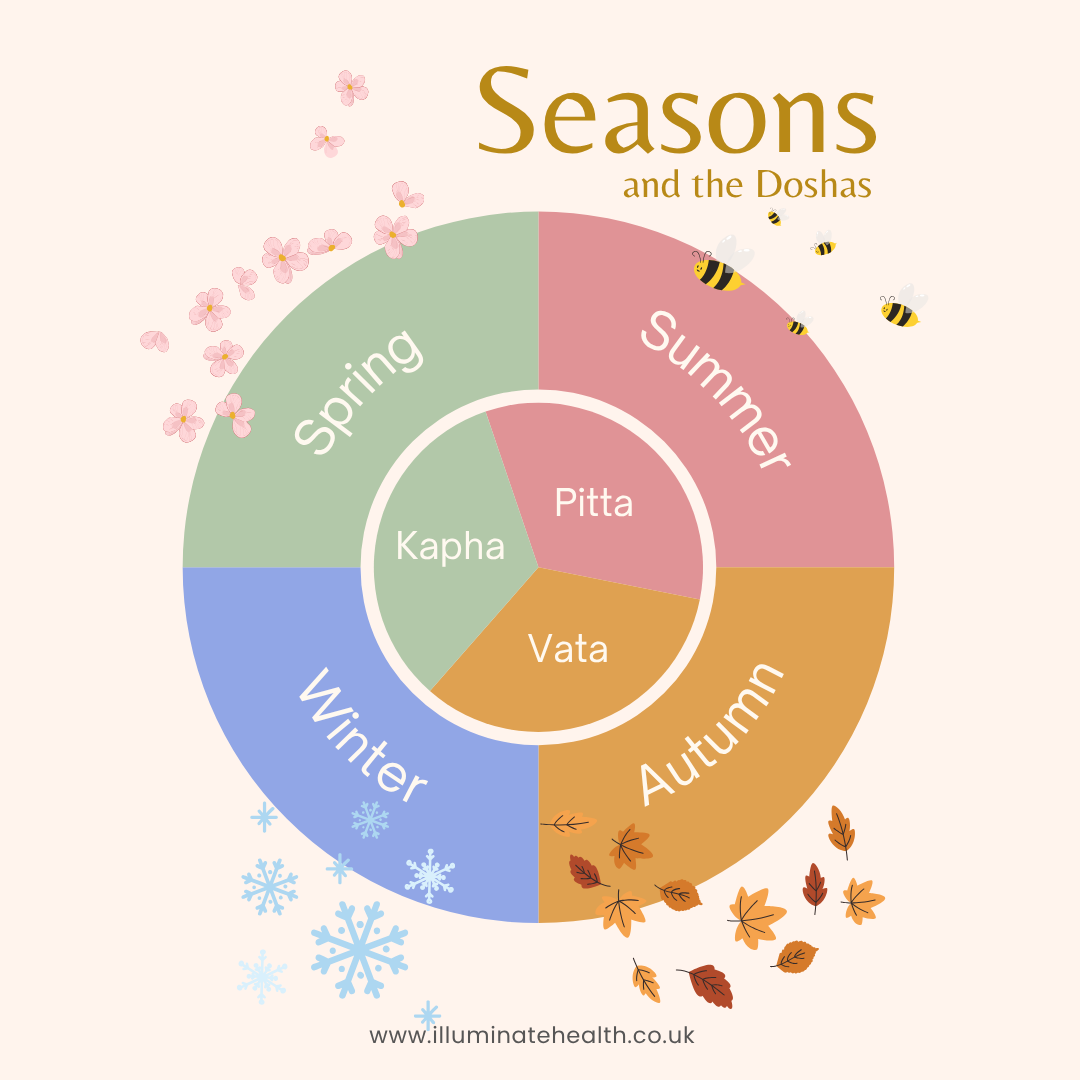
Many of us will have our favourite season that we feel we're compatible with or feel our best in.
While each of these doshas reach their peak in different seasons. In between seasons is where they tend to fluctuate as they find their footing.
What is Ritu Sandhi?
Ritu Sandhi is the interim period that sits between two seasons.
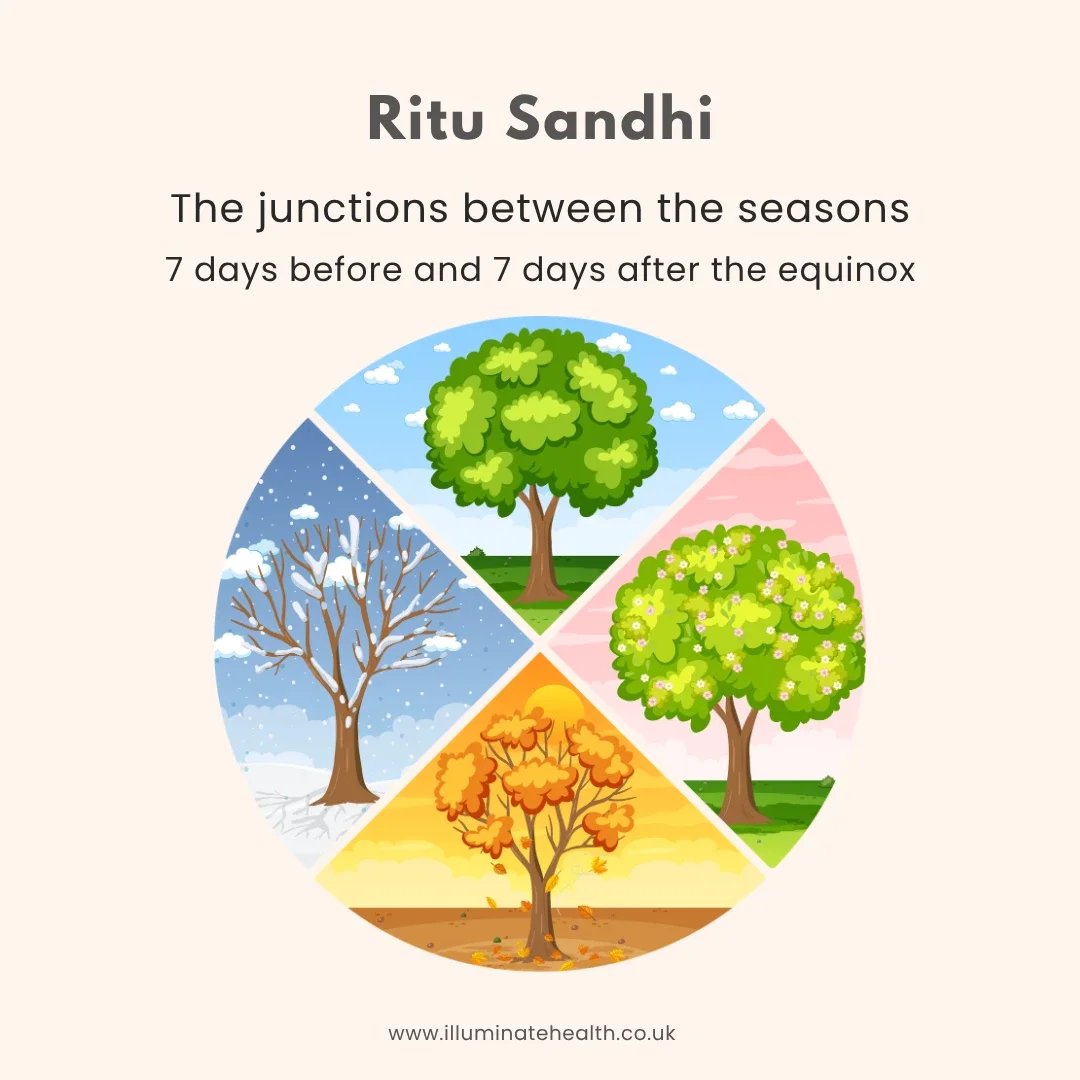
"Ritu" means season and "sandhi" means junction. It refers to the seven days leading up to the seasonal equinox and the seven days after it.
Although there are four seasons here in the UK, we focus on the two equinoxes as this is where we see the biggest shift in terms of the earth's temperature and daylight.
The Spring equinox is in March and signals the earth's axis tilting towards the sun for the coming months. The Autumn equinox is around the end of September and in the Northern hemisphere, this signifies the earth's axis turning away from the sun.
Ayurveda teaches us to to use this in-between time to slowly release habits and behaviours that were supportive in the previous season and gradually adjust to the qualities of the season we are entering.
This anticipation and adaptation helps ease the transition into the new season.
A Note on Modern Seasons
Writings on Ritucharya (seasonal regimen) were traditionally referring to the six seasons seen in the Indian subcontinent. However, the principles of Ritucharya can be applied to seasons in other locations too.
The images above show Ritucharya as we experience it here in the Northern hemisphere.
Another point to make is that climate change and modern city architecture is altering the seasons we experience. Here in the UK, we are experiencing longer, dryer Summers. City dwellers experience even hotter temperatures living in concrete jungles with tarmac flooring and dense air pollution.
But the strength of Ritucharya lies in Ayurveda's key principle which is to notice and respond accordingly. In this way, we can apply it to any circumstance by noticing the qualities and adapting.
With the temperamental weather here in the UK, sometimes this might even look like daily adjustments. Check the weather for the day and check-in with yourself to understand and choose what you need in response.
Gradual Over Sudden Change
The body and mind don't respond well to sudden change. And so Ritu Sandhi becomes a time when we can embrace the new season through incremental shifts.
We naturally start adjusting our diet and lifestyle to align with the environment. It might be an extra layer because the morning feels slightly chilly or a change in the type of meals we choose.
It's not just about creating comfort. Research shows that our gut microbiome and immunity actually shift in different seasons too. So, by leaning into these changes, we're preparing and supporting our health and wellbeing ahead.
Common Symptoms Seen During Seasonal Changes
Times of change can feel disturbing because they expose vulnerabilities.
If we understand how Doshas become imbalanced, we begin to appreciate how to support and move with them.
Doshas accumulate in the season that matches their qualities. The long, hot Summer has depleted our energy reserves because this season usually comes with heat-generating activities such as sunbathing, partying late, alcohol and general excitement. These activities can create an internal heat (Pitta dosha) and dryness (Vata) within us.
If we don't take care by incorporating supportive habits, these built-up Doshas can then become aggravated in the transition phase after the season.
Right now, in the Autumn Ritu Sandhi period, internal dryness that's built up over the Summer can look like:
constipation
dry skin
joint pain
skin flare-ups
sensitive digestion
general inflammation
feeling unsettled in the mind
Like all transitional phases, the mind and body are juggling a lot which makes it vulnerable to illness.
Unlike the middle of the seasons where the Doshas are more established in their quality, the junctions between seasons is where the Doshas are more mobile so easier to become thrown off kilter and become disruptive.
It's a time when we'll notice that our immunity goes from being somewhat robust to more fragile as the Agni (digestive capacity) can become destabilised. It makes sense why people tend to notice more coughs and colds in these in-between windows.
Junctions and bridges are vulnerable places. We notice that the Doshas naturally temper down in the season with opposing qualities. Outside that time, we need to actively pre-empt and incorporate supportive practices to keep them in check.
Why Seasonal Changes are Ideal for Detox
The mobile nature of the Doshas in between seasons makes this an ideal time for a detox.
The Doshas haven't yet settled into the coming season. As we are already experiencing an internal release and embracing newness, the mind and body are more amenable to letting go (detox).
Best Practices During Ritu Sandhi
Ritucharya means practices that align with the seasons. But before we even reach the new season, during this delicate in-between stage, here are some simple ways we can support ourselves to stay steady:
simplify meals
consistent sleep time
daily bowel movement
consider a detox
Specifically as we move into early Autumn, you may find the following dietary changes helpful:
Start reducing spicy and sour tastes in meals
Slowly incorporate sweet and bitter foods into meals. The sweet is grounding and the bitter pacifies remnants of lingering Pitta dosha.

Knowledge Is Empowering
Knowledge of Ritu Sandhi helps us to adjust and adapt to the seasons. Think of it as preventative healthcare!
But Ritucharya and Ritu Sandhi remind us to stay proactive in our wellbeing. This isn't about perfection. It's understanding what the seasons bring and bring about within us that allows us to almost course-correct our practices throughout the year.
And knowing our Prakriti (constitution) is the cherry on top. It's key to understanding our tendencies, our vulnerabilities and where we need to be proactive.
If you'd like to explore more about your own Prakriti and current imbalance (Vikriti) so that you can feel confident in navigating seasonal changes or are even considering an Autumn detox, get in touch.