You can't see the label from inside the jar: Why Health Decisions Are Harder for Ourselves
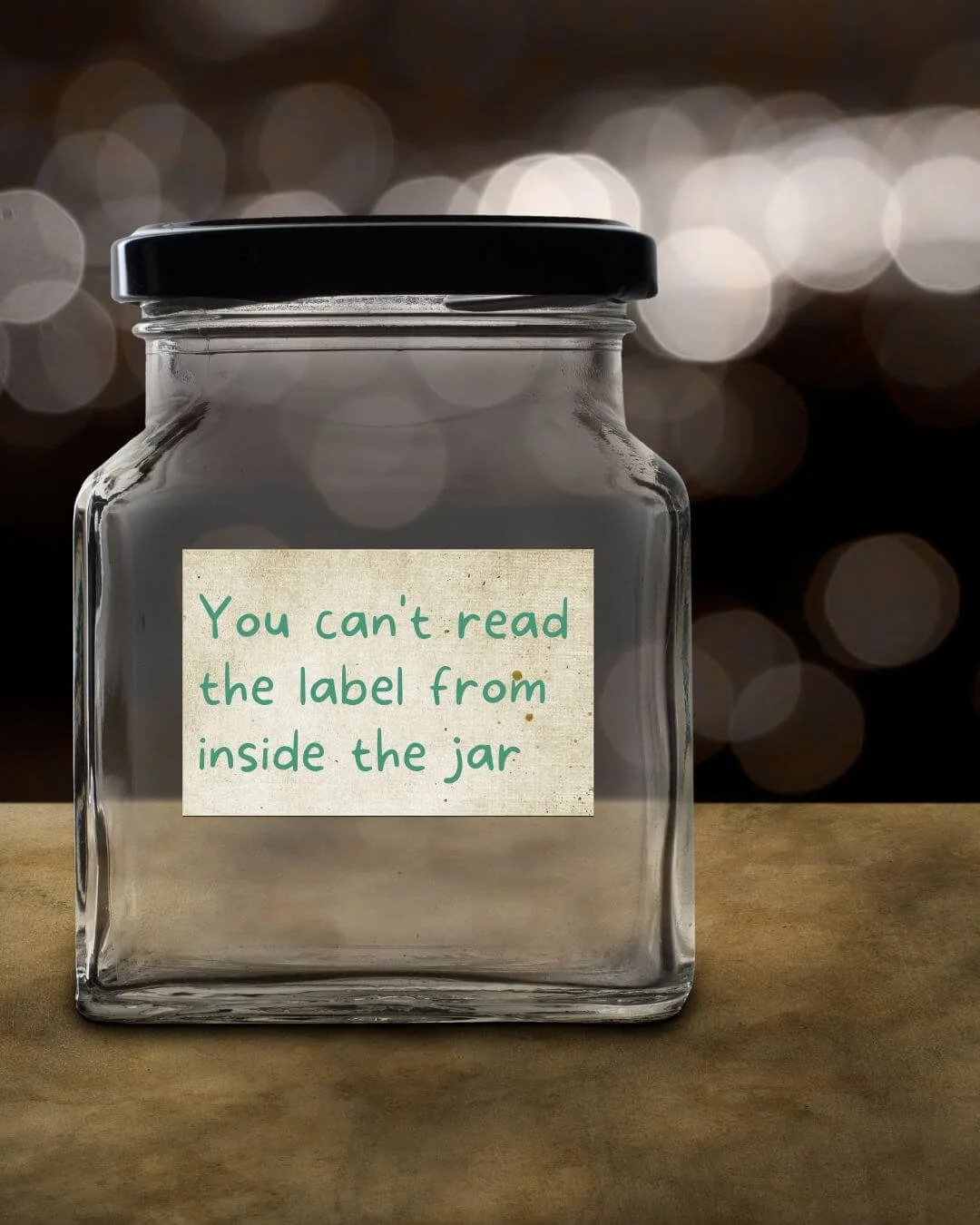
I was watching a short video a few weeks ago and the guest spoke of her experience as a sales and public speaking expert who had a surprising difficulty in communicating and selling her own product. She mentioned this quote:
"You can't see the label from inside the jar”
And it really landed with me. This saying highlights the importance of perspective in understanding ourselves and our circumstances. The message is: when we’re too involved in our own work, we can easily overlook important clues. The psychological term for this is “proximity bias”.
Although the video related to how someone was running their business, it’s easy to see how this can apply to all aspects of life. In particular, I was thinking about health and health beliefs.
Even Practitioners Need Practitioners
As a registered nurse and Ayurvedic Health Practitioner, I'm assessing and advising people about their health concerns on a daily basis. Yet somehow, I can't apply all that know-how to myself with the same clarity.
A lot of the writing around this topic focuses on the importance of stepping outside of the jar to get some perspective. But, this is only one stage of the process.
Seeking feedback, thoughts or even expert advice from others is where we gain real clarity. Just because you're a health practitioner, solicitor or an IT whizz, doesn't mean you can't go and seek the services of other health practitioners, solicitors or IT specialists.
With a fresh pair of eyes, they can quickly pick out our blind spots, challenge our assumptions and even show us our sticky thought patterns or where we might become defensive. I learnt this recently when visiting an Osteopath for my own health. And I have to say, it wasn't what I wanted to hear but I greatly appreciated it because it forced me to look in the mirror they held up for me.
Why It’s Easier to Make Decisions for Others Than for Yourself
Practitioners have psychological, emotional and social distance from the decisions or problems they are solving. This alone allows for a perspective that we just can’t have when we are the owner of the situation.
When we’re making decisions for ourselves, we are emotionally and situationally entangled with the outcome of that decision. We may have been carrying a particular symptom or imbalance for some time, holding the weight of everything we’ve tried: the repeated GP visits, the never-ending figuring out what works and what’s a trigger and even the routines we’ve created around it that have now become so habitual that they feel like our personality. This is how close we can get to our health imbalances and this is why an outsider’s view is so important. Not to dismiss you as the expert by experience, but to offer another layer. An angle you may have missed, a question that seemed too obvious to ask or one that even challenges you.
Research backs this up and shows that when thinking of solutions for others, people tend to think more abstractly and creatively than when doing so for themselves (Polman and Emich, 2011). This allows us to ask questions and pick up patterns that the person themselves couldn’t. This may be why people find it more enjoyable when making decisions for and about other people rather than themselves (Polman and Vohs, 2016).
A reminder though that health and wellbeing consultations should always be a process of shared decision-making between practitioner and client. These studies simply show us the underlying psychology of approaching problem-solving as if for ourselves or others.
Ways You Can Do This For Yourself
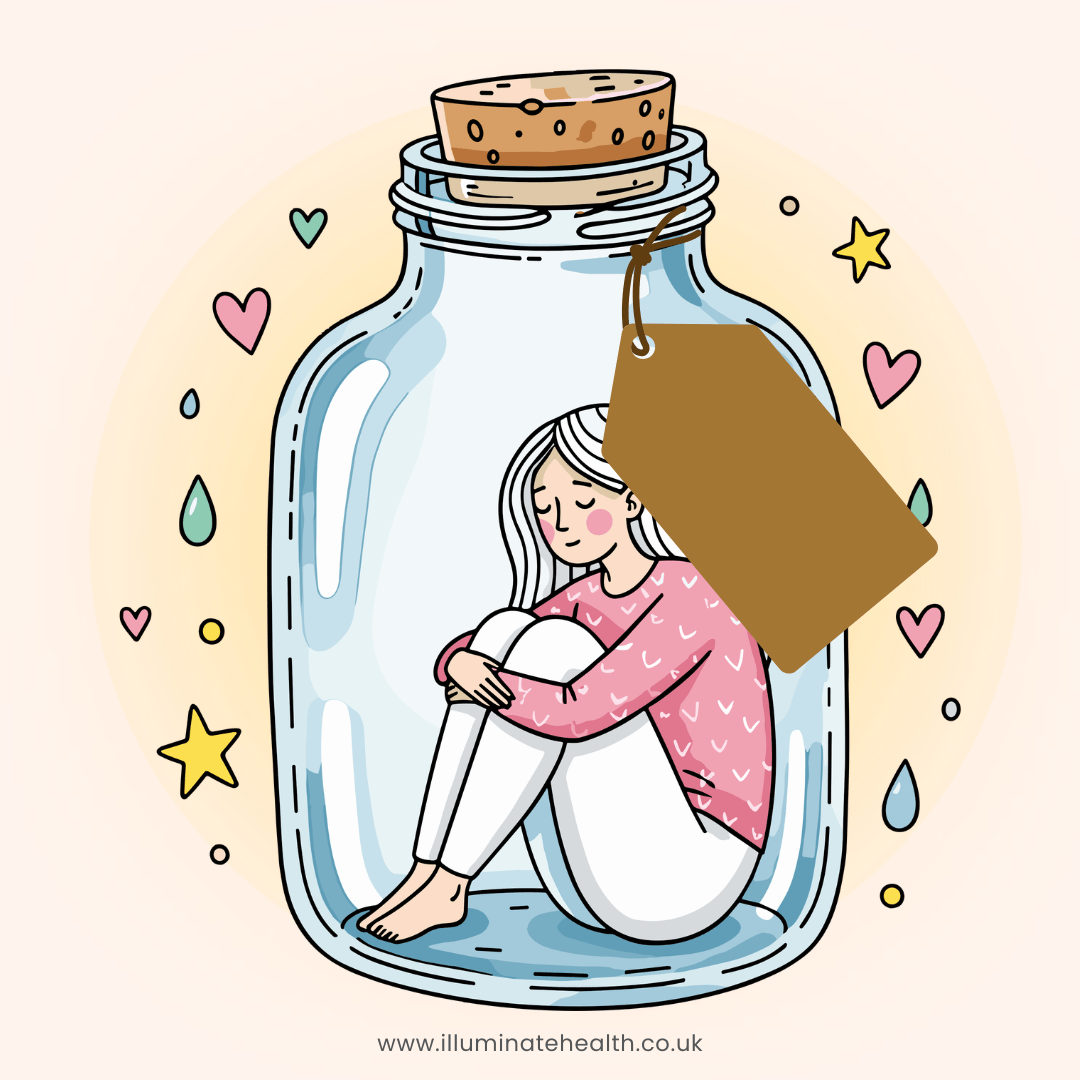
Here are three small shifts we can make to help create a bit of a distance between ourselves and the decisions we’re making.
Imagine you’re advising someone else – Ask yourself “What would I advise a friend to do in this situation?” This creates social distance and taps into our values.
Speak to yourself in third person – Instead of “What do I want to do?” or “Why am I feeling angry?”, ask yourself “What does [your name] want to do?” or “Why is [your name] feeling angry?”. This positions you as an observer of your own situation.
Create deliberate self-distance – If possible, physically leave the space where you are at the time and revisit it e.g. going for a walk, write the problem down, or sleep on it before deciding.
And, of course, there is always the option of asking someone else.
While these sound like interesting experiments to try, for some, maintaining a healthy level of detachment can be problematic and stressful. This is why it’s always advisable to speak with a professional in the first instance if you’re finding decision-making about your health difficult to do alone.
Autonomy and Asking for Help Aren’t Opposites
Why I love Ayurveda is that like many other forms of ancient health systems, it teaches us how to read ourselves. We get to really understand our tendencies, vulnerabilities and strengths in different environments and respond accordingly.
But it's not a matter of either-or. Seeking an external pair of eyes to evaluate a problem we've been looking at for so long just brings an additional view when we've been deep in the weeds. And that’s the ultimate goal of a health consultation – for a person to leave feeling confident and knowing themselves better.
If you've been circling the same health question for a while and feel you can't see the label anymore, a fresh pair of eyes might help. Book a consultation.