Chyawanprash: Nature’s Tonic for Immune Support
As we enter the back-to-school season, many parents fret over the inevitable sniffles that end up affecting the whole family.
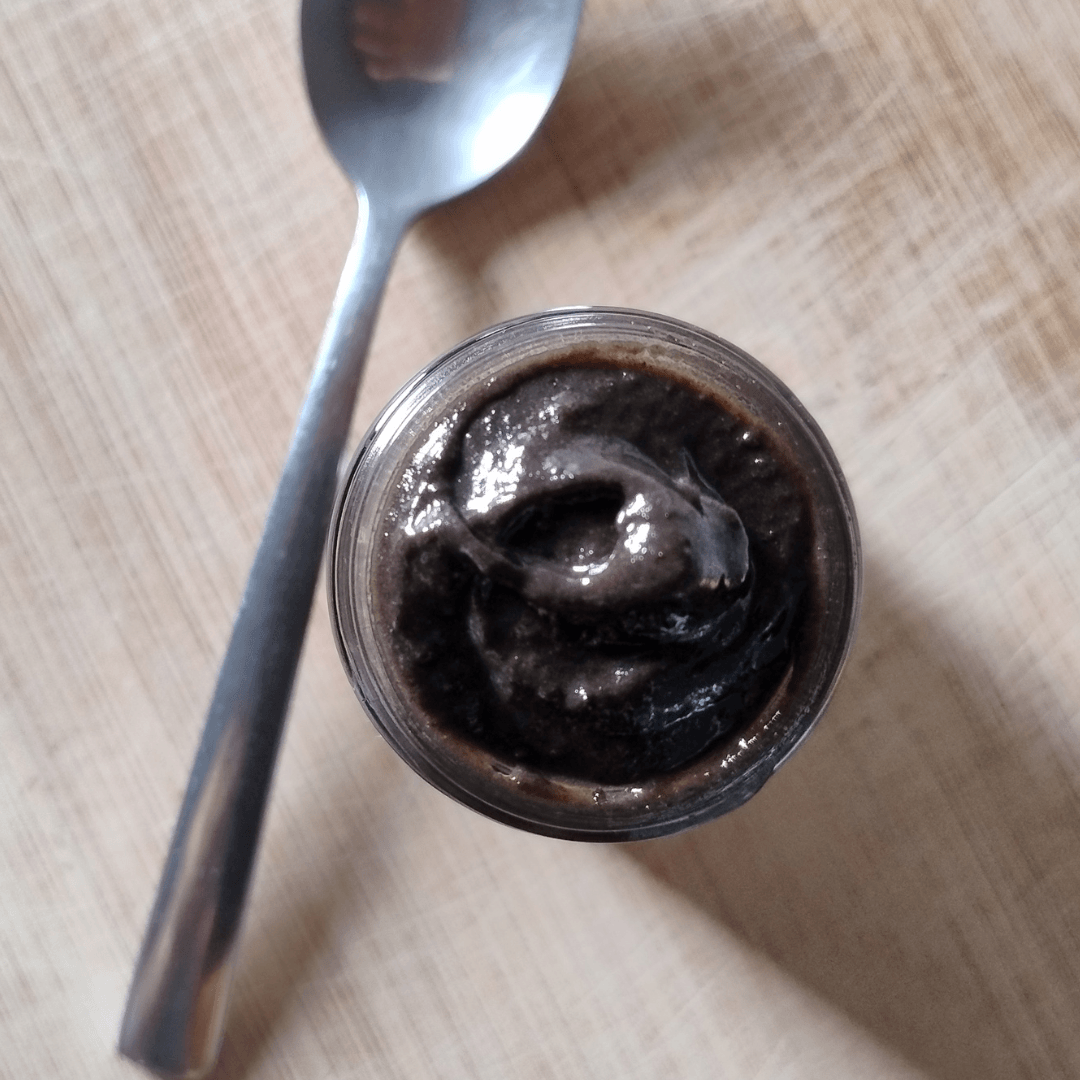
My go-to for immune support is something my parents used to give us as children. At that time, we’d look at this jar of unappetising brown-coloured, gloopy thing with distrust, but today I appreciate what it does for me. Chyawanprash is a herbal jam that supports immunity, energy and overall rejuvenation and you can take it way beyond Winter too.
What’s Inside Chyawanprash?
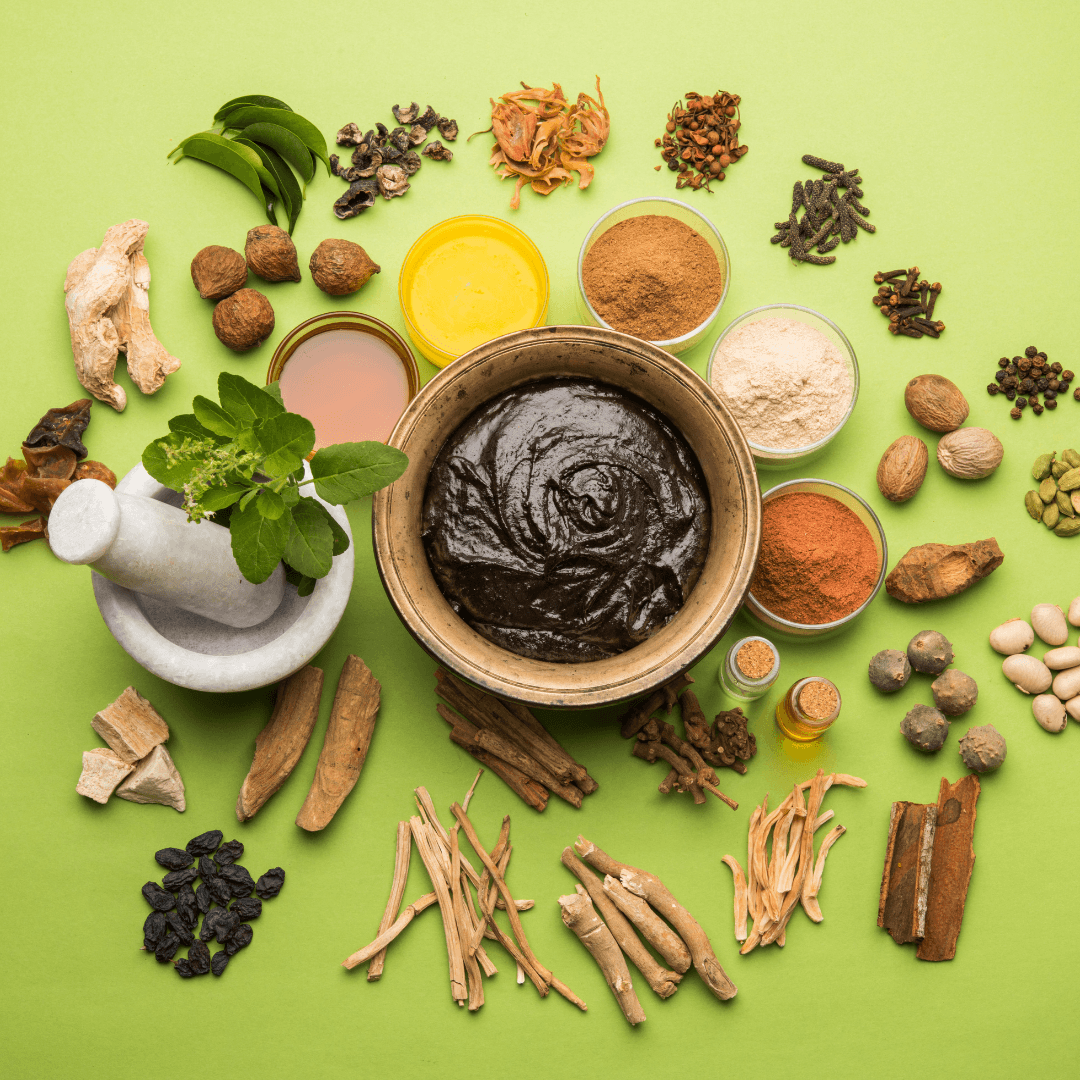
Chyawanprash is a multiherbal supplement, meaning that it contains more than one bioactive ingredient. In fact, some formulas contain more than 30 different herbs and spices!
This highly-concentrated blend of so many herbs gives it a complex and rich nutrient profile.
The key ingredient in Chyawanprash is amla, the Indian gooseberry. Amla is a powerful antioxidant, high in vitamin C.
Alongside amla, Chyawanprash contains herbs that provide the following actions:
Support digestion – because according to Ayurveda, our immunity begins with a happy gut
Antioxidant – provide defence against free radicals
Anti-inflammatory – reduces inflammation
Antimicrobial – inhibits the growth and activity of harmful bacteria, viruses and fungi
Expectorant – makes mucous thin, helping us to cough it up and out
Demulcent – soothes and protects mucous membrane, great for sore throats
Hepatoprotective – supports liver function
Antitussive – calms cough reflex, good for dry, irritating coughs
Neuroprotective – supports nervous system
Bronchodilator – supports the relaxation of respiratory airways
As you’re beginning to see, Chyawanprash is a multi-functional powerhouse!
While the exact recipe of each Chyawanprash brand will differ, most will contain a blend of ingredients that are based on a classical tridoshic (suitable for all three doshas) formula:
Amla has a tridoshic, Rasayana (rejuvenating) effect.
Dashamoola has a Vata-pacifying and stabilising effect.
Saffron, Sandalwood and Shatavari provide gentle, cooling nourishment for excess Pitta dosha which can show up as inflammation.
Pippali (long pepper) stimulates Agni (digestive fire) and supports the respiratory system by reducing Kapha excess.
To unlock the capacity of these herbs and spices and to deliver them into our tissues, the formulas are carefully cooked in healthy fats and natural cane sugar. Most varieties will contain ghee, sesame oil and jaggery (unrefined cane sugar). And these “carriers” are more than just a nice-to-have but have benefits of their own too:
Jaggery – source of iron, calcium, magnesium and potassium
Ghee – supports gut health (rich in butyric acid), immune health and high in vitamins A and E
Sesame oil – supports digestion and immunity
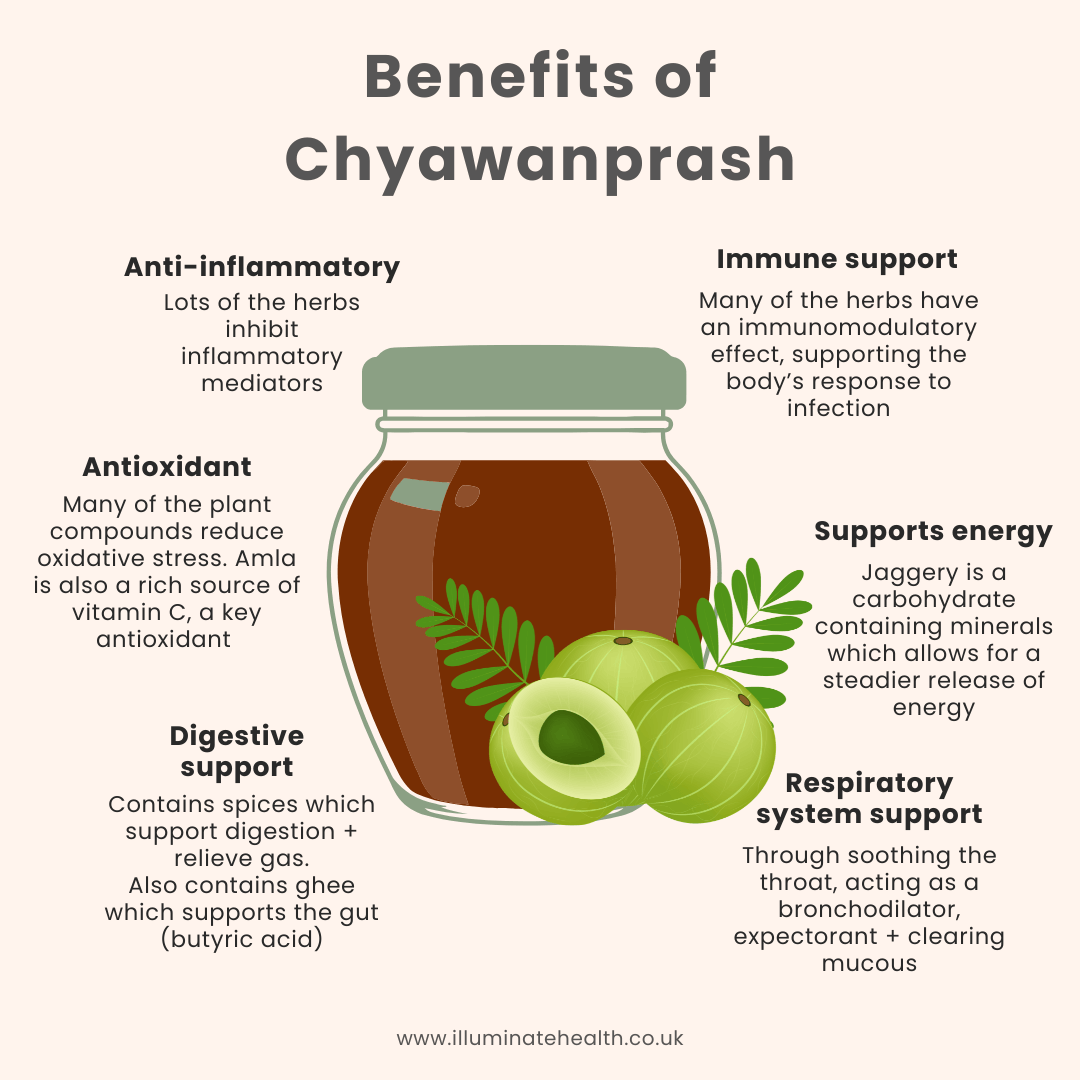
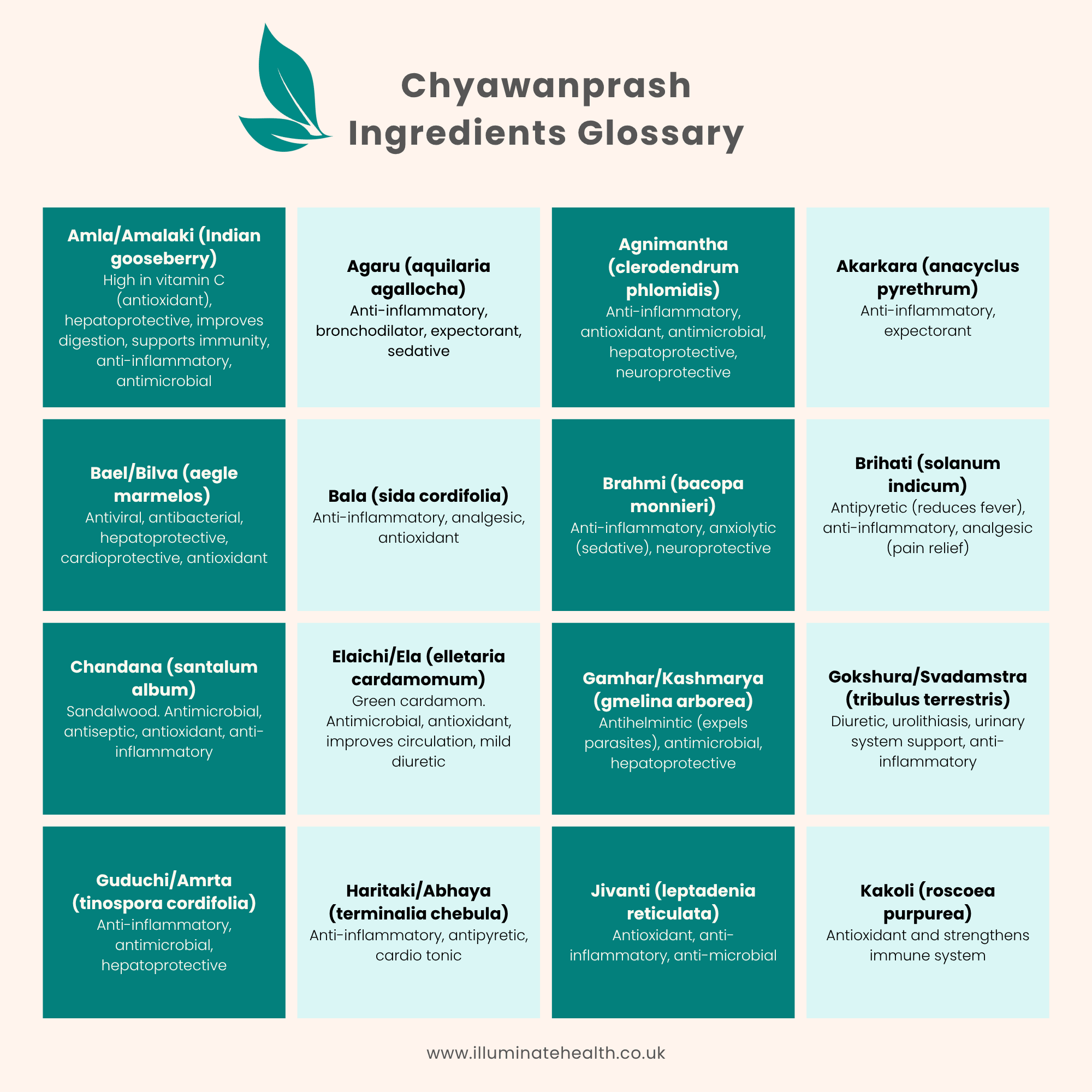
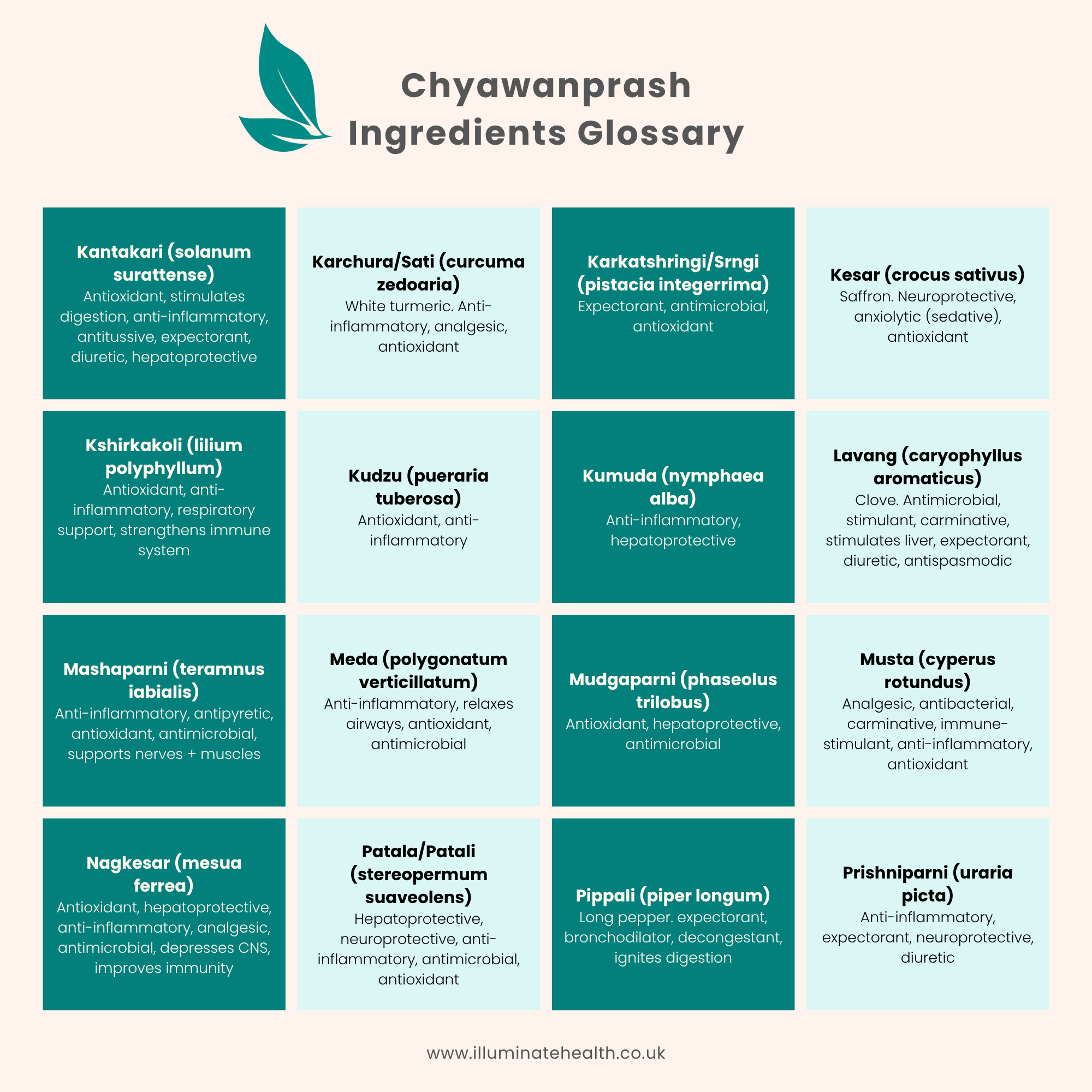
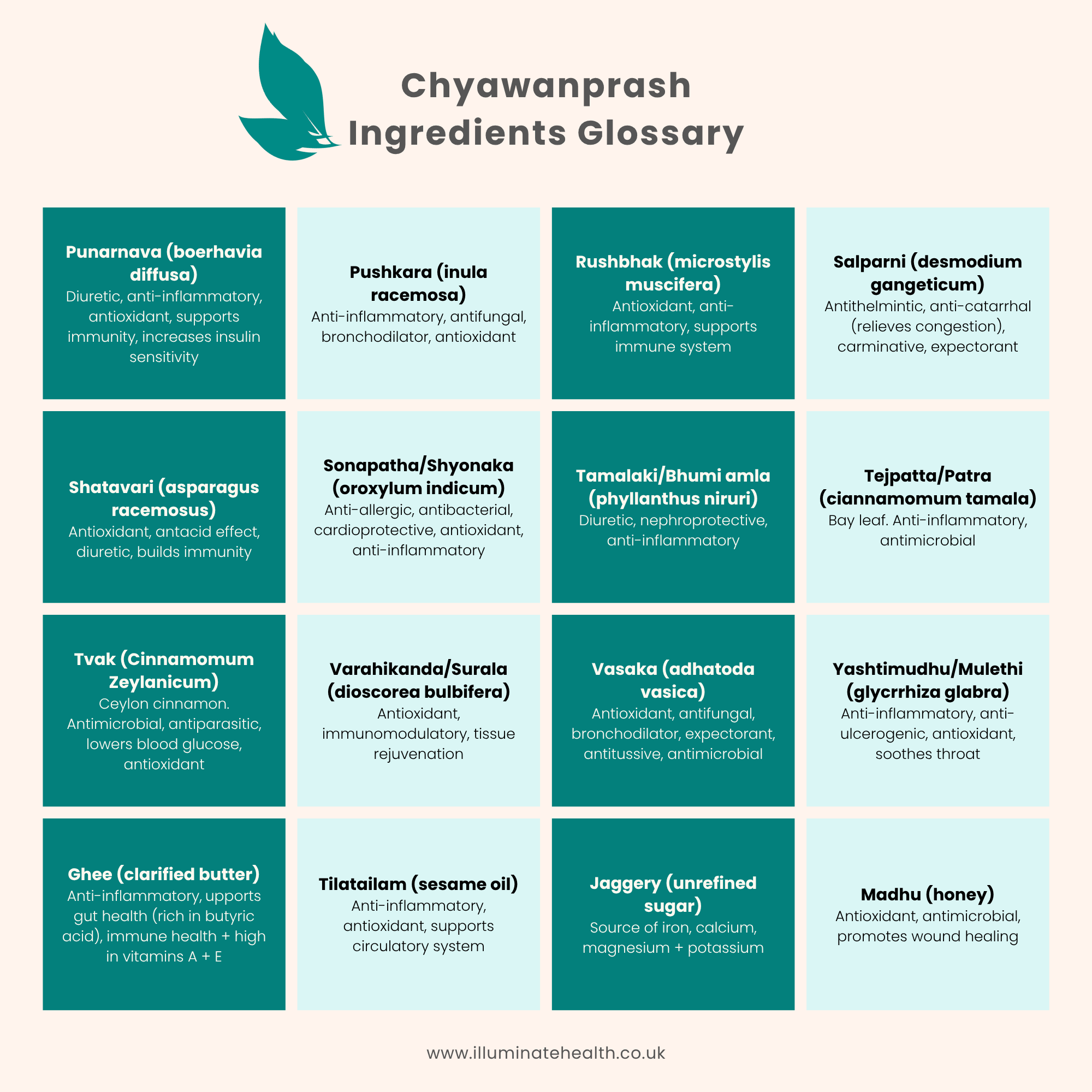
To understand the benefits of various ingredients commonly found in Chyawanprash, I’ve created a handy Glossary at the end of this page. Or you could download the PDF version to keep at hand when shopping for it.
The Best Chyawanprash Brands in the UK 2026:
Today, there are many brands that sell Chyawanprash in the UK. From mass-producing companies to smaller, batch-made, “clean-label” brands, there are so many options.
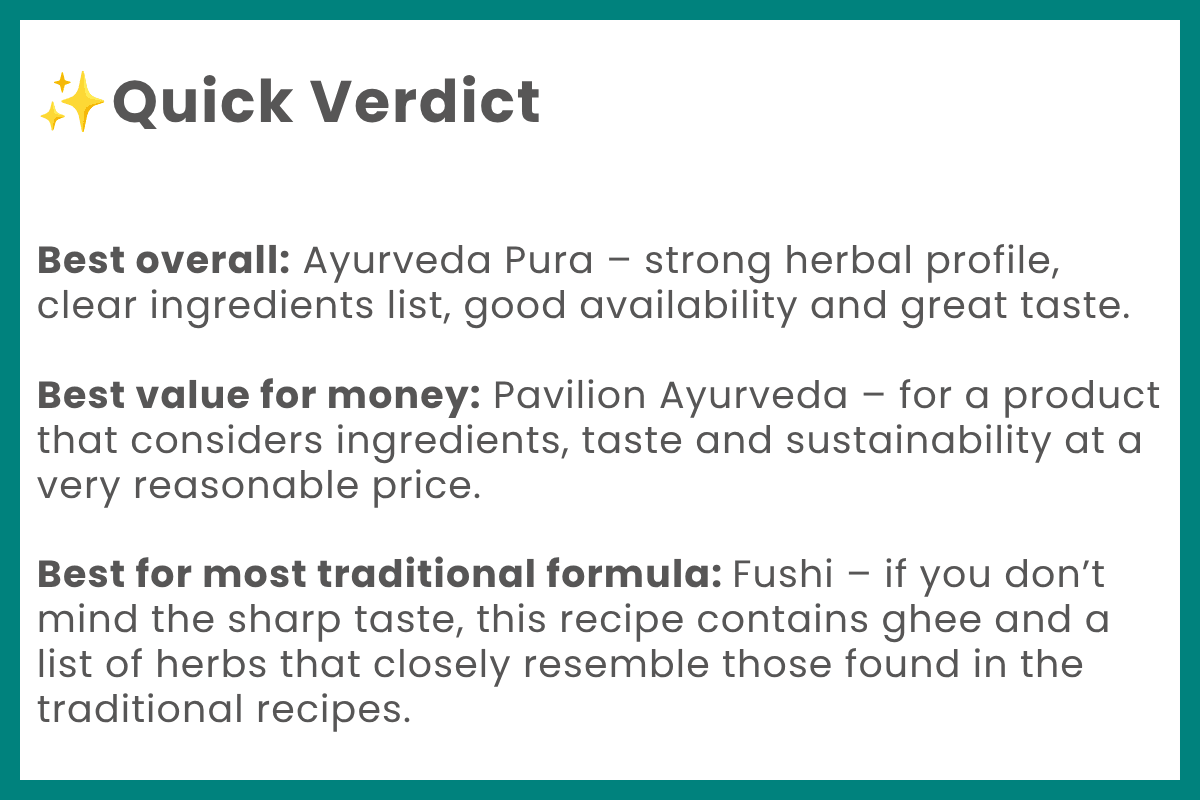
Here I’ve reviewed some well-known Chyawanprash products you can buy in the UK:
We’ll cover ingredients, Ayurvedic authenticity, taste, price and how easy it is to find so that you can choose which is best for your needs.
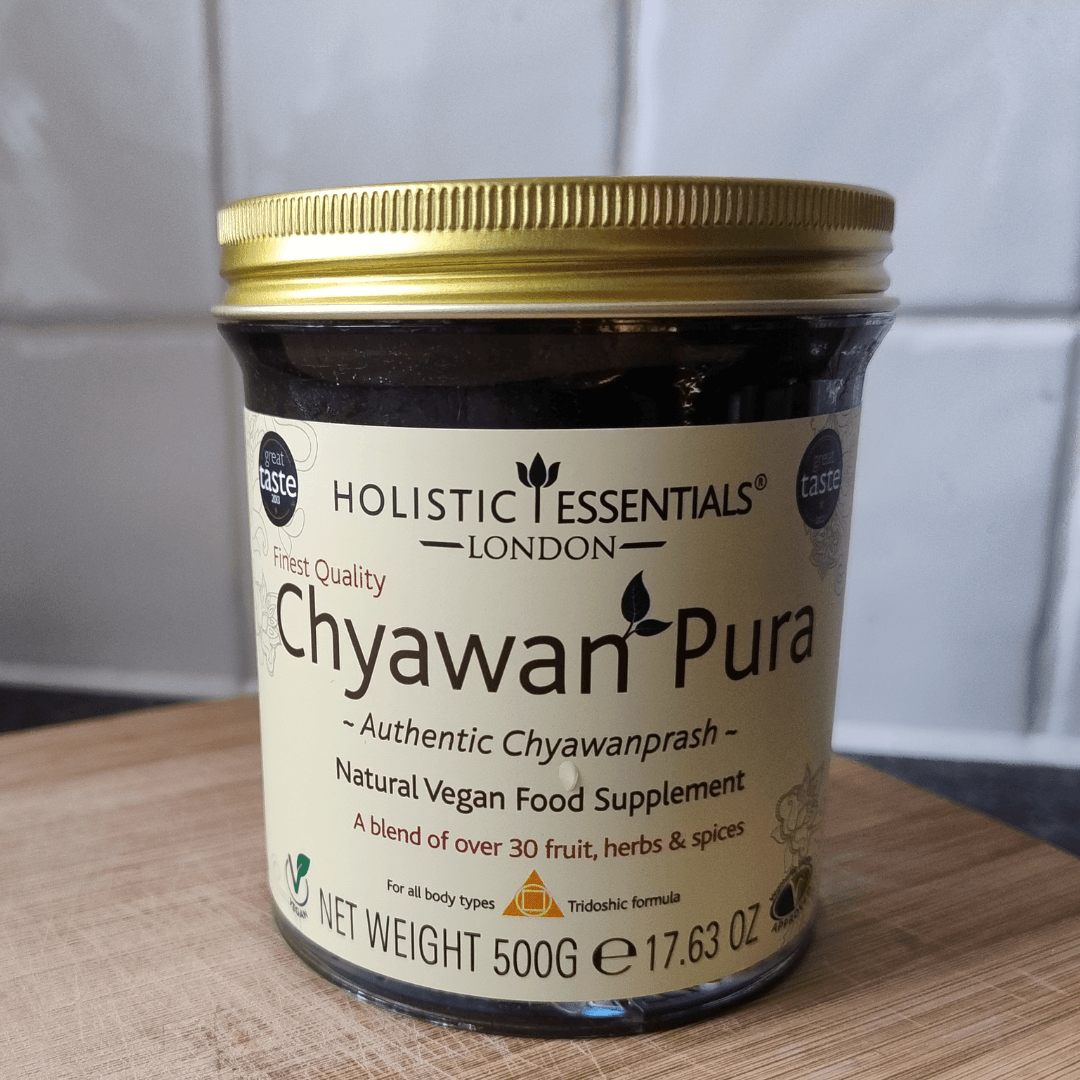
🌿Ayurveda Pura
I’ve been using this product for around 3 years now and it’s a firm favourite. Clients and family members also tell me that they notice an improvement in their overall feeling of vitality and energy when taking this, particularly at times of seasonal change.
Ingredients:
This formula contains 33 different herbs and spices and sits quite closely to what the original recipes called for but without ghee. This makes it an ideal choice for anyone looking for a vegan option.
It also the only vegan option with Saffron and Shatavari included.
Here is a full list of the ingredients:
Amla, Jaggery, Kudzu, Brahmi, Pippali, Bael/Bilva, Gamhar/Gambhari/Kashmarya, Sonapatha/Shyonaka , Agnimantha, Patala, Salparni, Prishniparni, Brihati, Kantakari, Vasaka, Punarnava, White turmeric, Musta, Varahikanda/Surala, Yashtimudhu/Mulethi, Kumuda, Mudgaparni, Bhumi amla/Tamalaki, Karkatshringi, Mashaparni, Haritaki, Guduchi, Kesar, Elaichi, Bay leaf, Shatavari, Akarkara, Nagkesar, Cinnamon, Clove, Sesame
Nutrition:
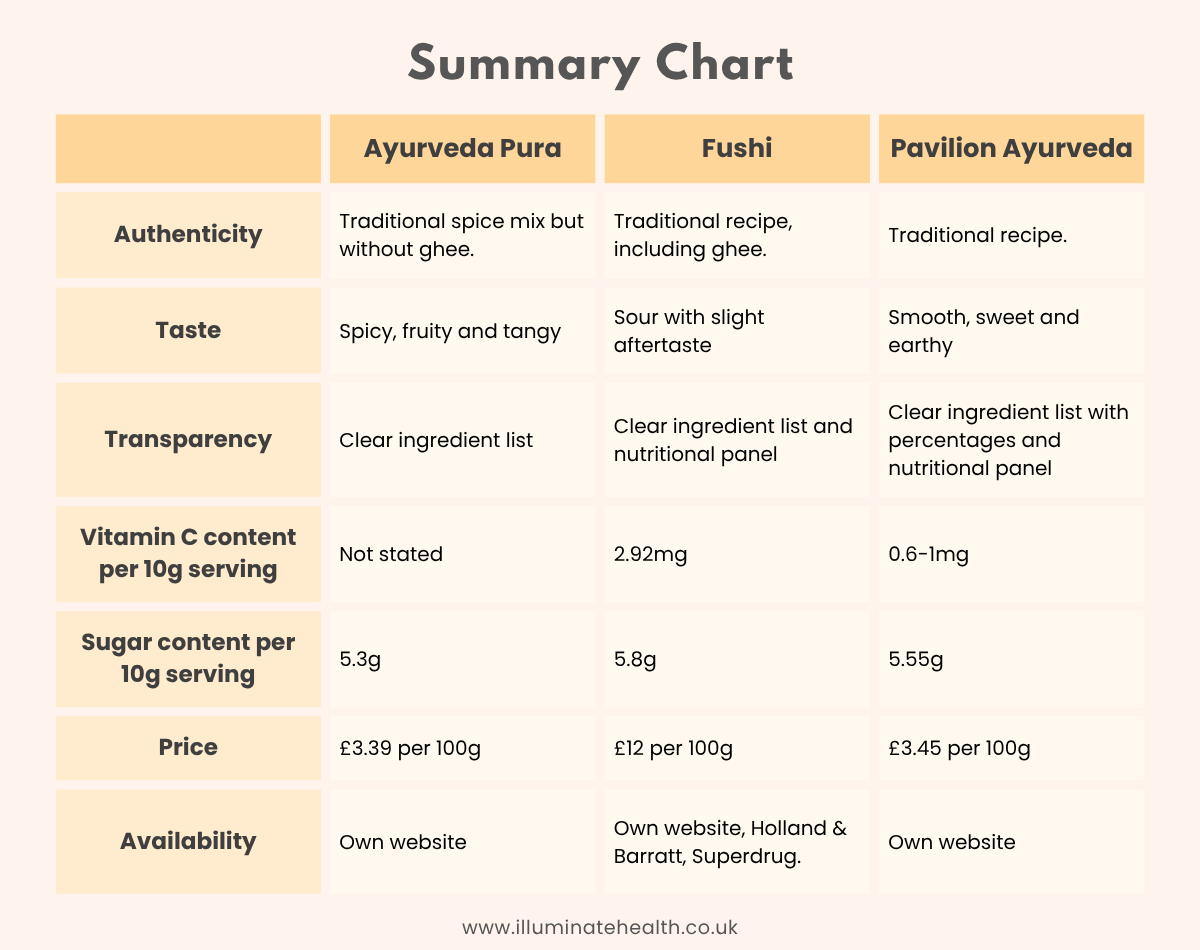
Sugars per 10g serving: 5.3g
Number of calories per 10g serving: 35Kcal
Taste and Texture:
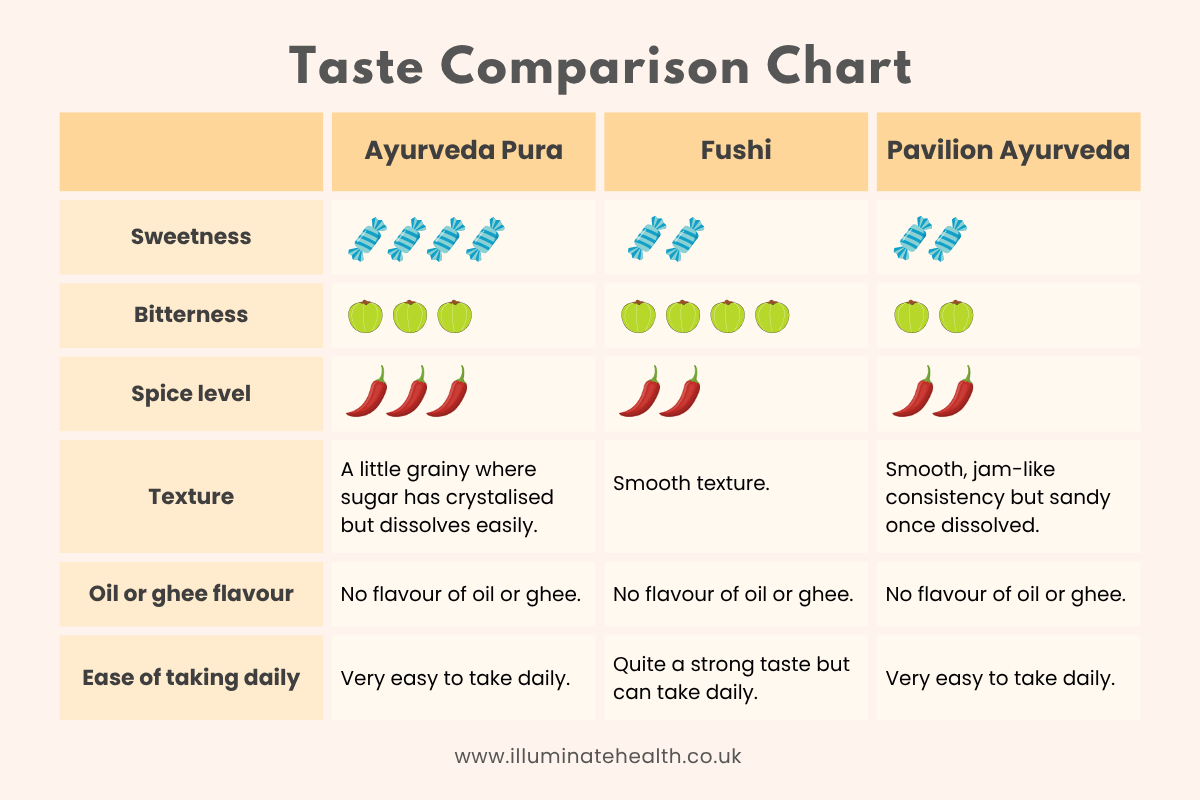
A spicy yet tart taste and a texture that dissolves easily into hot water.
Country of origin:
Made in India
Price and Availability:
£16.95 for 500g (£3.39 per 100g)
Purchase it online at Ayurveda Yoga Wellbeing with Dr. Deepa (Chyawan Pura - Authentic Chyawanprash – Ayurveda Yoga Wellbeing with Dr. Deepa & Ayurveda Pura Academy
Dietary preferences and allergens:
Suitable for vegans.
Contains sesame oil.
Certifications and Quality:
Ayurveda Pura’s Chyawanprash is free from preservatives and artificial flavours.
Storage and Shelf-life:
Keeps for up to 6 months after opening. Store in a cool, dark place.
Packaging and Environmental Considerations:
Arrives in a plastic jar that is described as “food grade” material and widely recyclable or reusable.
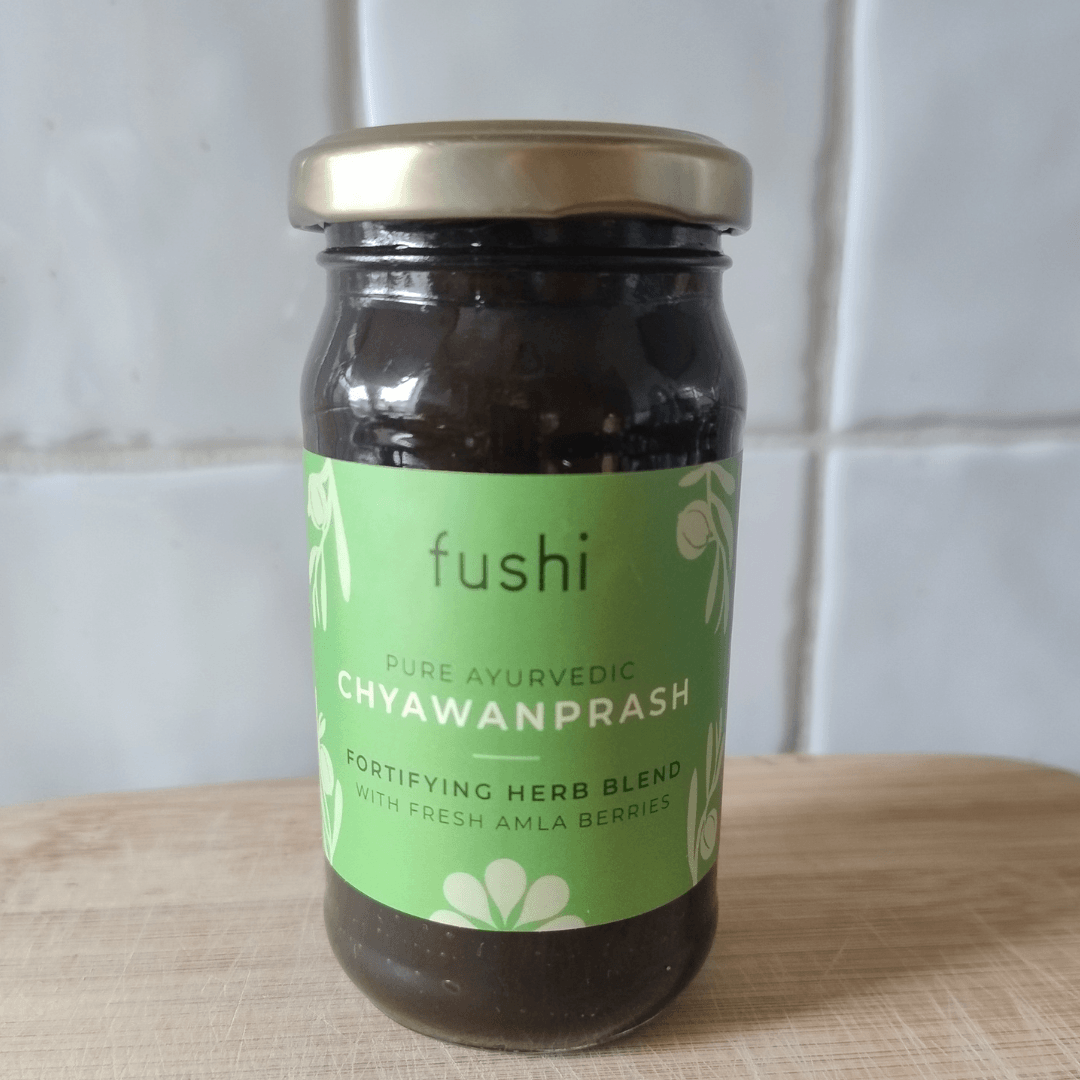
🌿Fushi
Ingredients:
Made with 30 different herbs and ghee, this formula probably sits the closest to the classical recipes.
The Fushi version of Chyawanprash also contains additional ingredients including grapes, sandalwood (strong antioxidant and antimicrobial action) and the following herbs: sati (anti-inflammatory), jivanti (anti-inflammatory), puskara (respiratory support).
One thing to be mindful of is that the first ingredient in the list is jaggery, not amla so we are left wondering how much of the contents carries the star ingredient.
Here is a full list of the ingredients:
Jaggery, Ghee, Amalaki, Sesame Oil, Pippali, Bilva, Agnimantha, Shyonaka, Kashmarya, Patali, Bala, Salaparni, Prsniparni, Mudgaparni, Masaparni, Svadamstra, Brhati, Kantakari, Srngi, Tamalaki, Draksha, Jivanti, Puskara, Agaru, Abhaya, Amrta, Sati, Musta, Punarnava, Ela, Chandana, Tvak, Patra
Nutrition:
Sugars per 10g serving: 5.8g
Number of calories per 10g serving: 37.1Kcal
Fushi’s Chyawanprash label displays a nutrition chart. The vitamin C content per 10g serving is 2.92mg.
Taste and Texture:
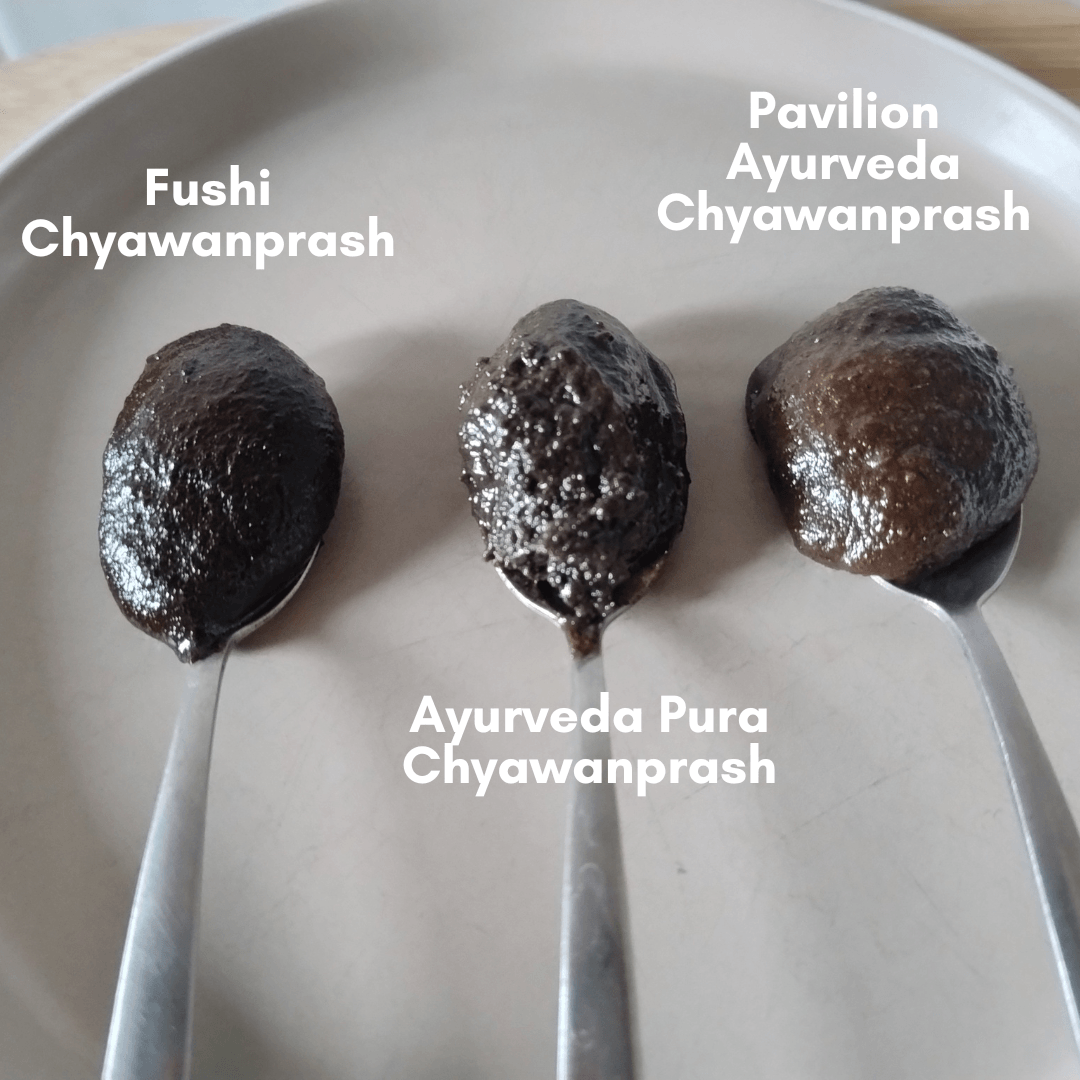
This Chyawanprash has a very sour kick and aftertaste which goes away quickly enough. The texture is smoother and less gritty, probably because of the ghee.
Country of origin:
Made in India
Price and Availability:
£30.00 for 250g (£12.00 per 100g)
Widely available to buy online on Fushi’s own website, Holland & Barratt and Superdrugs.
Dietary preferences and allergens:
Suitable for vegetarians.
Contains dairy.
Certifications and Quality:
Fushi’s Chyawanprash is free from preservatives, artificial flavours and colours.
Storage and Shelf-life:
Keeps for up to 6 months after opening. Store in a cool, dark place.
Packaging and Environmental Considerations:
Packaged in a glass jar that is widely recyclable or reusable.
Fushi also tend to use biodegradable delivery packaging such as honeycomb paper rather than plastic bubble wrap.
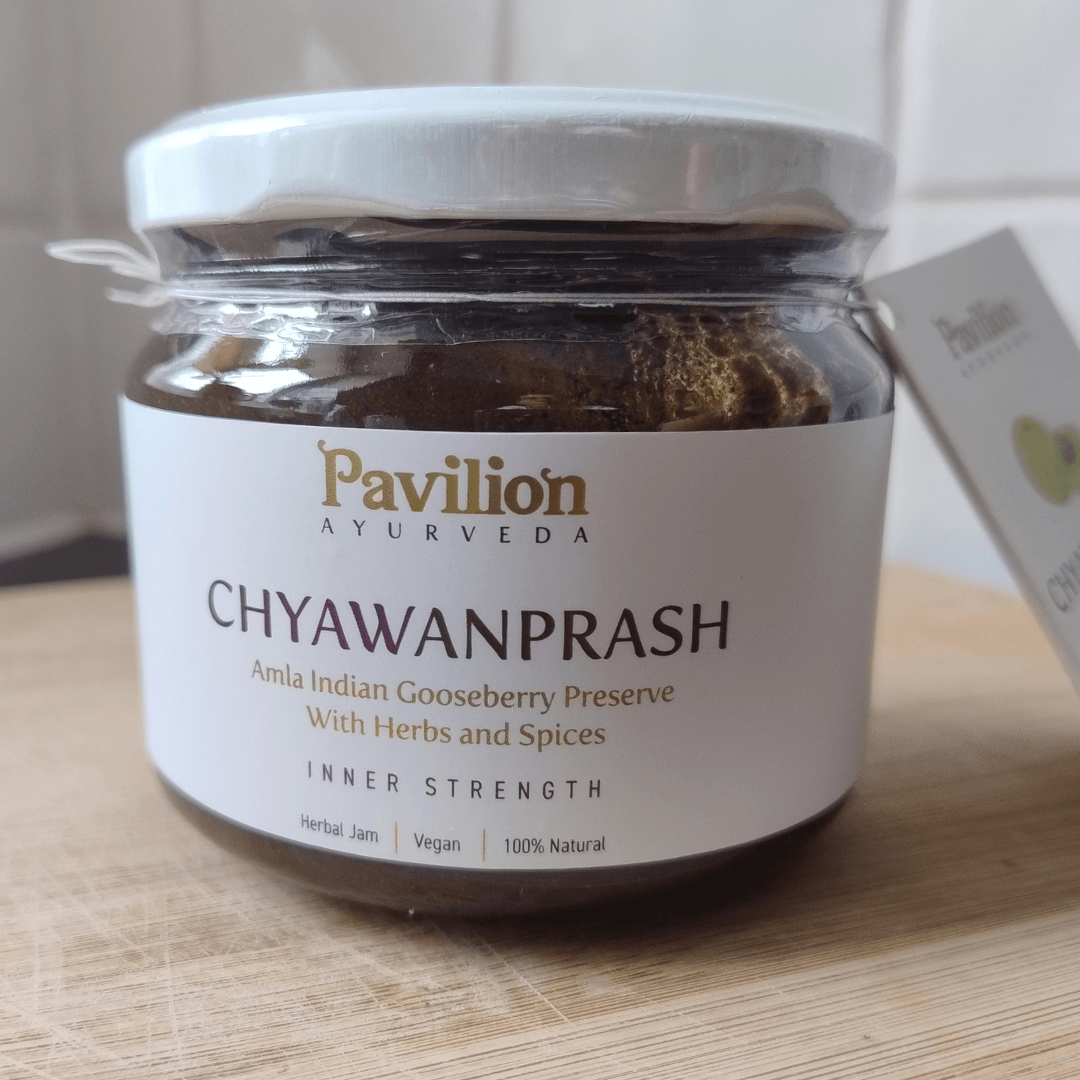
🌿Pavilion Ayurveda
Ingredients:
What’s impressive about the ingredients list for Pavilion Ayurveda’s Chyawanprash is the transparency regarding quantities as well as the plain language and terminology.
They are also transparent about the exact recipe varying according to seasonal availability so it is likely that the ingredients list will change batch to batch. The list below shows around 35 different herbs and spices.
Here is a full list of the ingredients:
Raw cane sugar (51%), Amla (44%), spice mix (2.5%) made from long pepper, cinnamon, bay leaf, cardamom, nagesakar-messua ferrea flower (Ceylon ironwood), aqueous extract (2.5%) of 26 herbs and spices, 1% each of vitis vinifera (dried grapes), nagarmoth spice/nut grass (cyperus rotundus), side cordifolia, lotus flower, salvan/shalparni (desmodium gingeticum), pithvan/prishnaparni (uraria picta), kakadasing/pistacia integerima, bhumi amla (phyllanthus niruri), jivanti (leptadinia reticulata), krunaguru (aquilaria agallocha), meda, jivak, rushbhak, Kakoli, kshirkakoli, munnaka/draksha (dried red grapes), pauhkarmul/Indian elecampane/sunspear (innula racemose), Chandan/sandalwood (santalum album), kachuro-white (white turmeric), ten root extract (1% each herb) – bilva (Indian bael), aegle marmelos, agnimantha/arani (premna sarratifolia), gambhari (beech wood/kasmari), gmelina aborea, shyonaka (oroxylum indicum), patala (sterospermum suaveolens), brihati (Indian hightshade), solanum indicum, shalaparni (desmodium gangeticum), kantakari (solanum xanthocarpum), gokshura (tribulus terrestris), prishnaparni (uraria picta), sesame oil for saute
*Note – I have provided the ingredients list found on the product label that arrived in the post, not the list provided on the website. The two differ.
Nutrition:
Sugars per 10g serving: 5.55g
Number of calories per 10g serving: 37.3Kcal
Pavilion Ayurveda’s Chyawanprash clearly lists the nutrition panel. The vitamin C content per 10g serving is 0.6-1mg.
Taste and Texture:
This product has both a smooth sweet and warming earthy taste. The sweetness isn’t overpowering as some products on sale. The texture can feel a little sandy though once dissolved but this isn’t an issue for me.
Country of origin:
Made in India
Price and Availability:
£15.00 for 400g (£3.75 per 100g)
Available to buy online on the Pavilion Ayurveda website.
Dietary preferences and allergens:
Both vegan and vegetarian options available.
Vegan version contains sesame oil and vegetarian option contains dairy (ghee).
Certifications and Quality:
Made in a GMP licenced facility. Pavilion Ayurveda’s website also states that all their ingredients are natural, organic and free from synthetic fragrances, parabens, mineral oils, silicones, palm oil, sulphates, propylene glycol, phthalates, GMO, PEGs, TEA and DEA.
Storage and Shelf-life:
Keeps for up to 6 months after opening. Store in a cool, dark place.
Packaging and Environmental Considerations:
Bottled in a glass jar that is widely recyclable or reusable.
🌿Other UK Chyawanprash Brands
There are many other recognisable brands selling Chyawanprash in the UK including:
Here’s why they didn’t make the cut for my review:
Use of preservatives
Use of artificial sweeteners
Plastic containers
It’s always a good idea to read the labels of any supplements before buying them to check the ingredients and for any allergens.
🌿Honourable Mentions
Here are some brands available globally that look great and I’d love to try some time:
How To Take Chyawanprash
The first thing I’ll say is that Chyawanprash is not intended to be used as a knee-jerk response to symptoms of a seasonal cold. It’s meant to be used as a preventative measure, fortifying our system for the inevitable vulnerabilities that the change in seasons bring.
Chyawanprash is best taken on an empty stomach, not part of a meal.
This makes it perfect for:
☕ A mid-morning elevenses
☕ Split the dose and take the second one as a mid-afternoon pick-me-up, stirred into hot water.
☕ For something more substantial, you can even stir it into hot milk.
🥄 Lick it straight off the spoon
When Not to Take Chyawanprash:
Acute illness – Take a break from Chyawanprash if you are acutely unwell or have a fever. Our digestion is weaker at these times. You can restart Chyawanprash when your appetite returns.
Diabetes or Pre-diabetes – As a significant proportion of the recipe is made of cane sugar, jaggery or even honey, consult with your GP before starting Chyawanprash.
Pregnancy – Speak with a health professional before starting any new supplements.
How to Store Chyawanprash:
Store Chyawanprash away from direct sunlight and in a cool place to prevent the herbs from spoiling. Some products are packaged in dark glass jars for this reason.
Preparation Is Key
Taking Chyawanprash embodies the Ayurvedic principle that says proactive prevention and rejuvenation are key for long-term wellbeing. Rather than acting as a reactionary solution for illness, it gently supports the body’s natural defences and offers vital energy.
If you’d like health tips and articles like this delivered straight to your inbox, sign-up to the monthly newsletter.
Note - Prices and availability were correct at the time of writing this review article (Sep 2026)
Disclaimer:
This article is for educational purposes only and does not constitute medical advice. Always consult your GP before starting any new supplement, especially if pregnant, nursing, or managing a health condition.
FAQs
-
Chyawanprash is a traditional Ayurvedic herbal formula made from amla (Indian gooseberry) and a blend of 30+ herbs, spices, ghee or oil, and jaggery. It's traditionally used to support immune function, energy levels, and respiratory health, particularly during seasonal changes.
-
Pregnant women should check with a healthcare professional before starting Chyawanprash. The complex herbal formula may affect some individuals differently during pregnancy.
-
People with diabetes or pre-diabetes should speak with their GP before taking Chyawanprash. Most formulations contain jaggery (unrefined cane sugar), with approximately 5.3–5.8g of sugars per 10g serving.
-
A typical serving is 10g (about one teaspoon). Many people take it once or twice daily, ideally on an empty stomach. This can be either in the morning or as an afternoon pick-me-up stirred into hot water or milk.
-
No. Chyawanprash is meant to be used as a preventative supplement, not treatment for acute illness. If you're acutely unwell or have a fever, pause using Chyawanprash until your digestion recovers and appetite returns.
-
Traditional recipes use ghee (clarified butter), making them unsuitable for vegans. Vegan versions substitute sesame oil or other plant-based fats. Both follow a similar herbal formula, but the carrier fat might affect the texture and digestive absorption.
-
Most products keep for up to 6 months after opening when stored in a cool, dark place, away from direct sunlight. Some are sold in dark jars to protect the ingredients from degrading.
-
If you're taking prescription medication, discuss Chyawanprash with your GP or pharmacist. The complex blend of bioactive herbs might interact with certain medications.
-
Although many families have given Chyawanprash to children for generations as part of traditional practice, there are some factors to consider. Dosage should be adjusted for age and instructions on usage by children varies across different brands. So, it is best to consult with a qualified Ayurvedic practitioner or healthcare professional for guidance specific to children.
-
Key factors include:
Ingredient transparency (full list with quantities where possible)
Whether it suits your dietary needs (vegan vs. traditional with ghee)
Sugar content according to your dietary goals
Availability (some brands only sell online via their own website)
Packaging (glass jars are preferable for preservation and environmental reasons)
Ingredients Glossary