Living Cyclically: An Ayurvedic Perspective on the Menstrual Cycle
About six months ago I delivered a joint workshop on menstrual health with a yoga teacher. What made this one different from the ones I’ve run before was that it was intergenerational for mothers and their teen or pre-teen daughters.
What stood out was how intuitively the girls understood the cyclical nature described in Ayurveda. They easily grasped concepts and language for our physiology and lived experience such as heat building up, feeling congested or noticing dips in energy.
I presented both the conventional medical model chart showing the rise and fall of hormones alongside the Ayurvedic menstrual rhythm. The way they lit up and engaged as we explored it from the Ayurvedic lens confirmed something to me: Ayurveda is both natural and deeply intuitive.
That experience inspired me to write this article. The aim is to show how contemporary medical insights and Ayurvedic wisdom can sit side-by-side to give us a comprehensive and holistic understanding of the menstrual cycle in a way that is relatable.
Modern Medical Explanation of the Menstrual Cycle
From a physiological perspective, the menstrual cycle is a complex interplay of hormonal activity over approximately 28 days with the purpose of preparing the body for a pregnancy.
Hormones are chemical messengers that control various processes in the body including temperature, hunger, energy expenditure and growth. In the menstrual cycle, specific hormones rise and fall in a coordinated way to stimulate the ovaries, release an egg and create the ideal conditions to carry a new being.
There is constant communication between the hormonal headquarters in our brain known as the hypothalamus and specific glands across the body. It operates via a feedback system that is constantly adjusting.
If you cast your mind back to GCSE Biology, here’s a simplified step-by-step overview of the menstrual cycle:
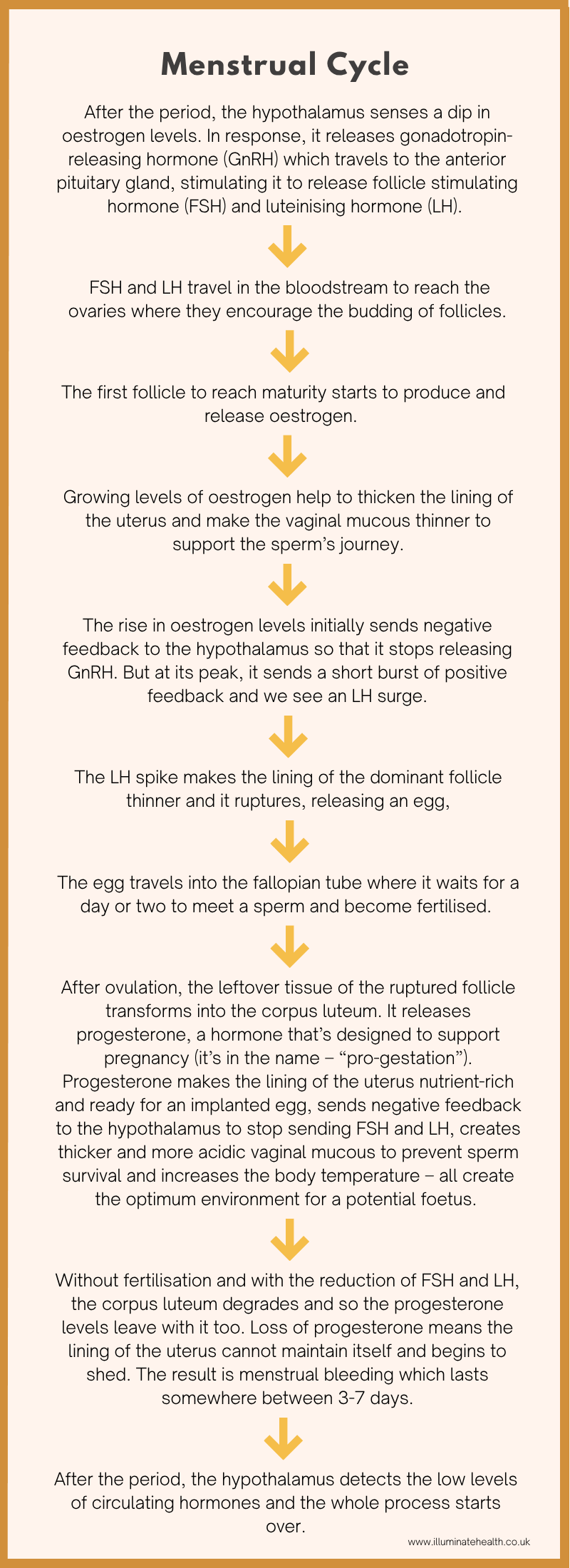
Menstrual cycle flowchart
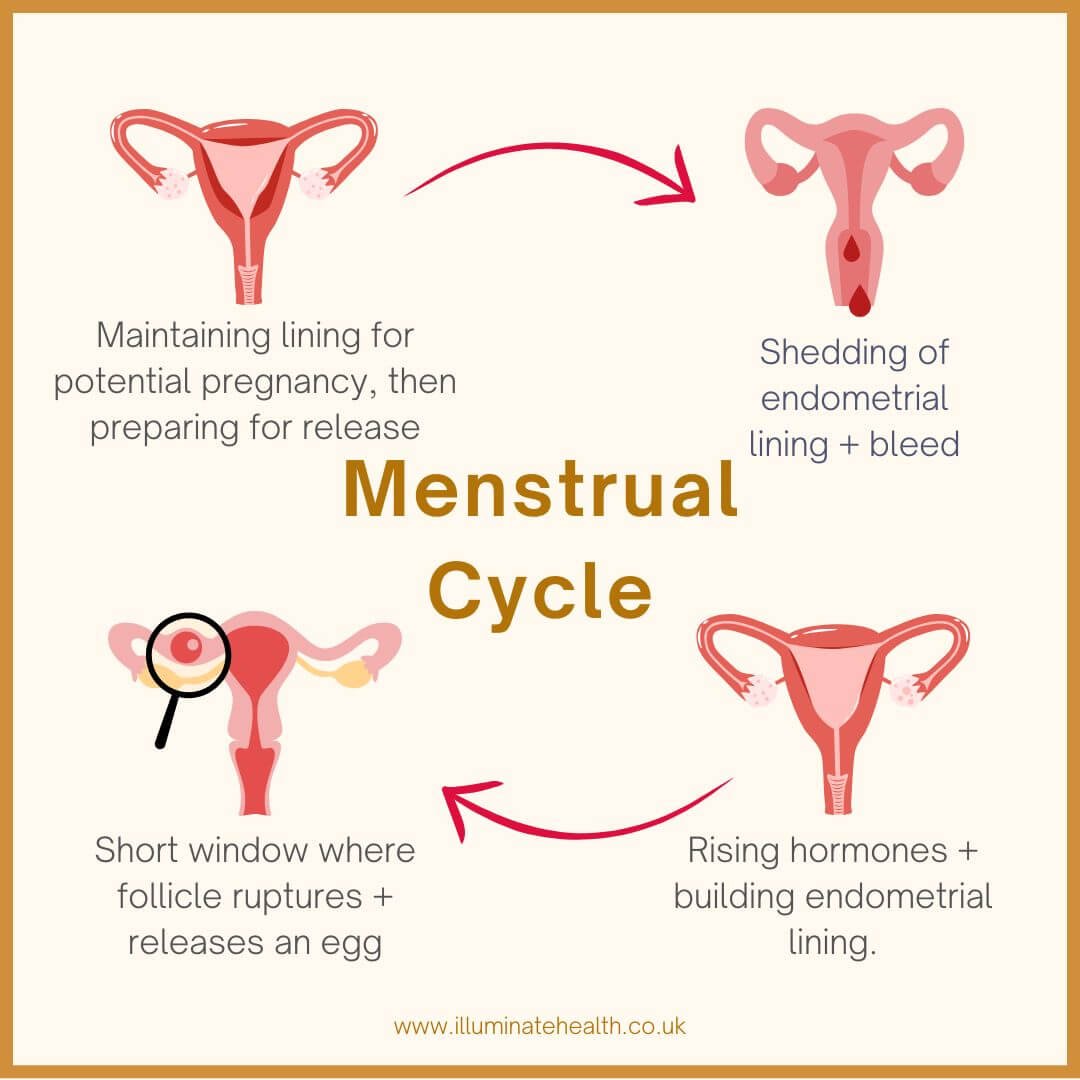
Endometrial cycle
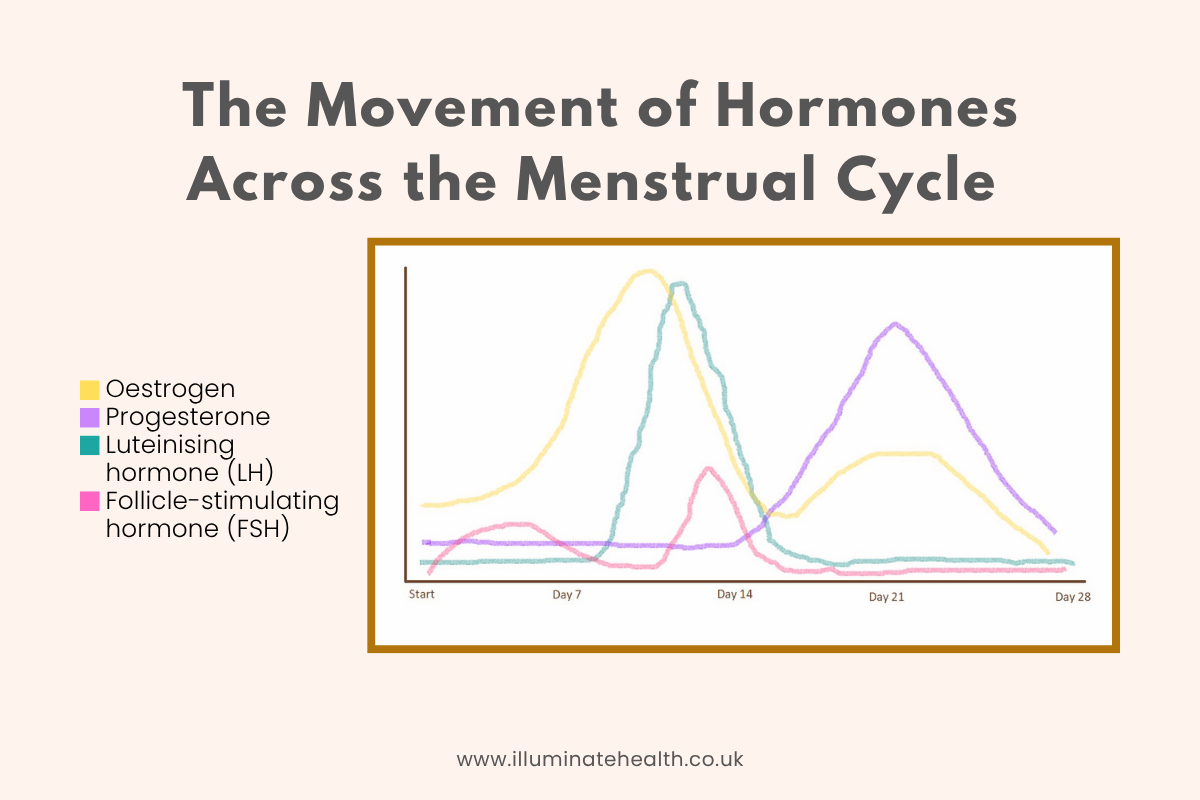
The rise and fall of hormones across the month.
While there’s lots more happening in the background with other hormones and neurons involved in the process (testosterone, kisspeptin, prolactin etc.), this is a helpful overview of the main phases.
To summarise, the menstrual cycle can be divided into four key phases:
Menstruation – The uterine lining sheds and we experience a bleed
Follicular phase – A time of regeneration as hormones begin to rise
Ovulation – A short window where the egg is released from the follicle
Luteal phase – The remaining two weeks where the body experiences higher metabolic activity before a decline in hormones, preparing for its next cycle
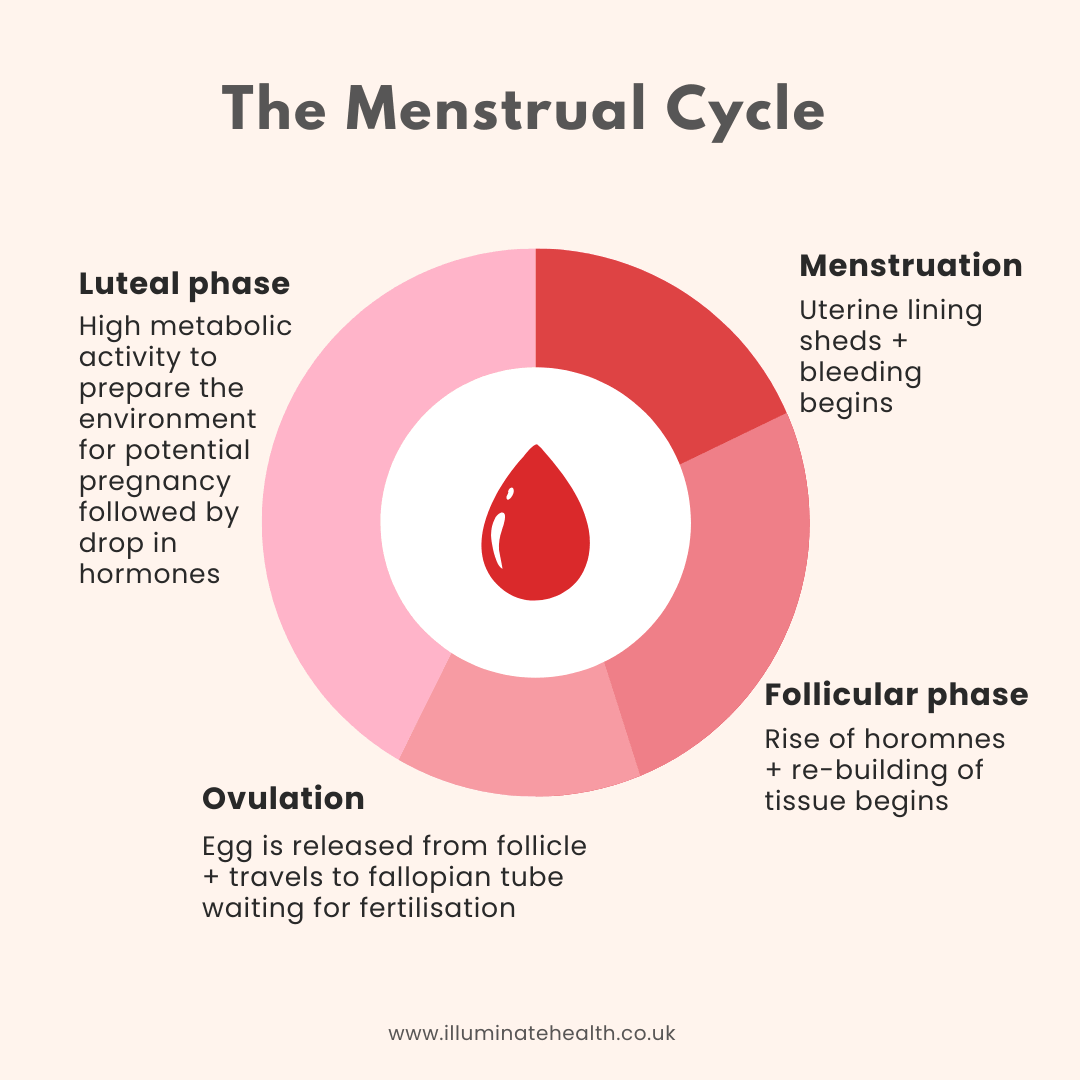
Phases of the menstrual cycle
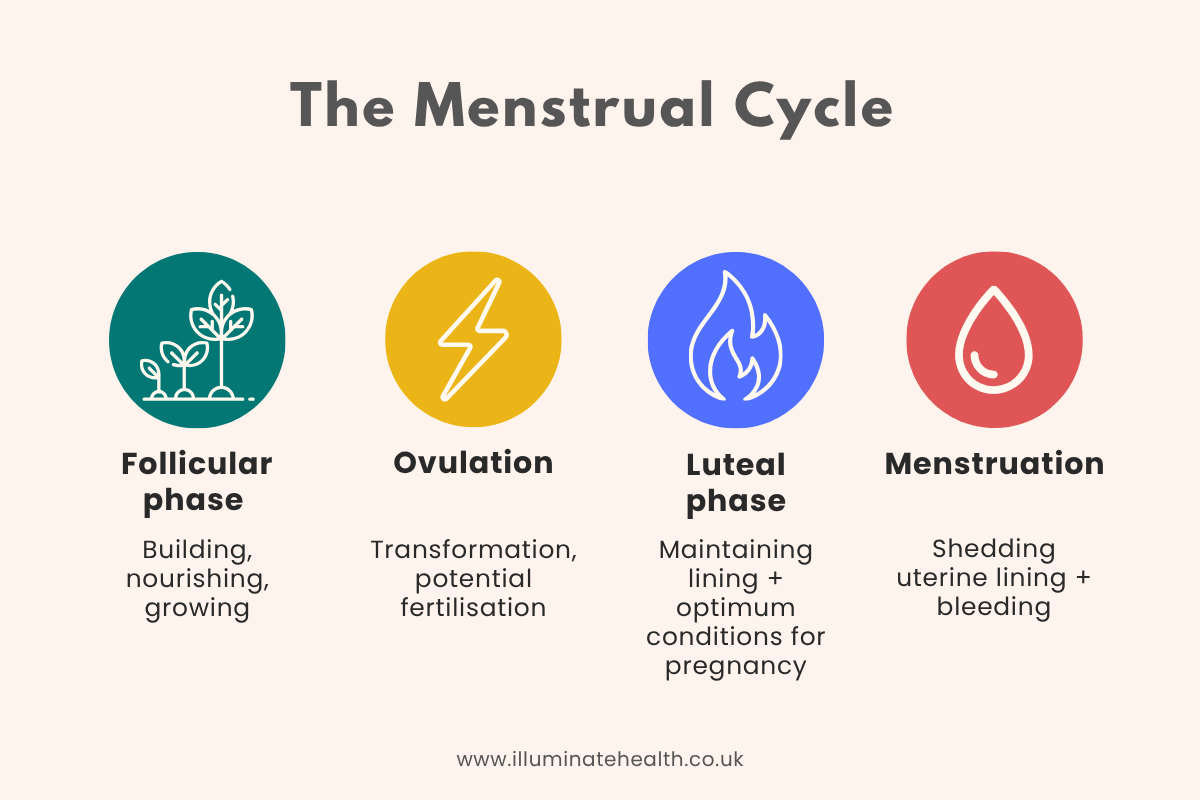
Stages of the menstrual cycle
The Ayurvedic Perspective on the Menstrual Cycle
Ayurveda views the menstrual cycle as a journey through changing energy states. While this perspective does not use the same language of hormones, its descriptions mirror the physiological processes observed in modern medicine.
These energy states are known as the doshas:
Vata dosha – responsible for movement and catabolic processes
Pitta dosha – responsible for all metabolic activity in the body and mind (hormones, enzymes), transformation and heat
Kapha dosha – responsible for lubrication, nourishment, structure and stability
Each dosha dominates at different stages of the menstrual cycle:
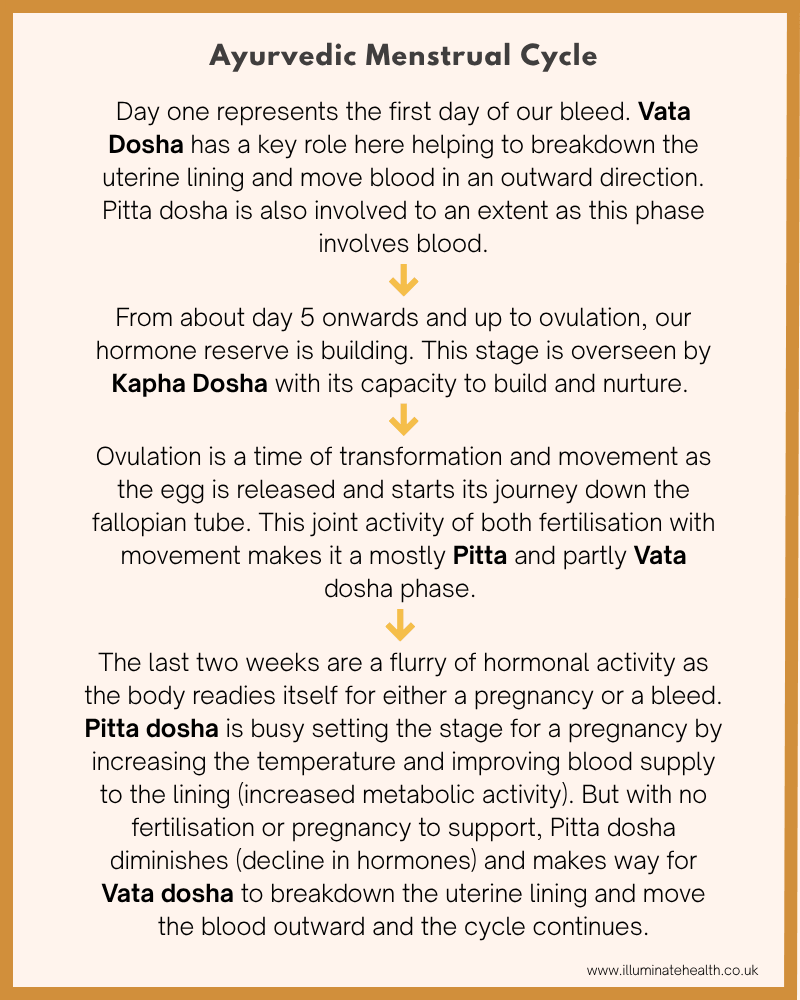
Ayurvedic menstrual cycle flowchart
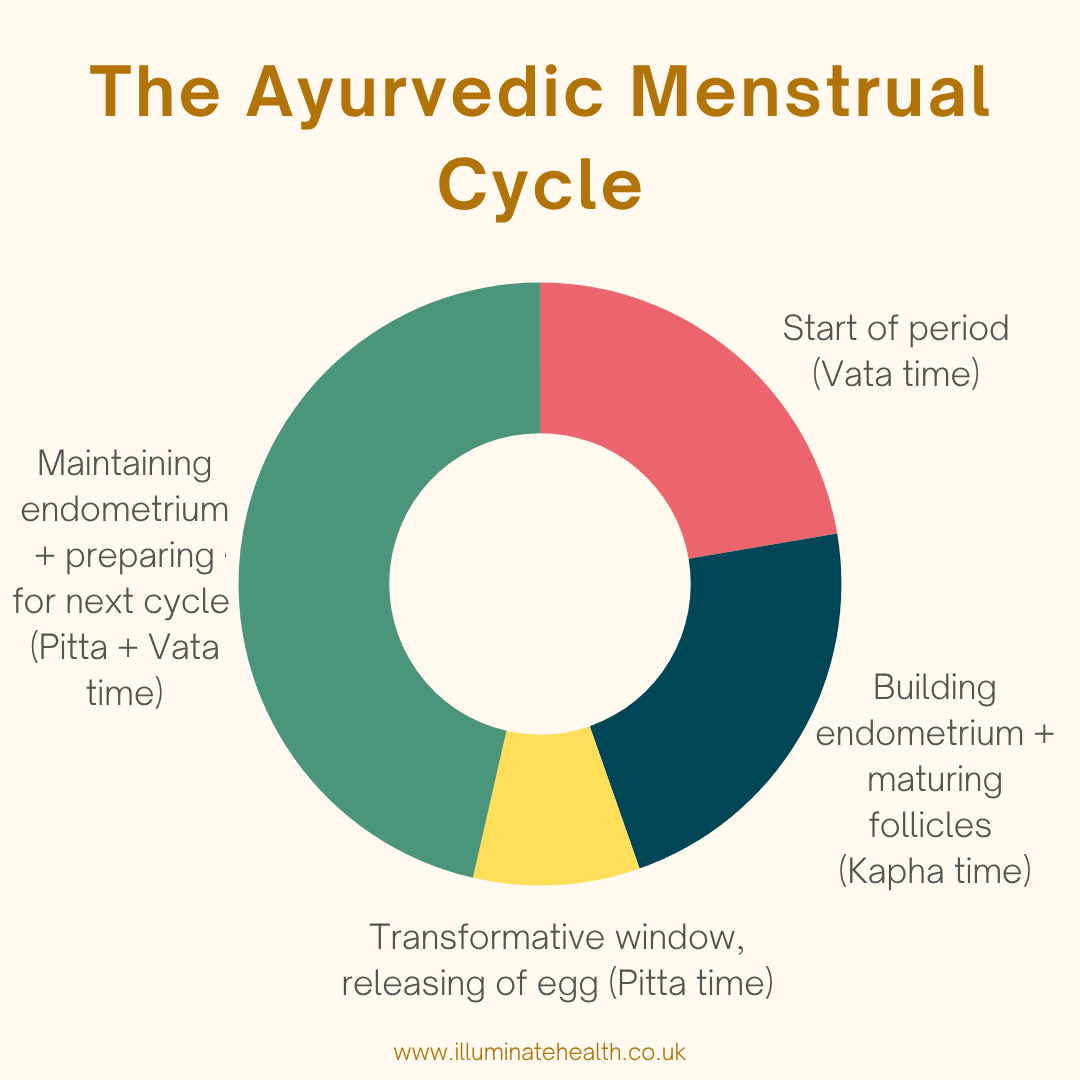
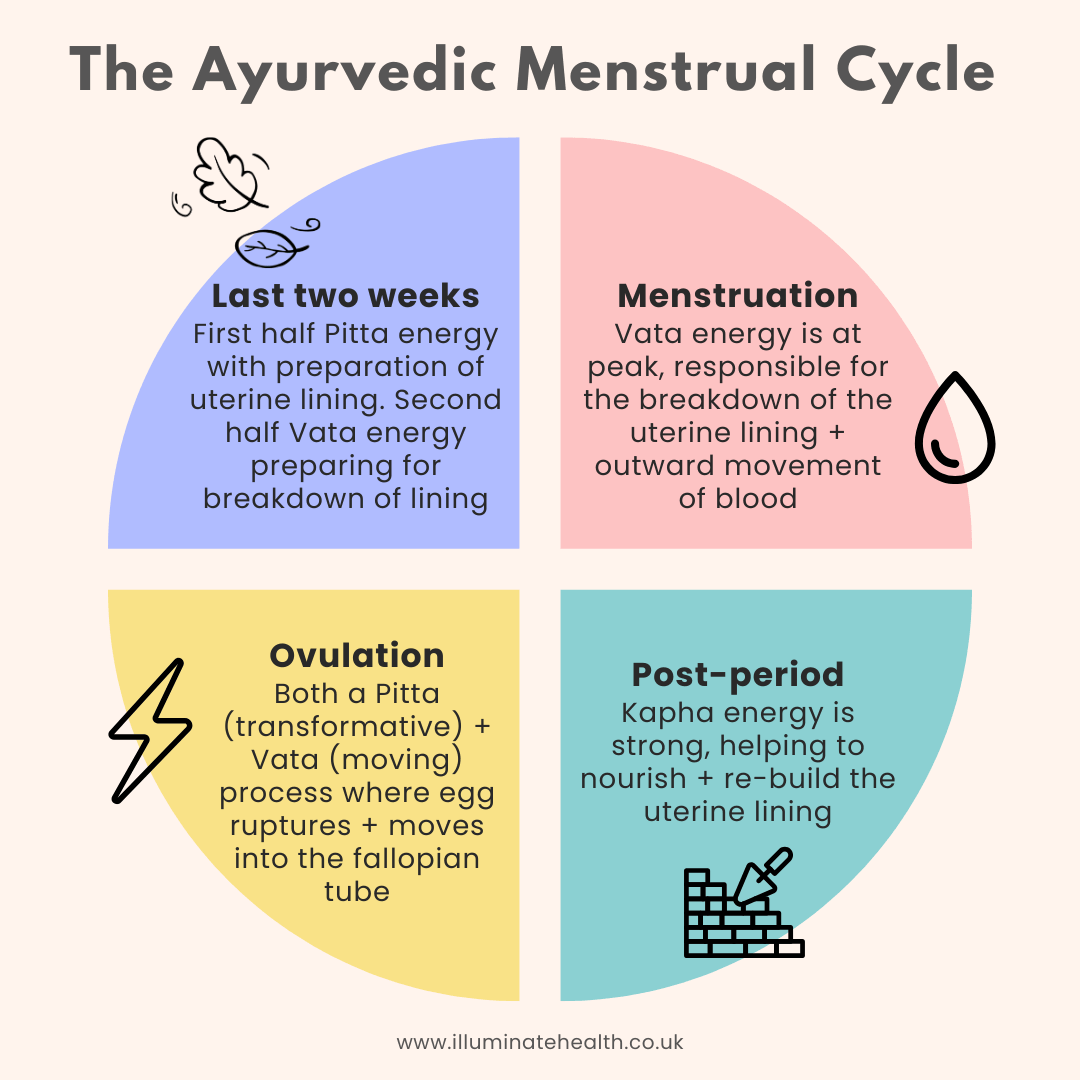
This model has also been likened to and complements the seasonal explanation of the menstrual cycle:
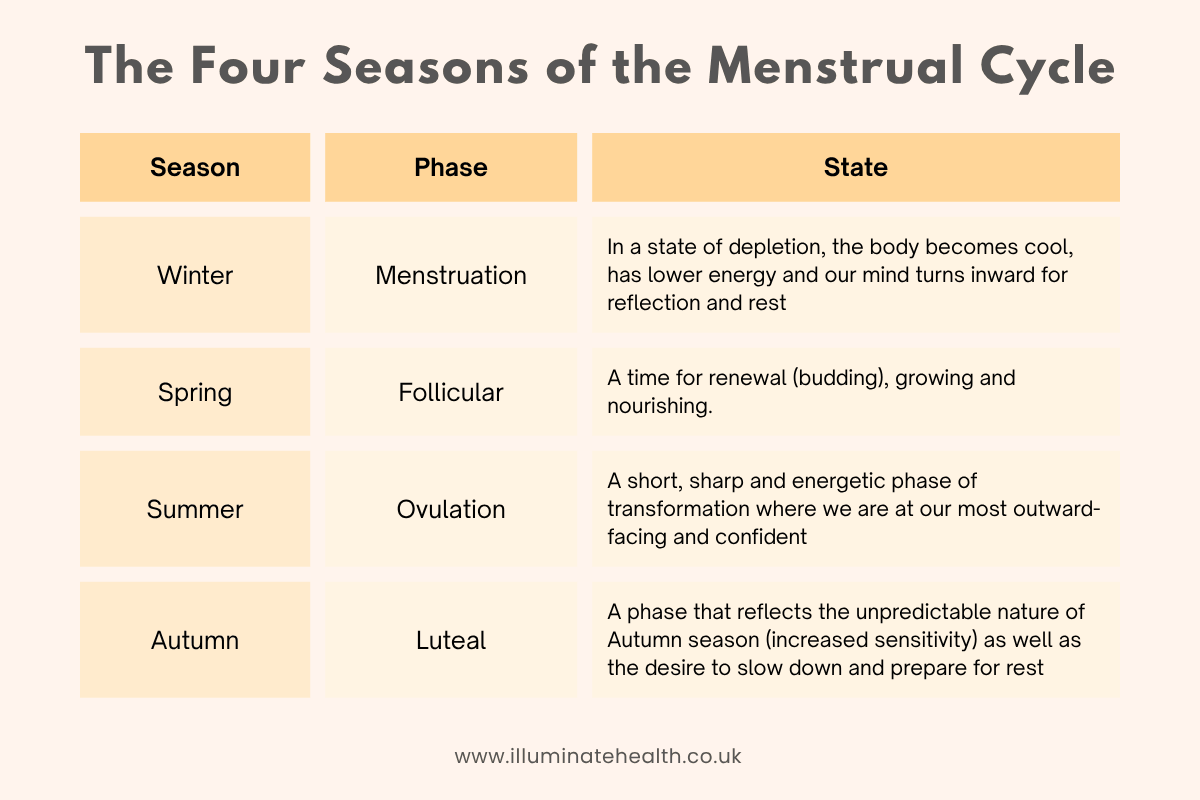
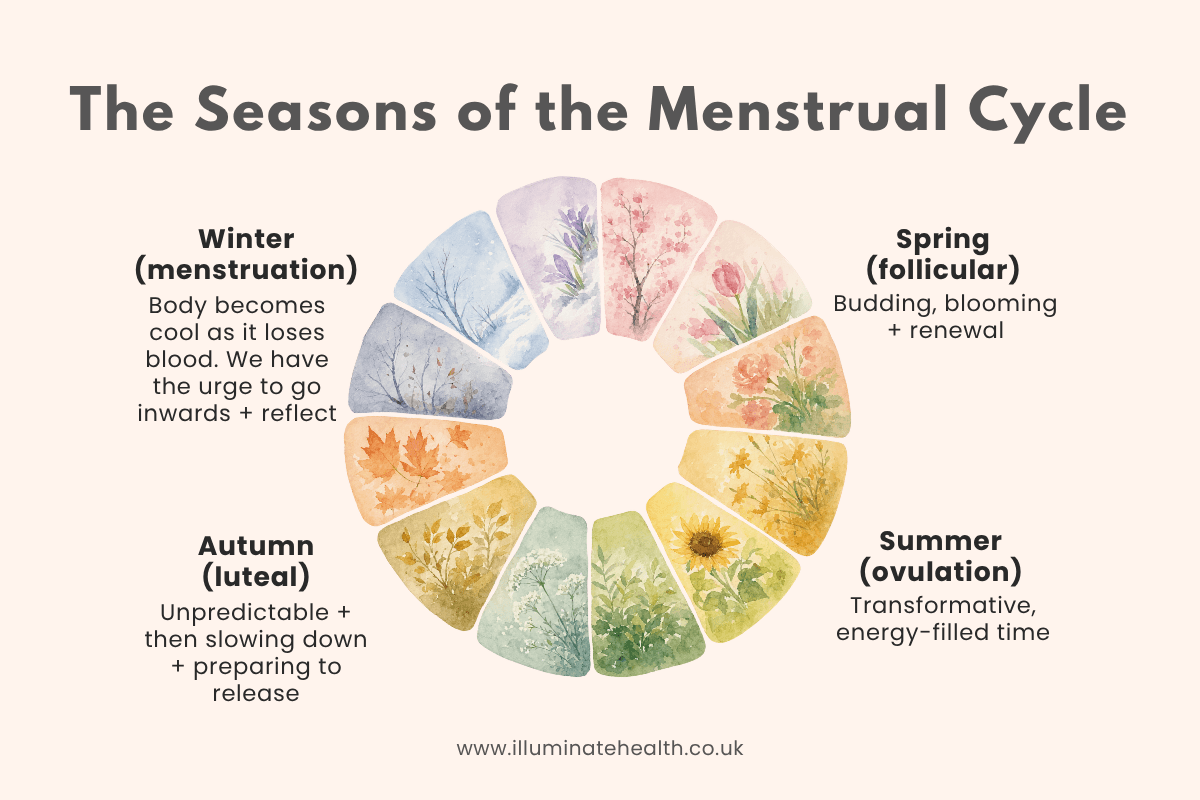
Understanding these patterns, helps us to better interpret symptoms and align nutrition and activities to support us at each stage.
Ayurvedic Strategies to Support Each Phase
Menstrual Phase (Days 1-5) 🩸
As a Vata-dominant phase, we can often feel quite depleted with low energy and maybe even low iron (1). It’s also during this phase that our heart rate is at its lowest (2).
What to eat during the menstrual phase:
Dhals, soups, greens, bone broths, kichari – rich in iron and magnesium, replenishing our reserves
Warm, cooked meals – digestion can feel delicate and erratic at this time so choosing simple, warm and cooked meals reduces the burden
Grounding ingredients – excess Vata can have us feeling hollow and highly sensitised so root vegetables and protein can help to nourish our body and bring a sense of grounding
Liquid-based meals – the body is actively losing fluid during menstruation so we need to be intentional about staying hydrated with warm and room-temperature drinks as well as soupy foods
Supportive practices during the menstrual phase:
Lean into the inward state and rest that your body is asking for during this phase.
Stay warm
Simplify nutrition
Moisturise, moisturise, moisturise!
Rest
Reflect
Follicular phase (Days 6-12) 🌷
As oestrogen rises in this phase, we can take advantage of the benefits it gifts us,
Oestrogen can be likened to Kapha dosha with its nourishing and lubricating qualities. It’s during this time that we begin to rebuild, feel steady and settled. Oestrogen has wide-ranging effects on the body because it has receptors in so many locations. It supports bone health, skin health, mood, the urinary system and more. The right amount can improve insulin sensitivity (3). But it needs to be kept in check too.
What to eat during the follicular phase:
Support this replenishing phase with good fats, protein, complex carbohydrates and essential nutrients that nourish the reproductive system.
Remember, we are giving back what the body has lost through the period just gone.
Stay hydrated – think beyond just drinks and eat your hydration with juicy foods. Think pomegranates, soups and stews
Good protein – the building-blocks of the body and best when taken from natural sources such as fish and chicken
Healthy fats – good fats provide the backbone for cell structure and steroidal hormones (oestrogen, progesterone, testosterone, cortisol). This includes foods that are rich in omega-3 such as walnuts, mackerel, salmon, flaxseeds and ghee.
Folate – an essential nutrient for cell division and growth. Not just for use in pregnancy, folate supports healthy egg formation and bone health. Find it in dark green leafy vegetables, broccoli, asparagus, artichoke, beans and lentils.
Magnesium – some studies show a fluctuation in magnesium levels across the month, suggesting that they are lower during the upcoming luteal phase due to the body’s increased demand for nutrients. We can help replenish this with magnesium-rich foods such as almonds, pumpkin seeds and flaxseeds.
Iron – continue to replenish lost iron through meat, chicken, eggs, lentils, beans and dark green leafy vegetables. For plant-based sources, pair with foods that are rich in vitamin C (e.g. broccoli, bell peppers) to improve absorption of the iron and get the added bonus of antioxidants.
Supportive practices during the follicular phase:
Make the most of the rise in energy levels, lift in mood, and the body’s capacity to build during this phase (Kapha dosha’s endurance and anabolic energy). Physical activity keeps the lymphatic fluid flowing and helps the movement of hormones. Try:
High-intensity interval exercises
Yoga (moderate intensity such as sun salutations)
Strength training
Ovulatory phase (Around Days 12-15) ⚡️
The most expansive and extroverted time of the cycle, ovulation reflects Pitta Dosha’s fire, confidence and exuberance as well as Vata dosha’s excitement.
We may even feel a surge of heat at this time and that's because our basal metabolic temperature rises about now. If we’re not tuning in to support our doshic tendencies, for some, this can show up as skin sensitivities, irritability or inflammation.
Studies also show that our pulse rate is at its highest during this fertile window (2) and that makes sense when we consider the mobile nature of Vata dosha during this phase too.
What to eat during the ovulatory phase:
As it's Pitta time, we are more able to tolerate raw foods. We also want to balance out the body’s heat generation with bitter and cooling vegetables and foods:
Greens – and fresh herbs to support liver detoxification of excess hormones
Fibre-rich meals – a powerhouse nutrient that supports digestion, blood glucose control and prevents sluggishness
Folate – found in lentils and most vegetables
Healthy fats – think walnuts, oily fish and ghee
Supportive activities during the ovulatory phase:
With the body being in peak productivity mode, we have more energy, confidence, focus and a brighter spirit. You might find you’re more sociable, breeze through tasks or are more creative.
Lean into this energy but also be mindful to not burn the candle at both ends, leading to exhaustion.
Luteal phase (Days 16-28) 🍂
The luteal phase is a dance of two Doshas: Vata and Pitta
It is a time of both rising hormones in preparation for a potential implantation and pregnancy (Pitta transformation) as well as the downward flow and movement of the unfertilised egg and lining (Vata destruction and excretion).
If not supported, when these two doshas come together, they can cause disruption. Think rising heat, emotional sensitivity, unsettled digestion, and cravings. Some of these symptoms can also be explained by current medical research.
Cravings:
Oestrogen suppresses cravings by stimulating satiety neurons in the central nervous system (4). With oestrogen levels at their lowest during the luteal phase, this is when we might notice more cravings (5).
Another reason we might experience cravings is due to changes in our blood glucose levels across the menstrual cycle (5). Progesterone has a slight opposing effect on insulin by interfering with its signalling pathways (6). This interrupts how cells absorb glucose and means decreased insulin sensitivity and potentially higher blood glucose levels. Essentially, we have glucose hanging around in our bloodstream, unable to get into our cells so we feel hungry.
Here are some ways to improve insulin sensitivity:
Regular physical activity will support glucose uptake into muscles and improve insulin sensitivity.
Avoid refined carbohydrates and sugars, choosing more complex carbohydrates for gradual glucose release (whole grains, starchy vegetables, legumes).
Add fibre to your meals. Fibre slows down glucose absorption after meals.
Watch your bed time! Sleep deprivation is also linked with insulin resistance so don’t scrimp on it.
Disturbed digestion:
Digestion may feel fragile at this time. This is because progesterone is rising and decreases smooth muscle contraction in our gut (7,8). This might show up as slower digestion or bloating.
Mood changes:
Research shows that progesterone has a calming effect on our mood (acts on GABA neurotransmitter). But as we enter the late luteal phase (last week before period begins), our stress sensitivity changes. Oestrogen and progesterone have a stabilising effect on our mood (enhancing serotonin and dopamine) so a noticeable drop in these hormones can result in low mood and motivation (9,10,11,12,13). Ayurveda would explain this as the woman approaching Vata season, again, with the potential to heighten anxieties and a feeling of instability if out of balance.
Some studies also suggest that zinc and magnesium deficiencies could result in premenstrual syndrome symptoms. Both minerals are said to support serotonin which plays a key role in mood and stress adaptation.
What to eat during the luteal phase:
Complex carbohydrates – support stable blood glucose levels with complex carbs such as sweet potatoes, wholegrains etc.
Zinc – abundant in chicken, salmon, meat, sesame seeds, sunflower seeds
Magnesium – found in almonds, beans, dark chocolate, tuna, spinach.
Calming herbal teas – try chamomile, spearmint, lavender
Supportive practices during the follicular phase
Avoid skipping meals during this phase as both the nervous system (Vata) and digestive system (Pitta) are being overworked here.
Reduce caffeine
Avoid late nights
Mind your screen time (over-stimulation)
Lower-intensity workouts might be more ideal as your energy levels fluctuate
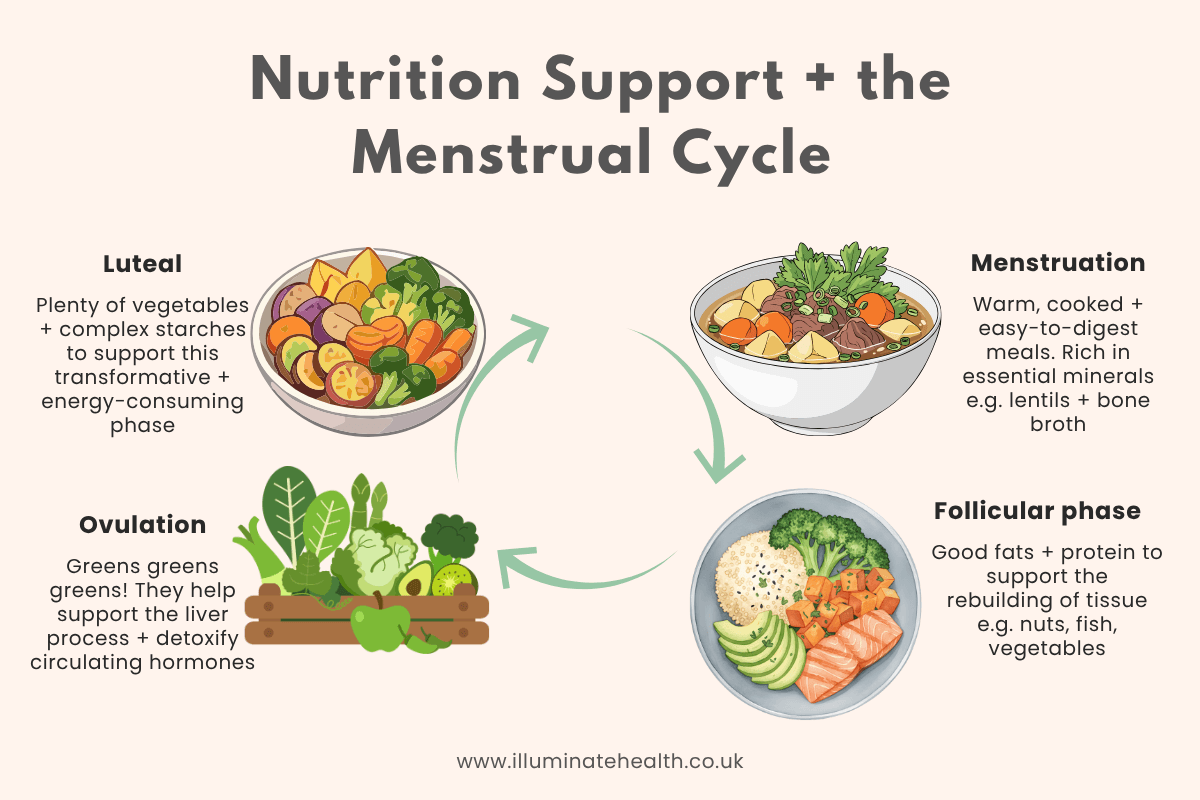
NOTE: None of these suggestions are meant to be prescriptive. Naturally, there will be individual variances between people. This is why understanding your current tendencies and imbalances (Vikriti) is helpful so that you can design and then adapt an approach that’s tailored to your needs.
Best Practices Throughout the Menstrual Cycle
Sleep and circadian rhythm
We already know how golden sleep is to our overall health. It improves energy levels, balances hunger signals, supports the immune system and skin health to name a few. But research also shows that sleep disruption and shift work is linked with menstrual irregularities (14,15). Aim to keep a consistent sleep-wake time to support your menstrual health.
Routine
When feeling off-kilter, routine can help us feel grounded and reassured. Even small things like meal times or your morning cuppa can create a stabilising effect.
Listen to your body
Rather than over-riding our bodily cues, listen and lean in. Consider these questions: What pace do you live your life at? How much of your work or responsibilities ask you to ignore your physical signals? How do you feel after eating? Mood, energy and appetite can offer valuable insights about our health.
Abdominal massage
The umbilical is a central marma point and for good reason. It’s where many of our vessels and nerves converge. Just a short, gentle abdominal massage in a clockwise direction can help with feeling more settled, improve digestion and enhance circulation to the pelvic region. Avoid immediately after a meal or post-surgery.
When to Seek Medical Advice
🚩If you experience any of the following symptoms, book an appointment with your GP or family doctor for an assessment:
Bleeding in between your periods (intermenstrual bleeding)
Bleeding after sex (post-coital bleeding)
Post-menopausal bleeding
Pelvic pain with fever
Painful sex (dyspareunia)
Feeling full quickly (early satiety)
Listening to the Body
Our period is our fifth vital sign. What does that mean? Just as our pulse, temperature, blood pressure and oxygen saturations give us crucial clues about our health in-the-moment, the state of our period gives us a window into our overall health.
We’ve also seen how our sex hormones impact way more than just our reproductive health. Our energy levels, mood, blood glucose levels and digestive capacity all fluctuate across the month.
From the Ayurvedic perspective, our reproductive tissues and capacity (Shukra dhatu) come in a succession after all our other tissues. So, the state of our reproductive health depends on and tells us a lot about the health of all the tissues that go before it – skeletal, nervous system, adipose, muscle, circulatory and lymphatic systems.
📝 A simple place to start is to keep a diary of the changes you notice on each day of your cycle. Take note of changes in:
Your energy levels
Any pain or discomfort
Bleeding pattern
Mood
We Are Cyclical Beings
The woman’s menstrual cycle reminds us that we are cyclical beings whose inner environment is shape-shifting all the time. The key is to tune-in and pay attention so that we can ride the waves of changing hormones or doshas. Being curious and aware of how we move through our cycles is more helpful than creating a strict protocol that feels like another to-do list.
It’s also a reminder to not beat yourself up for having a different capacity to yesterday. We’re not designed to run on the same tempo or energy every day. Instead, we move through a seasonal rhythm, each with its own pace and strength, and I think there’s something really beautiful about that.